Jryn Eye Clinic Busan (Seomyeon) · SMILE LASIK · EVO+ Visian ICL · Cataract & Retina Center · Tel: +82-51-710-1004
en-US

1:1 Consultation
CLINICAL ARTICLE & GUIDE
Korean Aging Eyes: Rising Demand for Post-LASIK Cataract Correction Care
South Korea has long been celebrated as a global hub for vision correction. In the early 2000s, laser vision correction surgeries like LASIK and LASEK experienced an immense surge in popularity across the country.
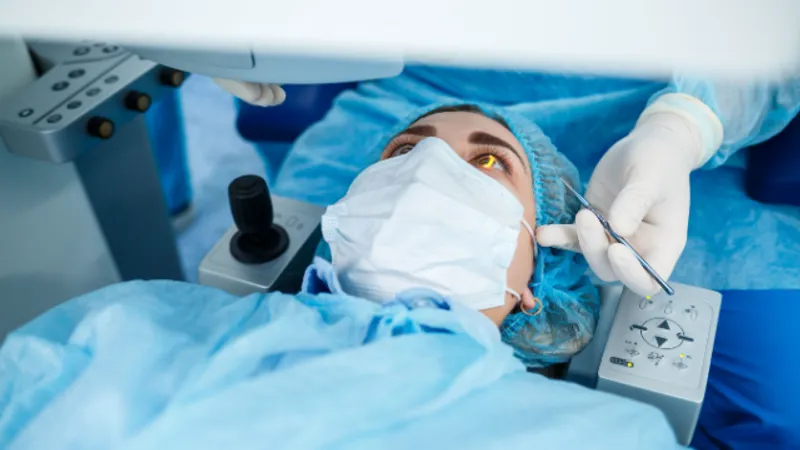
South Korea has long been celebrated as a global hub for vision correction. In the early 2000s, laser vision correction surgeries like LASIK and LASEK experienced an immense surge in popularity across the country. According to Korean ophthalmic market surveys, hundreds of thousands of young adults underwent these procedures to achieve visual independence. Fast forward to 2026, and this generation of patients is entering their 50s and 60s—the precise demographic window where the natural crystalline lens begins to cloud, leading to cataracts.
Managing a cataract in an eye that has previously undergone corneal refractive surgery presents unique optical challenges. The altered shape of the post-LASIK cornea makes standard intraocular lens (IOL) power calculations highly complex. For patients seeking clear vision at Jryn Eye Clinic in Seoul, understanding the intersecting data, costs, and clinical approaches of post-LASIK cataract surgery is the first step toward safeguarding long-term quality of life.
This data-driven insights article explores the current landscape of aging eyes in Korea, balancing conventional surgical challenges against modern, tech-driven solutions designed to maximize post-operative visual outcomes.
Post-LASIK Cataract Surgery in Korea: Risks, Challenges, and Ideal Candidates
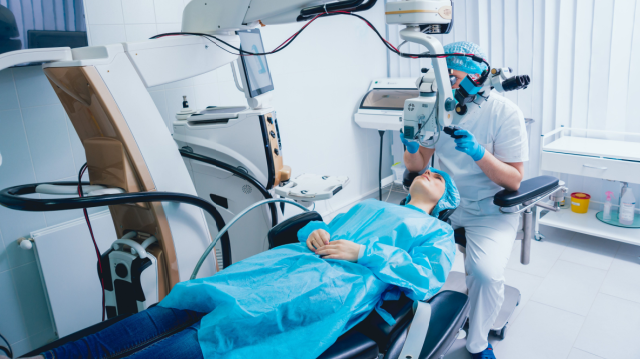
Why Does a History of LASIK Impact Cataract Surgery?
When a patient undergoes LASIK, an excimer laser reshapes the central cornea to correct myopia or astigmatism. This permanently alters the ratio between the anterior (front) and posterior (back) corneal curvature.
Standard diagnostic equipment used during conventional cataract surgery assumes a fixed, natural corneal ratio. When these standard formulas are applied to a post-LASIK eye, they systematically miscalculate the required power of the artificial intraocular lens. This often results in a "hyperopic surprise"—a post-operative scenario where the patient is left with unexpected farsightedness and remains heavily dependent on thick glasses.
Identifying the Ideal Candidate
An ideal candidate for post-LASIK cataract correction care is an individual who:
- Underwent corneal refractive surgery (LASIK, LASEK, or SMILE) 15 to 25 years ago.
- Is currently experiencing progressive blurred vision, decreased contrast sensitivity, or severe glare while driving at night.
- Seeks a high-precision approach to minimize the need for corrective eyewear after cataract removal.
What are the Limitations of Standard Cataract Protocols for Post-Refractive Patients?
The conventional cataract pathway in Korea is highly streamlined under the National Health Insurance Service (NHIS). While highly effective for virgin corneas, standard protocols often fall short when addressing the altered optical architecture of post-LASIK eyes.
Current Standard Options in Korea
- Standard Biometry & Third-Generation Formulas: Standard clinical practices rely on traditional optical biometry devices and formulas (like SRK/T or Hoffer Q). These mathematical models use standard assumptions about corneal keratometry to estimate lens power.
- Monofocal Intraocular Lenses: Standard treatment often pairs conventional formulas with monofocal lenses, which provide clear vision at only one distance (usually distance vision), requiring reading glasses for near tasks.
Key Pros and Cons of the Standard Approach
Pros:
- Fully or heavily subsidized by Korean National Health Insurance for standard components.
- Widely available at general ophthalmic clinics across Korea.
- Fast surgical turnaround times.
Cons and Shared Pain Points:
- Elevated Refractive Error Rates: Industry surveys indicate that standard formulas result in a higher rate of post-operative refractive surprises in post-LASIK eyes compared to unoperated eyes.
- Secondary Refractive Procedures: If the lens power calculation is inaccurate, patients may require a secondary laser touch-up or an IOL exchange, increasing total recovery time and physical strain.
- Reduced Quality of Vision: Standard spherical lenses may compound existing higher-order aberrations (subtle optical imperfections) introduced by early-generation LASIK lasers, leading to halos or ghost images.
Advanced AI-Assisted IOL Planning: High-Precision Care for Post-Refractive Eyes
To address the geometric discrepancies of the post-LASIK cornea, advanced ophthalmic care has shifted toward AI-assisted IOL planning. This tech-driven approach replaces traditional geometric assumptions with complex artificial intelligence algorithms, ray-tracing software, and extensive global datasets of post-refractive eyes.
How AI-Assisted IOL Planning Works
Instead of relying on a single, standardized corneal curvature value, AI-assisted planning instruments capture thousands of data points across the entire corneal surface. Advanced software models (such as the Barrett True-K formula, Hill-RBF, and AI-driven ray-tracing protocols) cross-reference the patient’s unique ocular typography with historical outcomes from millions of post-refractive eyes. This allows the system to predict the ideal intraocular lens power with an exceptionally high degree of predictability, accounting for the exact historical laser ablation depth.
Why It Is Considered a Tech-Driven, High-Precision Approach
- Elimination of Geometric Guesses: The software adapts dynamically to the altered anterior-to-posterior corneal ratio rather than using a static mathematical constant.
- Integration of Intraoperative Aberrometry: During the procedure, real-time wavefront analysis can measure the refractive power of the eye immediately after the cataract is removed, allowing the surgeon to verify or adjust the lens selection mid-surgery.
- Optimization for Premium Lenses: High-precision AI planning makes it safer to implant lifestyle-enhancing lenses—such as extended depth of focus (EDOF) or multifocal IOLs—by minimizing the risk of residual refractive errors that could degrade multi-distance vision.
Is AI-Assisted IOL Planning in Korea worth the cost?
Yes, for patients with a history of LASIK, AI-assisted IOL planning is widely considered a highly valuable investment. Because conventional calculations carry an elevated risk of refractive error in post-laser eyes, leveraging advanced AI formulas and specialized diagnostic suites significantly reduces the likelihood of requiring corrective touch-up surgeries or experiencing permanent visual distortion. It represents a crucial step toward achieving the crisp, unassisted vision that patients originally sought from their primary LASIK procedure.
Data & Outcomes: Conventional Protocols vs. Advanced AI-Assisted Planning
Data from international ophthalmic registries and Korean clinical reviews underscore the distinct predictability gap between traditional calculation pathways and advanced digital solutions for post-refractive eyes. Studies suggest that traditional formulas hit the targeted refractive goal within $\pm0.50$ diopters only about 50% to 60% of the time in post-LASIK eyes. Conversely, modern AI-driven and ray-tracing calculations can elevate that accuracy rate closer to 80% to 85%.
Conceptual Comparison Matrix
The table below outlines the practical differences between the conventional cataract pathway and the high-precision advanced path for a post-refractive patient in Korea.
| Feature / Metric | Conventional Cataract Protocol | Advanced AI-Assisted IOL Planning Pathway |
|---|---|---|
| Primary Calculation Method | Standard keratometry & 3rd-generation static formulas | Corneal tomography, ray-tracing, and dynamic AI datasets |
| Refractive Predictability | Moderate (approx. 50%–60% success rate) | High (approx. 80%–85%+ success rate) |
| Risk of "Hyperopic Surprise" | Relatively elevated due to altered corneal geometry | Significantly minimized through custom posterior measurements |
| Lens Compatibility | Mostly restricted to monofocal lenses to limit optical errors | Compatible with advanced EDOF and multifocal options |
| Need for Post-Op Laser Touch-ups | Higher likelihood due to residual refractive errors | Low; maximized primary accuracy minimizes secondary adjustments |
| Estimated Out-of-Pocket Cost Range | Lower initial cost (largely covered under standard insurance) | Higher upfront out-of-pocket fees for advanced diagnostics/lenses |
Local South Korea Insights: Patient Demographics and Regulatory Trends
South Korea’s domestic healthcare landscape heavily influences how cataract care is delivered and consumed:
- The Tech-Savvy Aging Demographic: Korean patients aged 50 to 70 are exceptionally active, digitally literate, and possess high visual demands. They frequently utilize smartphones, drive at night, and participate in active hobbies, making freedom from reading glasses a primary post-surgical priority.
- The Refractive Surgery Wave Cycle: The generation that drove the explosive growth of domestic refractive surgery in the late 1990s and 2000s has reached the age of natural lens degeneration. Ophthalmic centers in Seoul are experiencing a distinct demographic shift, requiring dedicated diagnostic tracks for post-refractive patients.
- Insurance and Regulatory Boundaries: While the removal of a cataract is covered under the National Health Insurance Service (NHIS), premium diagnostics, specialized AI software analysis, and non-monofocal intraocular lenses are categorized as non-reimbursable (uncovered) items. Korean consumers actively evaluate these premium out-of-pocket options based on long-term value, safety metrics, and the preservation of lifestyle quality.
Where Jryn Eye Clinic Fits in Post-LASIK Cataract Correction Care in Korea
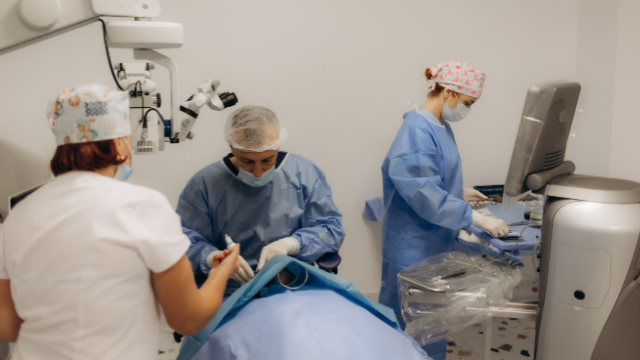
Where Jryn Eye Clinic fits in post-LASIK cataract correction care in Korea is rooted in its dedication to high-precision diagnostic infrastructure and customized patient mapping. Recognizing that a post-laser cornea cannot be treated like a standard eye, the clinic has developed a dedicated screening protocol tailored specifically for individuals with a history of laser vision correction.
At Jryn Eye Clinic, the diagnostic phase incorporates advanced corneal tomographers and multi-point optical biometers. This hardware feeds directly into advanced therapeutic suites featuring the Barrett True-K and modern AI-driven calculations. By utilizing AI-assisted IOL planning, the clinical team customizes the choice of intraocular lens to match both the historical structural shifts of the cornea and the modern lifestyle goals of the patient.
The medical staffs brings extensive collective experience in managing complex refractive cases, participating in domestic and international ophthalmic societies. This ensures that every patient receives care anchored in validated clinical evidence, structured safety frameworks, and a highly meticulous follow-up methodology aimed at preserving optical clarity.
Conclusion
The growing intersection of natural ocular aging and historical refractive surgery represents a significant clinical trend in South Korea. While conventional cataract calculation models carry an increased risk of visual inaccuracies when applied to post-LASIK corneas, modern technological interventions offer an effective solution. Utilizing AI-assisted IOL planning provides the complex calculations and customized data modeling necessary to overcome altered corneal architecture, reducing the likelihood of unexpected visual distortions or secondary corrective operations.
Patients considering AI-assisted IOL planning for post-LASIK cataract correction care in Korea can schedule a consultation at Jryn Eye Clinic to discuss whether this customized diagnostic approach may be suitable for their specific ophthalmic history and visual goals.
Ready for a Personalized 1:1 Eye Consultation?
Schedule your comprehensive 3D eye examination with Chief Director Dr. Sang-Youp Han and our ophthalmology team on the 14th floor of JRYN Medical Center in Seomyeon, Busan.