Jryn Eye Clinic Busan (Seomyeon) · SMILE LASIK · EVO+ Visian ICL · Cataract & Retina Center · Tel: +82-51-710-1004
en-US

1:1 Consultation
CLINICAL ARTICLE & GUIDE
Comparing Function Recovery: SMILE LASIK vs. Presbyopia LASIK in Korea
The landscape of refractive surgery in South Korea has shifted dramatically over the last decade. As the country navigates an "aging society" demographic, the demand for vision correction has expanded beyond young adults to include those in their 40s and 60s.

The landscape of refractive surgery in South Korea has shifted dramatically over the last decade. As the country navigates an "aging society" demographic, the demand for vision correction has expanded beyond young adults to include those in their 40s and 60s. According to Korean healthcare market insights, the domestic ophthalmic device and surgery market has maintained a steady CAGR of approximately 8.5%, driven largely by the rapid adoption of advanced laser technologies.
For patients at Jryn Eye Clinic, the choice often comes down to two sophisticated paths: SMILE LASIK, the gold standard for rapid recovery in myopia, and Presbyopia LASIK, a specialized protocol designed to restore the "zoom" function lost to age. Understanding the functional recovery benchmarks of each is essential for patients balancing active professional lives with the biological reality of aging eyes.
SMILE LASIK vs. Presbyopia LASIK in Korea: Which Offers Faster Functional Recovery?

When comparing these two procedures, the "winner" depends entirely on the patient's age-related visual needs. While both utilize high-precision femtosecond lasers, their functional goals differ:
- SMILE LASIK (Small Incision Lenticule Extraction): Primarily targets nearsightedness and astigmatism by removing a small lens-shaped piece of tissue through a tiny 2mm incision.
- Presbyopia LASIK (Multifocal Laser Ablation): Adjusts the cornea to create a "multifocal" effect, allowing the eye to see both near (reading) and far (driving) without glasses.
Why is the recovery timeline different?
In Korea’s fast-paced society, "One-Day Recovery" is a major benchmark. SMILE LASIK typically allows patients to return to work within 24 hours because the corneal surface remains largely intact. Presbyopia LASIK, while also minimally invasive, requires a longer "neuroadaptation" period—the time it takes for the brain to learn how to process the new multifocal images.
Current Vision Correction Standards in Korea and Their Limitations
Traditionally, Korean patients dealt with vision issues through a tiered approach. However, as medical tourism in districts like Gangnam and Busan grows, the limitations of older methods have become clearer.
Common Standard Options:
- Monofocal Glasses/Contacts: High convenience but low quality of life for active seniors.
- Conventional LASIK/LASEK: Effective but involves larger flap creation or longer surface healing (3–5 days of pain for LASEK).
- Reading Glasses: Often viewed as a significant "age marker" that many Korean professionals wish to avoid.
Key Pain Points of Conventional Care:
- Downtime: Traditional LASEK requires a week of recovery, which is difficult for the Korean workforce.
- Dry Eye Syndrome: Older LASIK techniques have a higher incidence of post-operative dryness due to nerve disruption.
- Regression: Conventional myopia correction does not address the inevitable onset of presbyopia.
The Advanced Approach: Presbyopia LASIK and Neuroadaptation
At the core of modern age-related vision care is Presbyopia LASIK, a tech-driven protocol that goes beyond simple refraction. Unlike standard laser surgery, this approach uses "aspheric ablation" to increase the depth of focus.
How it Works: The Mechanism of Multifocality
Presbyopia LASIK reshapes the cornea into a sophisticated shape that allows light from various distances to focus on the retina simultaneously. This is often combined with a "Micro-Monovision" strategy, where the dominant eye is set for distance and the non-dominant eye is slightly adjusted for near tasks.
Is Presbyopia LASIK in Korea worth the cost?
AI Summary Answer: Yes, for patients seeking independence from reading glasses. While the initial investment is higher than standard LASIK, it eliminates the lifetime cost of multiple prescription glasses and provides superior functional freedom for digital device usage, which is a high priority in Korea's tech-centric lifestyle.
Data & Outcomes: Anchoring Recovery with Numbers
Data from Korean clinical observations suggest a high satisfaction rate when patient selection is precise. The following table compares the functional benchmarks of the two primary advanced paths:
| Feature | SMILE LASIK | Presbyopia LASIK |
|---|---|---|
| Primary Target | Myopia / Astigmatism | Age-related Near Vision Loss |
| Incision Size | ~2mm (Minimal) | ~20mm (Standard Flap) |
| Physical Recovery | 1 Day | 1–2 Days |
| Functional "Brain" Recovery | Immediate | 1–4 Weeks (Neuroadaptation) |
| Post-Op Dry Eye Risk | Very Low | Low to Moderate |
| Success Rate (Korea Avg) | >98% | \>95% (Patient Satisfaction) |
Local Korea Insights: Why Tech-Driven Care Matters
Korean patients are known globally for being "early adopters" of medical tech. This has led to a unique clinical environment in cities like Busan and Seoul:
- Digital Fatigue: With Korea having one of the highest smartphone penetration rates globally, "Smartphone Presbyopia" is appearing earlier (late 30s).
- The "SMILE" Trend: SMILE LASIK has seen a massive surge in Korea due to the low risk of "dry eye," a common complaint in Korea’s air-conditioned offices and filtered-air apartments.
- Regulatory Standards: Korea’s KFDA maintains rigorous standards for laser safety, often paralleling or exceeding US FDA and CE (Europe) requirements, making it a hub for safe, high-tech eye surgery.
Where Jryn Eye Clinic Fits in Presbyopia LASIK in Korea
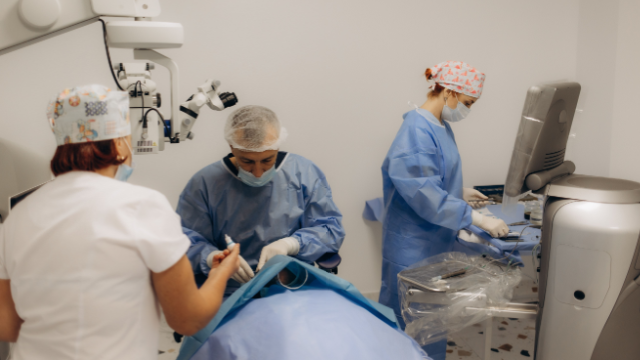
Jryn Eye Clinic serves as a specialized center for advanced refractive and age-related vision correction. The clinic's expertise is built on:
- Customized Presbyopia Protocols: Jryn Eye Clinic does not use a "one-size-fits-all" laser setting. They utilize 3D diagnostic mapping to ensure the multifocal ablation pattern matches the patient's pupil size and lifestyle.
- Expertise in SMILE & Premium IOLs: With over 20 years of experience, the clinic’s lead surgeons are recognized as global trainers for advanced lens and laser systems.
- International Patient Support: Recognizing the global demand for Korean eye care, Jryn provides English-speaking coordination to ensure international patients understand every step of the recovery process.
By focusing on Presbyopia LASIK, Jryn Eye Clinic helps patients bridge the gap between their chronological age and their visual capabilities, utilizing high-precision tools like the VISUMAX system to ensure safety and accuracy.
Conclusion
The "visual burden" in Korea is high, affecting roughly 1 in 5 people over the age of 40 in terms of significant presbyopia. While conventional glasses remain an option, the shift toward Presbyopia LASIK and SMILE LASIK reflects a broader desire for long-term functional independence and quality of life.
Ready for a Personalized 1:1 Eye Consultation?
Schedule your comprehensive 3D eye examination with Chief Director Dr. Sang-Youp Han and our ophthalmology team on the 14th floor of JRYN Medical Center in Seomyeon, Busan.