Jryn Eye Clinic Busan (Seomyeon) · SMILE LASIK · EVO+ Visian ICL · Cataract & Retina Center · Tel: +82-51-710-1004
en-US

1:1 Consultation
CLINICAL ARTICLE & GUIDE
Will I Still Need Glasses After Cataract Surgery?
Discover if you'll need glasses after cataract surgery, how lens options affect vision, and what to expect post-surgery. Learn more from eye experts today!
Introduction
For many people, cataract surgery represents more than just a medical procedure—it’s a second chance to see the world clearly again. When vision becomes clouded by cataracts, daily life can start to feel dimmer and more tiring. Driving at night, reading menus, or recognizing faces can suddenly require more effort.
Naturally, one of the first questions patients ask before surgery is, “Will I still need glasses afterward?”
At Jryn Eye Clinic in Busanjin-gu, Busan, this question comes up almost every day—and the answer depends on much more than just the surgery itself. It depends on your eye’s unique characteristics, the type of intraocular lens (IOL) chosen, and the vision goals you hope to achieve.
In this article, we’ll explain how cataract surgery affects your need for glasses, explore the different lens options available, and share insight from our clinical experience at Jryn Eye Clinic—where every procedure is tailored to the patient’s eyes, lifestyle, and expectations.
Understanding Cataracts and Lens Replacement
A cataract is the natural aging of the lens inside your eye. Over time, the proteins in the lens break down, causing it to become cloudy—like a window that fogs over after years of use. This clouding scatters light, leading to blurred, dim, or yellow-tinted vision.
Cataract surgery is one of the most common and safest procedures performed worldwide. During surgery, the cloudy lens is removed and replaced with a clear, artificial lens known as an intraocular lens (IOL). This new lens performs the same function as your original one—focusing light precisely on the retina—but with the potential to do much more.
What many patients don’t realize is that this step—the choice of lens—is what determines whether they’ll still need glasses after surgery.
Why Some People Still Need Glasses After Cataract Surgery
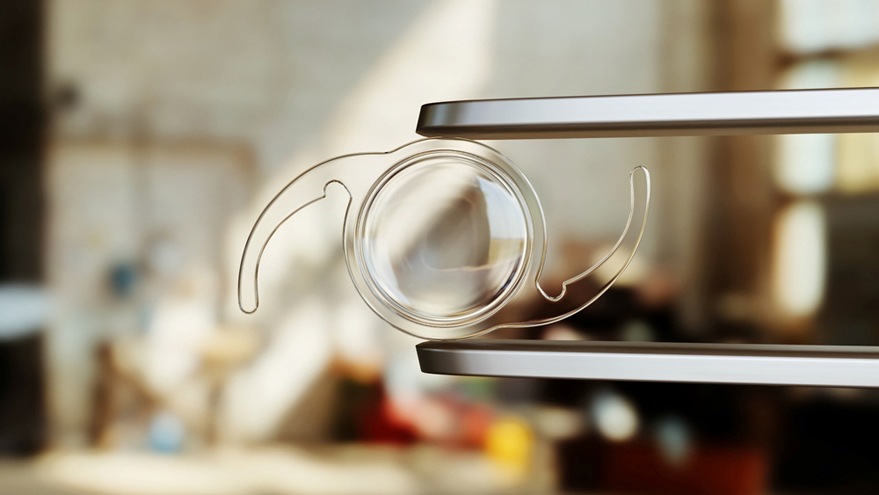
While cataract surgery restores clarity, it doesn’t automatically correct all visual errors. The most common reason patients still wear glasses afterward is the type of IOL that was implanted.
1. The Standard Monofocal Lens
In Korea, as in many other countries, the standard IOL covered by national health insurance is the monofocal lens. This lens has a single focal point—usually set for distance vision. With a monofocal lens, patients typically see well for driving, watching TV, or outdoor activities.
However, because the lens doesn’t adjust for near tasks, reading or using a smartphone usually requires reading glasses. For people who have worn glasses most of their life, this may still feel like a significant improvement—but it’s not total glasses freedom.
2. Residual Refractive Error
Even with advanced surgical techniques, every eye heals differently. Tiny differences in corneal shape, healing response, or lens positioning can cause small refractive errors. In some cases, this leads to mild blurriness that can be easily corrected with glasses, or in some cases, with a minor laser enhancement after surgery.
3. Pre-existing Eye Conditions
Other eye issues—like astigmatism, macular degeneration, or dry eye—can also affect post-surgery clarity. If these are not addressed before or during surgery, glasses may still be needed for the sharpest possible vision. That’s why comprehensive preoperative testing is crucial. At Jryn Eye Clinic, we perform detailed corneal mapping, optical coherence tomography (OCT), and tear film assessments to plan each surgery with precision.
Advanced Lens Options: How Modern IOLs Reduce Glasses Dependence
Today’s cataract surgery has evolved far beyond basic lens replacement. With advanced IOLs, many patients can now enjoy clear vision at multiple distances—without the constant need for glasses.
At Jryn Eye Clinic, we guide each patient through these options carefully, balancing technology with individual lifestyle needs.
1. Toric Lenses for Astigmatism
Astigmatism occurs when the cornea is irregularly curved, causing distorted or blurred vision. Toric IOLs are designed with special surface markings that correct this irregularity.
For patients who previously relied heavily on glasses due to astigmatism, toric lenses can provide crisp, unaided vision for distance tasks like driving, walking outdoors, or watching television. In many cases, they dramatically reduce or eliminate the need for corrective eyewear.
2. Multifocal and Trifocal Lenses
Multifocal and trifocal IOLs represent a leap forward in vision restoration. Unlike monofocal lenses, they contain multiple optical zones to focus light from different distances simultaneously.
That means one lens can help you see your phone screen, computer monitor, and distant scenery—all without switching glasses.
However, these lenses require neural adaptation. Some patients report mild glare or halos around lights, particularly at night, though these effects often diminish over time. The key is careful selection: not every patient is an ideal candidate for multifocal IOLs, especially if there are pre-existing retinal or corneal issues.
3. Extended Depth of Focus (EDOF) Lenses
EDOF lenses—such as Alcon’s Vivity or Johnson & Johnson’s Symfony—offer a balanced middle ground. Instead of creating multiple focal points, they extend the range of clear vision, providing smooth, natural transitions from near to far.
Patients often describe this experience as “younger eyes again.” EDOF lenses reduce the risk of glare and halos while still providing functional near vision. For active individuals who drive frequently at night or work long hours on computers, EDOF lenses can offer an ideal balance.
At Jryn Eye Clinic, Dr. Han Sang Yeop often uses a personalized blend—sometimes implanting different lens types in each eye (a strategy known as “mix and match”) to create a customized visual experience.
What Most People Don’t Realize: The Health of the Entire Eye Matters
Choosing the right lens is important, but it’s not the only factor in achieving glasses-free vision. The health of the cornea and retina also plays a critical role.
Even the most advanced IOL can’t perform perfectly if the rest of the eye isn’t in good condition. Dry eye, corneal irregularities, or early macular disease can limit visual sharpness after surgery.
That’s why Jryn Eye Clinic uses high-resolution retinal OCT scans and corneal topography before surgery to detect subtle issues that might otherwise go unnoticed. For example, a patient with early macular changes might be advised against multifocal lenses, while someone with chronic dry eye would benefit from pre-surgical tear film stabilization to ensure optimal healing.
This comprehensive approach allows us to set realistic expectations—and prevent disappointment later on. As Dr. Han often reminds his patients, “Cataract surgery is not just about changing the lens; it’s about harmonizing the entire visual system.”
The Role of Presbyopia and Aging Eyes

Even after successful cataract surgery, our eyes continue to age. The retina, cornea, and tear glands gradually change, sometimes causing mild shifts in visual comfort or focus.
For instance, a patient who initially enjoys complete independence from glasses may notice that reading small print becomes slightly harder after several years. This is not a failure of surgery—it’s simply a reflection of natural biological changes.
To maintain the best results, regular post-surgery checkups are important. At Jryn Eye Clinic, we recommend annual eye exams to monitor vision stability, lens clarity, and ocular surface health. In some cases, a simple adjustment to lighting, eye drops for dryness, or a minor prescription update is all that’s needed to restore perfect comfort.
What Happens During a Cataract Surgery Consultation
When you visit a clinic for cataract evaluation, expect several key steps. At Jryn Eye Clinic, the process is comprehensive yet patient-centered.
Precision Measurements – We use diagnostic tools such as IOL Master, Pentacam, and corneal topography to map the curvature, thickness, and length of the eye.
Retinal and Tear Film Assessment – OCT scans check for macular or retinal conditions, while tear film tests evaluate dryness that could affect healing.
Discussion of Visual Goals – We review your daily habits, work environment, and expectations for life after surgery.
Lens Selection and Simulation – Advanced software lets us simulate different lens outcomes, helping patients visualize how their new sight may feel.
This meticulous planning is why our patients consistently achieve sharp, stable results—and why complications or surprises are exceedingly rare.
Conclusion: Seeing Clearly Again—Your Way
Cataract surgery is one of medicine’s true success stories. It not only restores vision but allows people to reclaim independence and confidence. Whether or not you’ll need glasses afterward depends on thoughtful planning, precise technology, and honest communication with your surgeon.
At Jryn Eye Clinic in Busan, we believe that every patient deserves more than clear vision—they deserve clarity that fits their life. Through comprehensive diagnostics, advanced lens options, and individualized care led by Dr. Han Sang Yeop, our goal is to help you see comfortably and naturally, for many years to come.
If you’ve been struggling with cloudy vision or diagnosed with cataracts, consider visiting a clinic that offers advanced diagnostics and personalized IOL solutions. The right decision today could mean not just clearer sight—but a future where you live, work, and read without reaching for your glasses.
Ready for a Personalized 1:1 Eye Consultation?
Schedule your comprehensive 3D eye examination with Chief Director Dr. Sang-Youp Han and our ophthalmology team on the 14th floor of JRYN Medical Center in Seomyeon, Busan.