Jryn Eye Clinic Busan (Seomyeon) · SMILE LASIK · EVO+ Visian ICL · Cataract & Retina Center · Tel: +82-51-710-1004
en-US

1:1 Consultation
CLINICAL ARTICLE & GUIDE
Why Some Patients Need LASIK Enhancement in Busan
LASIK enhancement in Busan helps patients refine vision results after initial surgery. Discover why some need it and how experts improve clarity—learn more today!

Introduction: When Vision Changes After LASIK

For many in Busan, LASIK is a turning point—the day the world becomes clear without glasses or contacts. But sometimes, months or years later, that perfect sharpness starts to fade slightly. Street signs may blur, or night vision feels less crisp than before.
If this sounds familiar, you’re not alone. The truth is, the eyes continue to change with time, even after successful LASIK. In these cases, a gentle LASIK enhancement—a precise touch-up to fine-tune your vision—can help restore that clarity.
At Jryn Eye Clinic in Busanjin-gu, we see LASIK enhancement not as a repeat surgery, but as part of ongoing vision care—refining your eyesight to keep up with your life, not just your age.
What Is LASIK Enhancement?
LASIK enhancement—sometimes called a “LASIK retreatment” or “touch-up”—is a secondary procedure designed to correct minor vision changes that occur after the initial surgery. It’s not a redo, but a refinement.
During LASIK, a laser reshapes the cornea to correct refractive errors such as myopia (nearsightedness), hyperopia (farsightedness), or astigmatism. The result is clearer vision without the need for glasses or contact lenses.
However, over time, the eye’s natural healing response or subtle biological changes can cause tiny shifts in the corneal curvature. These shifts can slightly alter how light focuses on the retina, resulting in mild blur or residual refractive error.
A LASIK enhancement readdresses that small imperfection—often restoring 20/20 vision or better.
At Jryn Eye Clinic, we perform enhancements using state-of-the-art femtosecond and excimer lasers with advanced eye-tracking technology. This ensures sub-micron precision and minimal tissue disruption.
Why Do Some Patients in Busan Need LASIK Enhancement?
To be completely honest, LASIK enhancement isn’t about something going wrong—it’s about how individual eyes heal and change. Every cornea, every tear film, every patient’s biology is unique.
Here are the most common reasons we see at Jryn Eye Clinic for LASIK enhancement in Busan:
1. Natural Healing Variability
Even with the most precise laser and skilled surgeon, no two corneas heal exactly the same way. Some patients experience a slightly different healing pattern, leading to a minor residual refractive error.
Think of it like tailoring a suit: most of the time, it fits perfectly after one adjustment. Occasionally, though, the fabric relaxes and needs a tiny re-fit. The same principle applies to corneal healing.
2. High Initial Prescriptions
Patients who began with high myopia or significant astigmatism are statistically more likely to need enhancement. The more correction the cornea undergoes, the more variables there are in healing.
Older LASIK procedures—especially those performed more than a decade ago—didn’t have today’s level of wavefront-guided precision. Enhancements today can correct what older systems might have missed.
3. Age-Related Vision Changes (Presbyopia)
In Korea, it’s very common for patients in their 40s or early 50s to notice near-vision difficulties even after perfect LASIK results. This condition, known as presbyopia, happens when the natural lens inside the eye loses flexibility.
While LASIK reshapes the cornea, it doesn’t prevent this natural aging process. In some cases, an enhancement can fine-tune distance vision to maintain balance, especially for those who develop mild farsightedness or regression.
4. Environmental and Lifestyle Factors
Busan’s sea air and busy digital lifestyle can take a toll on tear film stability. Chronic dry eye—a common post-LASIK issue—can mimic or contribute to regression.
Before considering enhancement, our clinic always evaluates and treats dryness. It’s not uncommon for patients who think they “need LASIK again” to regain clear vision simply after restoring healthy tear balance.
5. Long-Term Regression
A small portion of patients naturally experience regression, meaning their refractive error gradually returns over time. This happens more frequently in those who were very nearsighted before surgery.
Regression doesn’t mean LASIK failed—it means your eye’s natural healing response slightly offset the laser correction. With modern laser platforms, these touch-ups are typically simple and highly accurate.
How We Evaluate Whether Enhancement Is Needed
At Jryn Eye Clinic, we take a careful, diagnostic-first approach. Enhancement is never automatic—it’s recommended only after a full ocular evaluation and months of stability.
Here’s how we determine if an enhancement is right for you:
Vision Stability
We check whether your prescription has remained unchanged for at least three to six months. If your vision is still fluctuating, enhancement may only provide temporary results.Corneal Thickness & Health
Using corneal topography and OCT, we measure residual tissue thickness to ensure it’s safe to reshape the cornea again. If the tissue is too thin, other options like PRK or EVO ICL may be safer.Tear Film and Ocular Surface
Dryness, meibomian gland dysfunction, or inflammation can mimic vision regression. We treat those first before proceeding.Patient Expectation and Lifestyle
Some patients expect “super vision” (better than 20/20), while others are simply seeking comfort and clarity. Understanding your goals helps us tailor the approach.
What the Enhancement Procedure Involves
For many patients, LASIK enhancement is faster and gentler than their first surgery. The process depends on how the initial LASIK was performed:
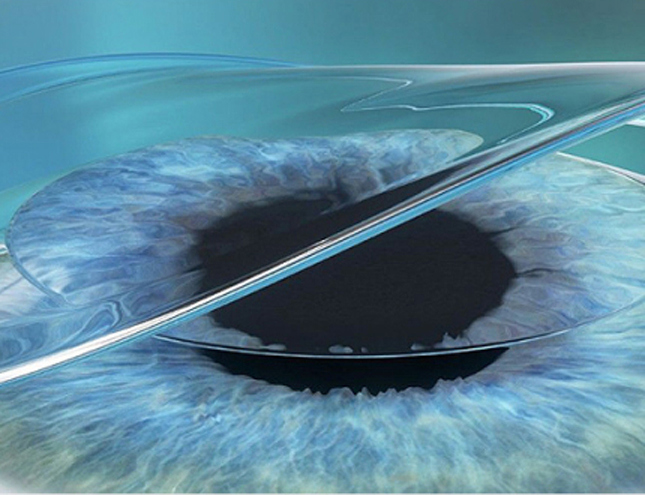
Flap Lift Enhancement: If the original corneal flap is intact and healthy, we can gently lift it and perform additional laser correction underneath.
Surface Re-Treatment (PRK or Trans-PRK): If the flap cannot be safely lifted—often the case in older surgeries—we perform a surface laser treatment directly on the cornea.
The actual laser time is typically under a minute per eye. Most patients experience minimal discomfort, mild dryness for a few days, and return to normal vision within a week.
At Jryn Eye Clinic, Dr. Han Sang Yeop personally plans every enhancement using wavefront-guided mapping to ensure optical precision tailored to each patient’s unique corneal profile.
What Many Patients Don’t Realize About Enhancements

What surprises most people is that LASIK enhancement isn’t about “fixing” something—it’s about refining it.
Your eyes, like the rest of your body, continue to evolve. Just as your skin changes or your posture shifts with age, your eyes also adapt over time. An enhancement simply keeps your vision aligned with those changes.
Another overlooked point: sometimes what feels like a need for enhancement is actually unrelated to LASIK itself. Factors like poor tear quality, excessive screen time, or new-onset presbyopia can blur vision.
That’s why at Jryn Eye Clinic, we always start by asking, “Why has your vision changed?” before deciding “How should we fix it?”
Safety and Results: The Busan Perspective
Busan has become one of Korea’s major hubs for advanced vision correction, attracting patients from across the country and even from overseas. Clinics here are equipped with cutting-edge laser systems and imaging technologies—but experience and precision still matter most.
At Jryn Eye Clinic, our LASIK enhancement success rates are extremely high, with the majority of patients regaining 20/20 vision or better. More importantly, complications are exceedingly rare thanks to thorough screening and conservative surgical judgment.
We don’t recommend enhancements unless they’re necessary and safe. Some patients, upon evaluation, discover that they’re better served with non-surgical solutions like prescription glasses for specific tasks, or lifestyle-based adjustments to manage eye fatigue.
When LASIK Enhancement Isn’t the Right Choice
Enhancement is a powerful tool—but it’s not always the best solution.
If the cornea is too thin, irregular, or has signs of ectasia (progressive thinning), performing additional LASIK could increase risk. Similarly, if vision changes are primarily due to presbyopia, further corneal reshaping may not help.
In such cases, Jryn Eye Clinic explores alternative vision correction options, such as:
EVO ICL (Implantable Collamer Lens): Ideal for thin corneas or regression after LASIK.
Presbyopia-Correcting Procedures: Such as blended vision LASIK, multifocal intraocular lenses, or refractive lens exchange.
Dry Eye and Tear Film Therapies: Including IPL treatment, punctal plugs, or regenerative tear solutions.
These approaches can sometimes deliver clearer, more stable vision than additional corneal laser correction.
The Jryn Eye Clinic Philosophy: Precision, Patience, and Personalization
Every LASIK enhancement we perform at Jryn Eye Clinic is built on three principles: precision, patience, and personalization.
Precision: We use top-tier diagnostic imaging to map each eye down to micron-level accuracy before making any correction.
Patience: We never rush to enhance; we wait until vision stabilizes, tear health is optimized, and the cornea is ready.
Personalization: Every treatment is planned individually—no “standard recipe.” Your corneal thickness, visual habits, and long-term goals all matter.
Dr. Han Sang Yeop’s two decades of surgical experience guide each decision. For him and our team, enhancement is not a mechanical act—it’s a relationship with the patient’s vision journey.
Conclusion: Seeing Clearly, Again
The truth is, even the most advanced LASIK cannot freeze time. Eyes, like all parts of the body, continue to change with age, lifestyle, and biology. A LASIK enhancement is simply a continuation of your commitment to clear, comfortable vision.
If your eyesight has started to blur years after LASIK, it doesn’t mean something is wrong. It means it’s time to check in—with a clinic that understands how to balance safety, precision, and personal care.
At Jryn Eye Clinic in Busanjin-gu, Busan, we believe lasting vision care doesn’t end after surgery—it evolves with you. Whether through enhancement, dry eye treatment, or advanced presbyopia management, we’ll help you see the world with the same clarity and confidence you felt the first day your glasses came off.
Ready for a Personalized 1:1 Eye Consultation?
Schedule your comprehensive 3D eye examination with Chief Director Dr. Sang-Youp Han and our ophthalmology team on the 14th floor of JRYN Medical Center in Seomyeon, Busan.