Jryn Eye Clinic Busan (Seomyeon) · SMILE LASIK · EVO+ Visian ICL · Cataract & Retina Center · Tel: +82-51-710-1004
en-US

1:1 Consultation
CLINICAL ARTICLE & GUIDE
What to Expect During SMILE Eye Surgery in Busan
Discover what to expect during SMILE eye surgery in Busan. Learn about the process, recovery, and benefits to prepare for your vision transformation.
Introduction
For many people in Busan, vision correction is more than a cosmetic choice—it’s a way to reclaim daily life. Whether you’re a student poring over textbooks late into the night, an office worker staring at screens for hours, or someone who loves hiking up Hwangnyeongsan to watch the city lights, clear vision makes every experience richer.
But glasses fog up in the winter. Contact lenses can dry your eyes, especially in Korea’s windy springs or heated winters. And constantly reaching for eye drops or adjusting your lenses can be tiring. That’s why more patients are turning to SMILE (Small Incision Lenticule Extraction) surgery—a precise, minimally invasive alternative to traditional LASIK.
At Jryn Eye Clinic, we’ve seen firsthand how this advanced laser procedure transforms not just vision, but confidence and comfort. Yet for many people, the idea of eye surgery is nerve-wracking. The best way to feel at ease is to know exactly what will happen—step by step. This guide will walk you through what SMILE is, why it’s so popular in Busan, and what your surgery day will really be like.
Why SMILE Is Different—And Why Busan Patients Prefer It
If you’ve been researching vision correction in Busan, you’ve probably seen SMILE mentioned alongside LASIK and LASEK. On paper, all three can give you clear vision—but the way they get there is very different. SMILE (Small Incision Lenticule Extraction) represents a new chapter in refractive surgery: one that focuses on precision with minimal disruption to the eye’s natural structure.
Here’s how it works in simple terms: instead of creating a large corneal flap like LASIK, SMILE uses a femtosecond laser to carve out a tiny, lens-shaped disc of tissue (a lenticule) inside the cornea. This lenticule is removed through a micro-incision just 2–4 mm wide. By reshaping the cornea internally, the eye’s focusing power is corrected—without the need for stitches or a healing flap.
For Busan patients, the benefits are more than just medical theory:
Lower risk of dry eye symptoms
Because SMILE leaves more of the corneal nerves intact, it greatly reduces the chance of long-term dryness—a big plus in Korea’s dry, heated winters or during long hours at a computer.No flap complications
Outdoor lovers in Busan—whether hiking Geumjeongsan, cycling along the Nakdong River, or enjoying a breezy day at Gwangalli—don’t have to worry about the rare but real risk of a LASIK flap shifting after trauma. SMILE simply doesn’t involve a flap.Quick visual recovery
Most patients can resume normal activities within a day or two, and because the incision is so small, discomfort is usually minimal.
At Jryn Eye Clinic, we’ve found SMILE to be particularly suited to Busan’s active, coastal lifestyle. Our patients appreciate the blend of high-tech precision and gentle healing—making it not just a medical choice, but a lifestyle fit.
What to Expect Before Surgery Day
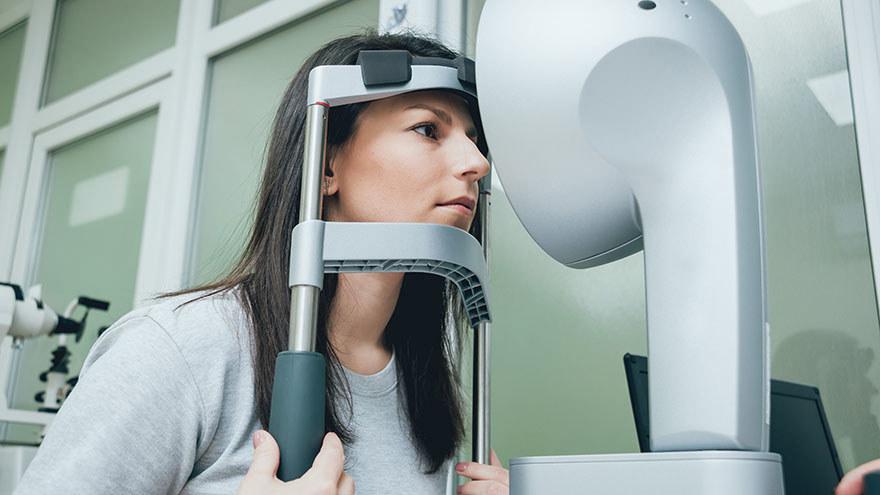
Before you can have SMILE surgery, a thorough preoperative examination is essential. At Jryn Eye Clinic, this isn’t just a quick glance at your prescription—we perform:
Corneal topography to map the exact shape and thickness of your cornea.
Tear film analysis to assess dryness risk.
Retinal scans to ensure there are no underlying issues.
Wavefront analysis to detect subtle optical imperfections.
If you’re a candidate for SMILE, we’ll schedule your surgery date and provide clear instructions. You may need to stop wearing contact lenses for several days before your surgery so your cornea returns to its natural shape.
Surgery Day: A Step-by-Step Walkthrough
Walking into surgery day, most patients tell us they feel two things at once—excitement about life without glasses, and nervousness about the idea of a laser near their eyes. The truth? The SMILE procedure is far gentler than most people expect. At Jryn Eye Clinic, we’ve designed the entire experience to be calm, efficient, and deeply reassuring from the moment you arrive.
1. Arriving at the Clinic
We recommend patients arrive about 30 minutes before their scheduled surgery time. This gives you space to breathe, settle your nerves, and complete a quick re-check of your vision and corneal measurements. Even though we’ve already performed your comprehensive eye exam during consultation, this double-check ensures the laser settings are exactly matched to your eyes that day.
You’ll meet our surgical coordinator, who will review your procedure and answer any last-minute questions. We want you to walk into the operating room feeling fully informed, not just prepared.
2. Prepping for the Procedure
You’ll change into a clean surgical gown and wear a disposable cap to keep the surgical area sterile. Before you enter the procedure room, we’ll apply numbing eye drops. These work quickly and mean you’ll feel no pain—just mild pressure at certain moments.
If you’re feeling tense, our staff may offer a mild oral sedative to help you relax. Many patients are surprised at how quiet and comfortable the surgical suite feels; the atmosphere is more like a high-tech spa than a hospital ward.
3. Inside the Operating Room
Once you’re lying comfortably on the surgical bed, a small device will gently hold your eyelids open. This may sound intimidating, but it’s not painful—you won’t even feel the urge to blink thanks to the numbing drops.
The Carl Zeiss VisuMax femtosecond laser will be positioned above your eye. You’ll be asked to look at a small guiding light. The laser then creates the lenticule inside your cornea and makes a micro-incision on its surface. This step is over in less than 30 seconds per eye.
Through the micro-incision, Dr. Han will carefully remove the lenticule. This instantly reshapes your cornea, correcting the way light focuses on your retina. The entire process for both eyes usually takes under 10 minutes.
4. What You’ll See and Feel
You will not see the laser or instruments coming toward you—only a soft light above. Your vision may go slightly dim or blurry during the laser step; this is normal and lasts only seconds. Some patients describe feeling a gentle pressure, but no sharp sensations.
5. Immediately After the Procedure
Once the surgery is complete, you’ll sit up slowly and notice your vision is hazy, as though looking through frosted glass. This is temporary and will begin to clear over the next few hours.
We’ll guide you to a quiet recovery area where you can rest for 15–30 minutes. You’ll receive protective eye shields to wear while sleeping for the next few nights, along with your post-operative eye drops—usually a combination of antibiotics, anti-inflammatories, and lubricants.
You can go home the same day, and we’ll see you again the next morning for your first follow-up check.
The First Week After SMILE Surgery

Day 1–2:
Most patients notice clear improvement within 24 hours. Some describe it as “already better than my glasses.” Mild scratchiness, tearing, or light sensitivity is normal during the first day.
Day 3–7:
Your vision may fluctuate—sharp at times, slightly blurry at others. This is part of the healing process. You can usually return to most daily activities, but we recommend avoiding eye rubbing, swimming, or dusty environments.
After 1 Week:
By this point, most patients are back to full normal activity, including sports and makeup use. Vision continues to stabilize over the next few weeks.
Why Your Choice of Clinic Matters
The SMILE procedure is highly dependent on precision—not just from the laser, but from the surgeon’s skill and the quality of preoperative assessment. At Jryn Eye Clinic:
Dr. Han Sang Yeop has over 20 years of surgical experience, including complex corneal and cataract surgeries.
We use the Carl Zeiss VisuMax system, known for its unmatched accuracy and safety profile.
Our follow-up care is structured to catch even the smallest issues early, ensuring optimal healing.
For patients traveling from outside Busan or even overseas, we arrange follow-ups in a way that minimizes disruption to your schedule without compromising safety.
Common Concerns—Answered by Our Team
“Will it hurt?”
No—numbing drops make the surgery painless. You may feel slight pressure during the laser step.“Can I go blind?”
SMILE is one of the safest elective surgeries when performed by an experienced surgeon. Severe complications are extremely rare.“When can I work again?”
Many people return to desk work within 1–2 days, though your vision may still be adjusting during the first week.
Conclusion: Seeing the Future Clearly
SMILE eye surgery isn’t just about sharper vision—it’s about living without the daily interruptions of glasses or contacts. For our patients, it often means more freedom, more comfort, and more confidence in every moment.
In Busan, where active lifestyles and changing seasons can make glasses and contacts inconvenient, SMILE offers a long-term, low-maintenance solution. But as with any surgery, success depends on the skill of your surgeon, the thoroughness of your pre-op assessment, and the quality of your post-op care.
At Jryn Eye Clinic, we see every SMILE patient not as a case number, but as a neighbor, a friend, and someone trusting us with one of their most precious senses. From your first consultation to your final follow-up, we aim to make the process smooth, safe, and deeply reassuring.
Ready for a Personalized 1:1 Eye Consultation?
Schedule your comprehensive 3D eye examination with Chief Director Dr. Sang-Youp Han and our ophthalmology team on the 14th floor of JRYN Medical Center in Seomyeon, Busan.