Jryn Eye Clinic Busan (Seomyeon) · SMILE LASIK · EVO+ Visian ICL · Cataract & Retina Center · Tel: +82-51-710-1004
en-US

1:1 Consultation
CLINICAL ARTICLE & GUIDE
Top 5 Questions to Ask at a Busan LASIK Clinic
Discover the top 5 questions to ask at a Busan LASIK clinic to ensure safe, effective eye surgery. Get expert insights before your procedure—read now!

Introduction

In recent years, LASIK has become a popular vision correction option for people across South Korea—and Busan is no exception. Whether you're a young professional staring at screens all day, a student preparing for civil service exams, or someone looking to simplify life after years of glasses and contacts, LASIK can be life-changing. But not all LASIK experiences are the same. Just as every pair of eyes is different, so too are the skills of surgeons, the quality of technology, and the thoroughness of aftercare.
At Jryn Eye Clinic in Busanjin-gu, we often meet patients who come in with one question: “How much does LASIK cost?” While price is important, there are far more valuable questions that shape your experience and outcome. This guide explores the five most important things you should ask during your LASIK consultation—whether you visit our clinic or another in Busan. If you want clear vision and lasting comfort, these questions will help you make a confident, informed decision.
“Am I a Good Candidate for LASIK?”
This sounds simple, but it’s the most important question you’ll ever ask.
Every eye is unique. At Jryn Eye Clinic and other reputable centers in Busan, LASIK eligibility isn’t decided by your glasses prescription alone. A thorough assessment includes:
Corneal thickness and curvature
Tear film quality (dry eye evaluation)
Pupil size
Retinal health
Overall ocular anatomy
Sometimes good candidates aren’t obvious at first glance. For example, someone with mild myopia but very thin corneas might be better suited for SMILE or EVO ICL, even though their prescription looks easy. Conversely, someone with borderline astigmatism could still achieve excellent results with the right technology.
What to listen for in the answer: A responsible surgeon will explain why you are—or aren’t—a good candidate, not just give you a yes or no.
"What Technology and Technique Will You Use—And Why?"
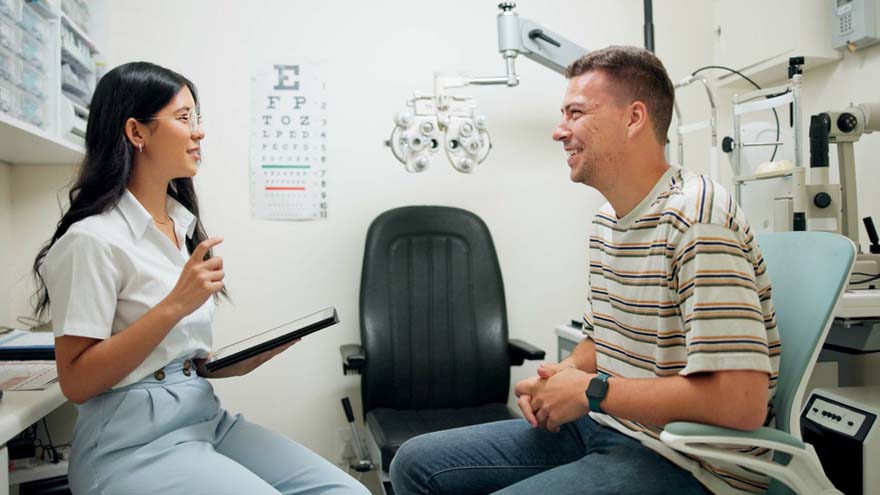
Not all LASIK is the same—and neither are the tools or techniques behind it. This might be the most overlooked topic among first-time LASIK patients, yet it plays a central role in the comfort, accuracy, and long-term success of your vision correction.
In Busan, you’ll find clinics offering a variety of options: from traditional LASIK using older blade-based microkeratomes, to the latest bladeless femtosecond lasers, to SMILE LASIK and implantable collamer lenses (EVO ICL). Each of these methods has unique strengths, limitations, and indications.
The Technology Spectrum
At a glance, LASIK can seem like a straightforward laser surgery. In reality, your outcome is shaped by dozens of subtle variables—most of which depend on the quality and precision of the machines used. Here are a few examples:
Bladeless Femtosecond LASIK (All-Laser LASIK): Uses two lasers—one to create the corneal flap, and another to reshape the cornea. This method offers higher accuracy, reduced risk of flap complications, and quicker healing.
Topography-Guided LASIK: Maps the corneal surface with thousands of data points, then customizes the laser treatment to minimize imperfections. Especially helpful for patients with astigmatism, night vision issues, or corneal irregularities.
Wavefront-Optimized LASIK: Focuses on preserving the natural curvature of the cornea, aiming to reduce glare and halos at night.
SMILE (Small Incision Lenticule Extraction): A minimally invasive procedure performed through a small incision, ideal for patients with dry eye tendencies or those with physically active lifestyles.
EVO ICL (Implantable Collamer Lens): Often used for patients with very high prescriptions or thin corneas. Unlike LASIK, this does not remove corneal tissue but places a corrective lens inside the eye.
Why This Matters to You
It’s not just about having “the latest” machine—it’s about whether the clinic is using the right tool for your specific anatomy and visual goals. A responsible surgeon should assess your corneal thickness, pupil size, tear film quality, and lifestyle before recommending any particular approach.
Let’s say you’re a night driver or someone who frequently works under low light. In that case, topography-guided LASIK or wavefront-optimized techniques may help reduce the likelihood of experiencing glare and halos after surgery. Or perhaps you’re prone to dry eye—a common issue in South Korea, especially among contact lens users and screen-heavy professions. In that case, SMILE may be better suited to preserve the integrity of your corneal nerves and reduce dry eye symptoms post-surgery.
What to Ask During Your Consultation
Don’t hesitate to ask your doctor:
Which specific laser models are used in this clinic?
Why are they recommending this particular technique for your case?
What other options did they consider for your eyes?
How often do they perform this specific procedure—and on what types of patients?
Pay attention to whether the answer is tailored to your unique eye structure or sounds like a generic pitch. If the surgeon explains the pros and cons in plain language, shares real patient examples, and considers your lifestyle, that’s a good sign you’re in expert hands.
“What Are the Realistic Outcomes and Risks for Someone Like Me?”
Every surgeon should be transparent about both good and less ideal outcomes.
Most people walk into a LASIK consult expecting “20/20 or better.” But there’s a spectrum of realistic results depending on:
Your prescription level
Corneal shape
Dry eye status
Healing response
Occupation and visual demands
Your doctor should discuss:
Likelihood of achieving 20/20, 20/15, or similar outcomes
Expected visual stability timeline (weeks to months)
Possible side effects such as dry eye, glare, halos
How often enhancements (touch-ups) are needed
And—just as importantly—how your daily life may influence your outcome. For example:
Someone who reads for hours, works on visually demanding tasks, or wears contact lenses daily typically requires a nuanced dry-eye evaluation prior to LASIK. Long-term comfort is just as important as sharpness.
Important phrase to hear: “We’ll tailor expectations based on your eyes, not averages.”
“Can You Show Me Before/After Cases Like Mine?”
This is one of the most practical questions—yet many patients forget it.
A good surgeon should be able to show you examples of treated eyes that are:
Similar to your prescription
Similar in corneal shape or age
Similar in lifestyle demands (e.g., night driving, reading)
Video simulations, topography maps, and patient testimonials help you see patterns—not just perfect results. If a surgeon has only ever shown their best cases, that’s not the full story.
What to notice in real case reviews:
Was the initial condition similar to yours?
Did outcomes include both visual acuity and comfort?
Are there cases showing less ideal results and how they were managed?
This gives you perspective, not just promises.
“What Does Post-Op Care Look Like, and What If I Need Follow-Up?”
Your care doesn’t end when you leave the operating room.
Great clinics—and especially those with an experienced surgeon like Dr. Han Sang Yeop at Jryn Eye Clinic—have structured, proactive follow-up plans. Ask specifically:
How many post-op visits are included?
What’s the timeline for follow-up exams?
Who do I contact if I have discomfort or vision changes after hours?
Are enhancements included if needed?
What kind of dry-eye support is provided?
A surprising number of complications or dissatisfaction stem from inadequate post-op care, not the surgery itself. Healing is a process—not a moment.
Warning sign: A clinic that treats follow-ups as optional rather than integral.
Beyond the Top 5: Questions That Reveal Depth

Here are a few additional questions that separate experienced providers from sales-driven ones:
Who will actually perform my surgery?
Will it be the doctor you meet, or will an assistant handle key steps?What is your enhancement policy?
Some clinics charge extra; others include touch-ups within a certain range.How do you manage dry eye before and after surgery?
Dry eye is one of the biggest reasons for post-LASIK dissatisfaction—and it’s largely preventable.What training and complication-management experience do you have?
Fine print matters when you’re trusting someone with your vision.
How to Prepare Before Your LASIK Consultation
To get the most out of your appointment:
Bring your current glasses/contact prescription.
This gives an objective baseline.Know your visual goals.
Do you want freedom from glasses for daily life? Sports? Night driving? Near tasks?List your symptoms.
Dryness, glare at night, fluctuating vision—tell the doctor.Be honest about your contact lens wear.
Contacts can change corneal shape, affecting measurements. You may need to stop wearing them days before testing.
Conclusion: See Clearly—And Choose Carefully
Vision correction is not just a cosmetic decision. It’s a medical one with lifelong implications for how you see, work, and live. The best LASIK results come not only from advanced lasers or low prices, but from a thoughtful, personalized process. When you ask these five key questions—and listen closely to the answers—you give yourself the best chance at safe, lasting vision correction.
At Jryn Eye Clinic, we believe that informed patients make better choices. That’s why we take the time to answer these questions thoroughly during every consultation. Our goal isn’t just sharp vision—it’s lasting visual wellness.
If you’re exploring LASIK in Busan and want a clinic that takes your vision seriously, we invite you to schedule a full diagnostic consultation at Jryn Eye Clinic. Whether you’re a great candidate or need a different approach, we’ll help you make a decision that protects your eyes for years to come.
Ready for a Personalized 1:1 Eye Consultation?
Schedule your comprehensive 3D eye examination with Chief Director Dr. Sang-Youp Han and our ophthalmology team on the 14th floor of JRYN Medical Center in Seomyeon, Busan.