Jryn Eye Clinic Busan (Seomyeon) · SMILE LASIK · EVO+ Visian ICL · Cataract & Retina Center · Tel: +82-51-710-1004
en-US

1:1 Consultation
CLINICAL ARTICLE & GUIDE
SMILE vs. EVO ICL: Which Works for High Astigmatism?
SMILE vs. EVO ICL for high astigmatism—compare benefits, risks, and results to choose the best vision correction. Learn more to find your perfect fit.
Introduction: Seeing Beyond the Numbers
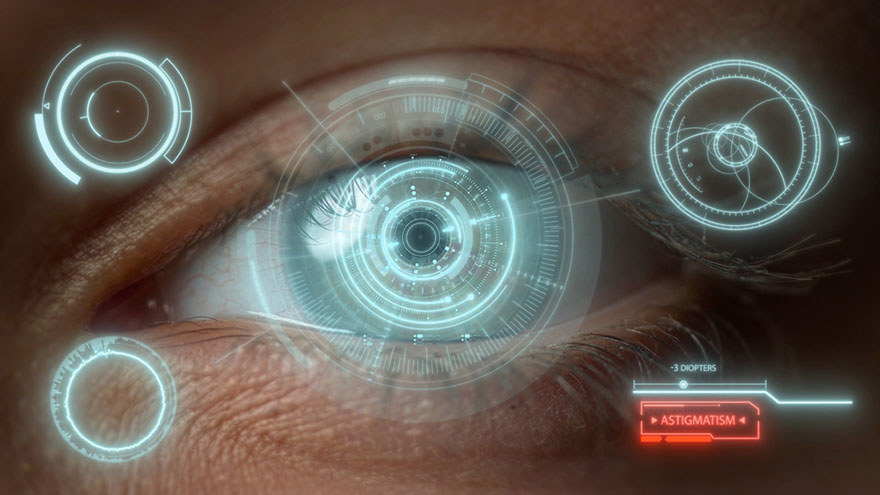
For many people in Busan living with high astigmatism, the world has always looked just a little… bent. Lines aren’t crisp, letters have shadows, and at night, headlights stretch into streaks that make driving stressful. Glasses help, but they can feel heavy, slip during humid summer walks along Haeundae Beach, and fog instantly when you step into a café in winter. Contact lenses can sharpen things—until they dry out or irritate your eyes after a long day.
And then, somewhere along the way, you hear about vision correction surgery. You start imagining life without lenses. But almost as quickly, a doctor or online search delivers the blow:
“Your astigmatism is too high for LASIK.”
Years ago, that might have ended the conversation. But today, ophthalmology offers more than one way forward. At Jryn Eye Clinic, we help patients navigate two of the most advanced solutions for high astigmatism—SMILE and EVO ICL—and choose the one that will not only correct their prescription but fit their eyes, lifestyle, and long-term vision health.
Understanding High Astigmatism: Why It’s Different
Astigmatism occurs when your cornea (the clear front surface of the eye) or internal lens isn’t perfectly spherical. Instead of being shaped like a basketball, it’s shaped more like a rugby ball—curved more in one direction than the other.
This uneven curvature means light focuses in multiple points, not one, leading to blurry or distorted vision. You may notice:
Words on a page look slightly stretched.
Streetlights have “tails” or streaks at night.
You squint or tilt your head to see more clearly.
In high astigmatism (often defined as over 3 diopters), the distortion is strong enough that ordinary laser procedures must remove more corneal tissue than is safe—or can’t correct the prescription fully.
In Korea, high astigmatism is often picked up early during:
School vision checks – A surprising number of teenagers here wear high-prescription glasses.
Workplace health exams – Common in companies with annual medical screenings.
Military or driver’s license evaluations – Where vision standards are strict.
The real challenge isn’t just the number—it’s ensuring your cornea remains biomechanically stable and your vision is sharp in all lighting conditions after surgery.
SMILE Surgery: Reshaping with Precision
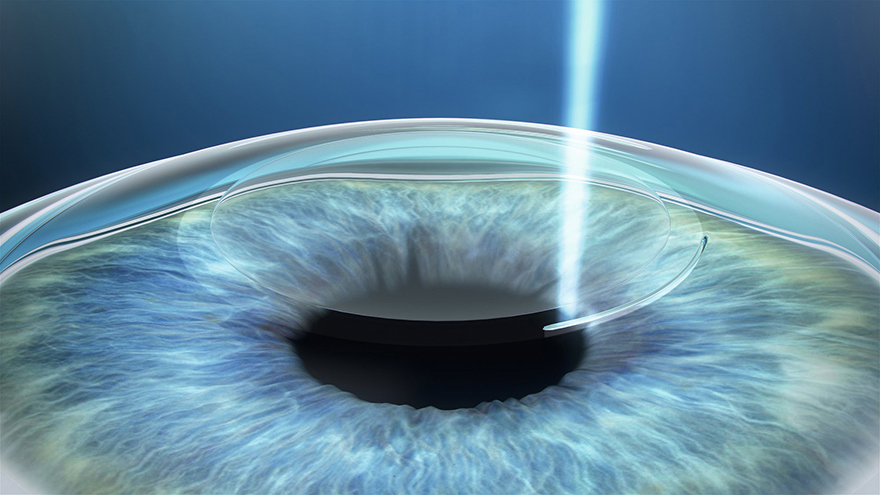
SMILE is one of the most advanced laser eye surgeries today. Unlike LASIK, it doesn’t require creating a large corneal flap. Instead, a femtosecond laser makes a tiny 2–4 mm incision, from which a small disc of tissue (called a lenticule) is removed to change the cornea’s shape.
Why many Busan patients love SMILE
Less invasive – No large flap, preserving more corneal strength and reducing dry eye risk.
Quick recovery – Most return to daily life in 2–3 days.
Comfortable procedure – No burning smell or loud cutting sounds.
Limits for astigmatism
Modern SMILE can treat up to 5 diopters of astigmatism with the latest platforms.
Works best for regular astigmatism (symmetrical curvature).
Requires enough corneal thickness to safely reshape.
Best suited for
Patients with moderate-to-high astigmatism within treatable limits.
Those who want a minimally invasive approach and have healthy corneas.
EVO ICL: Implanting a Perfect Lens
EVO ICL takes a totally different route. Instead of reshaping the cornea, we insert a custom-made lens inside the eye, between the iris and your natural lens. This “Toric” version of the ICL corrects astigmatism while also addressing myopia (nearsightedness).
Why patients choose EVO ICL
Treats higher levels of astigmatism – Up to 6 diopters, sometimes more in custom cases.
Preserves your natural cornea – Ideal for thin or irregular corneas.
Excellent optical clarity – Many report sharper night vision than with laser procedures.
Reversible – Lens can be removed or replaced if needed.
Things to consider
It’s an intraocular surgery, so risks like infection, increased eye pressure, or cataracts exist—but remain rare in skilled hands.
Requires precise preoperative measurements for sizing.
Best suited for
Very high astigmatism or combined high myopia.
Thin or irregular corneas.
Patients who want reversible correction.
What Patients Often Overlook

Many people assume high astigmatism means one solution is “best” for everyone. In reality:
Corneal shape matters – Even with the same prescription, a thin or irregular cornea may point us toward EVO ICL.
Tear film quality affects accuracy – Dry eye can make surgical measurements less precise, leading to undercorrection.
Lifestyle matters – Athletes or military recruits may prefer SMILE’s flapless stability; others may value EVO ICL’s reversibility.
Patient Story 1: SMILE for a Designer in Seomyeon
Ms. Park, a 29-year-old graphic designer, had 4.2 diopters of astigmatism in both eyes. Her corneal thickness was well above average, and she had no signs of dry eye. She wanted fast recovery and was nervous about the idea of an implant.
We performed SMILE, and within 48 hours she was back at her studio, amazed at the clarity of fine text and color gradients. Her nighttime halos were minimal and resolved within two weeks.
Patient Story 2: EVO ICL for a Teacher with Very High Astigmatism
Mr. Kim, a 41-year-old middle school teacher, had 5.8 diopters of astigmatism and high myopia. His corneas were too thin for SMILE or LASIK. He also needed excellent night vision for evening classes.
We recommended Toric EVO ICL. His surgery was done on a Friday, and by Monday he was reading his students’ handwriting from the back of the classroom—without glasses for the first time in 25 years.
The Korean Context: Why This Choice Matters
In Korea, vision correction isn’t just a medical decision—it often has career and lifestyle implications.
Occupational requirements – Pilots, police officers, and military personnel often need uncorrected vision that meets strict standards.
Aging concerns – Many patients in their 30s or 40s also think ahead about presbyopia (age-related reading difficulty). Some surgical choices can preserve more future options.
Social convenience – From mountain hiking to jjimjilbang visits, living without glasses or contacts simply fits the Korean lifestyle better.
How Jryn Eye Clinic Decides
At Jryn Eye Clinic, Dr. Han Sang Yeop’s philosophy is simple: Do the right surgery for the right eyes.
We don’t make the decision based on prescription numbers alone. Instead, we:
Map your cornea in detail using 3D tomography.
Measure your eye’s exact dimensions for lens sizing (if considering EVO ICL).
Assess tear film health to predict healing quality.
Simulate outcomes with both methods when possible.
Only after this full assessment do we recommend SMILE, EVO ICL, or—sometimes—holding off until certain eye health issues are addressed first.
Conclusion: Precision Over Popularity
High astigmatism used to be a barrier to surgical vision correction, but modern technology has rewritten the rules. SMILE offers a gentle, flapless reshaping of the cornea for eligible eyes, while EVO ICL delivers powerful correction without touching the corneal structure—often ideal for very high or complex prescriptions.
The key is understanding that there is no one-size-fits-all answer. The “best” procedure is the one that matches your eye’s unique anatomy, your prescription, and your long-term vision goals. That’s why at Jryn Eye Clinic, every recommendation comes only after thorough diagnostics, precise measurements, and an honest conversation about what will give you your clearest, most comfortable vision—today and years from now.
If you’ve been told your astigmatism is “too high” for surgery, don’t stop searching. The perfect solution may already exist—and with the right guidance, you might soon see Busan’s skyline in crystal clarity for the first time in years.
Ready for a Personalized 1:1 Eye Consultation?
Schedule your comprehensive 3D eye examination with Chief Director Dr. Sang-Youp Han and our ophthalmology team on the 14th floor of JRYN Medical Center in Seomyeon, Busan.