Jryn Eye Clinic Busan (Seomyeon) · SMILE LASIK · EVO+ Visian ICL · Cataract & Retina Center · Tel: +82-51-710-1004
en-US

1:1 Consultation
CLINICAL ARTICLE & GUIDE
Signs You Might Need a LASIK Enhancement
Discover the top signs you may need a LASIK enhancement. Learn when to act for clearer vision and lasting results. Book your eye evaluation today!
Introduction
When LASIK first arrived in Korea, it was almost like science fiction. Imagine—20 minutes in a surgery chair, and you walk out seeing clearly without glasses or contact lenses. For many of our patients at Jryn Eye Clinic, it still feels like a miracle, even decades later.
But here’s the part that’s rarely discussed outside the doctor’s office: even the best LASIK result isn’t “forever” in the same way a building or a sculpture is. Your eyes are living tissue. They adapt, heal, and—yes—change with time. For some people, that means a gradual shift in their vision years after surgery.
This is where LASIK enhancement comes in. It’s not about “redoing” the surgery. It’s about fine-tuning, like adjusting the strings on a well-loved instrument so the music is perfect again.
What Exactly Is a LASIK Enhancement?
Think of your original LASIK as painting a beautiful, crisp landscape on a windowpane. Over the years, a thin film of dust might settle—hardly noticeable at first, but enough to make you squint. A LASIK enhancement is like a delicate cleaning of that pane, bringing the view back into perfect focus.
Medically, a LASIK enhancement is a smaller, more targeted laser procedure to correct minor refractive errors that have developed since the first surgery. The goal isn’t to rebuild your cornea from scratch, but to adjust its curvature just enough to restore sharp vision.
At Jryn Eye Clinic, our approach to enhancements is conservative—we only recommend it if the benefits clearly outweigh the risks. For some patients, glasses or contact lenses might still be the better solution, especially if the underlying cause isn’t the cornea.
Why Vision Might Change After LASIK
You might be wondering—if LASIK reshapes the cornea permanently, how can vision “wear off”? The truth is, LASIK works beautifully on the cornea, but it can’t control changes in the lens, retina, or the overall health of your eyes.
Here are the main reasons your vision might shift after LASIK:
1. Natural Aging of the Eye
Even after the cornea is corrected, the lens inside your eye ages—becoming stiffer (presbyopia) or slightly cloudier (early cataracts). These changes have nothing to do with the LASIK itself.
2. Regression
In a small percentage of patients, the cornea gradually moves slightly back toward its original shape. This can happen months or years after surgery, especially in higher prescriptions.
3. Hormonal or Systemic Changes
Pregnancy, thyroid disorders, or poorly controlled diabetes can cause fluctuations in vision.
4. Undetected or Developing Eye Conditions
Sometimes, new conditions like dry eye, keratoconus, or early retinal changes can mimic post-LASIK regression. That’s why enhancements should never be done without a full exam.
The Subtle Signs You Might Need a LASIK Enhancement

These signs aren’t about sudden blindness or dramatic loss of vision—they’re about small, creeping changes you might dismiss at first. The sooner you notice them, the better your outcome if an enhancement is needed.
1. You Can See Clearly—But Only Briefly
At the start of the day or after putting down your phone, your vision feels crisp. But after reading or working at a computer for an hour, it gets slightly blurry.
This can be due to mild regression or astigmatism, or sometimes related to tear film instability.
2. Night Driving Feels Different
Halos, glare, or starbursts around headlights are common for a few weeks after original LASIK, but if they return years later, they can signal small irregularities in the corneal surface.
3. Your “Backup Glasses” Are Back in Use
Maybe you kept an old pair of glasses for emergencies and suddenly find yourself wearing them to drive, especially at night. That’s a red flag for a prescription change.
4. Headaches From Eye Strain
If your eyes are working harder to focus, your brain will let you know—often with a dull headache in the temples or brow area after prolonged concentration.
5\. You’re Squinting Without Realizing It
Squinting can sharpen images temporarily by changing the shape of your eyelids, but if you’re doing it often, it’s usually a sign you’re compensating for reduced visual clarity.
The Psychological Side of Post-LASIK Changes
For some patients, realizing that vision isn’t “permanently perfect” can feel disappointing or even frustrating. At Jryn Eye Clinic, we always remind patients:
LASIK enhancement isn’t a failure—it’s maintenance.
It’s like servicing a luxury car. The car is still excellent, but regular fine-tuning keeps it performing at its best for years to come.
When a LASIK Enhancement Is Not the Right Solution
One of the most important parts of our job is knowing when not to operate.
Common scenarios where enhancement isn’t appropriate:
Presbyopia: Around age 40, the lens naturally loses flexibility, making near vision more difficult. Enhancing the cornea won’t reverse this; other solutions like multifocal lenses may help.
Cataracts: If the lens is already starting to cloud, cataract surgery—not LASIK—is the better long-term option.
Insufficient Corneal Thickness: If too much corneal tissue was removed in the first surgery, another LASIK could compromise eye safety.
Active Eye Disease: Inflammation, infection, or unstable conditions like keratoconus rule out enhancement until they’re addressed.
How We Evaluate Candidates for LASIK Enhancement at Jryn Eye Clinic
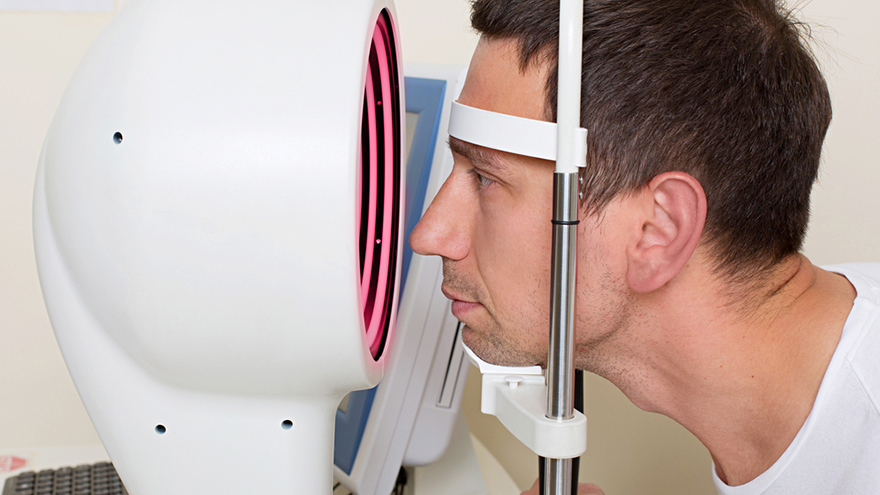
When a patient comes in saying, “Doctor, my LASIK isn’t as sharp as it used to be,” our process is thorough. We never rush to the laser.
Step 1: Comprehensive Diagnostics
Corneal Topography – Maps the cornea’s shape to detect irregularities.
Wavefront Analysis – Identifies higher-order aberrations affecting quality of vision.
Pachymetry – Measures corneal thickness to ensure safety.
Tear Film Assessment – Because dry eye can mimic regression.
Retinal Imaging – Rules out back-of-the-eye causes for vision changes.
Step 2: Root Cause Identification
Is it truly regression, or is it early lens change? Could dry eye be the main culprit? We believe that diagnosing why vision changed is more important than deciding how to fix it.
Step 3: Customized Treatment Plan
Not all enhancements are LASIK. In some cases, PRK (surface laser) or SMILE may be better for corneal safety. Our clinic’s access to multiple laser platforms gives us flexibility.
Step 4: Patient-Centered Decision
We weigh the benefits and risks together with the patient. If glasses or contacts will serve you just as well without risk, we’ll recommend them. Surgery is never the default.
Step 5: Post-Procedure Care
Enhancement patients are often more prone to temporary dry eye. Our clinic uses advanced tear film therapies and anti-inflammatory care to protect long-term results.
How Long After LASIK Can You Get an Enhancement?
In theory, enhancements can be done months or decades later—but the timing matters.
We recommend waiting at least 6–12 months after your original LASIK before considering a touch-up, to allow your eyes to fully stabilize.
If it’s been over 10 years, enhancements are still possible, but we check very carefully for lens-related vision changes first.
The Recovery Experience After LASIK Enhancement
Most patients are surprised at how easy recovery is the second time around:
Less discomfort compared to the first LASIK
Faster vision stabilization (often within days)
Shorter downtime—most people return to work in 1–2 days
At Jryn Eye Clinic, we also provide same-day checkups and personalized home care kits so recovery feels smooth and stress-free.
The Risks—And How We Minimize Them
Every surgery carries some risk. For LASIK enhancements, the main concerns are:
Dry Eye: More common in enhancements, but manageable with proper care.
Flap Complications: Rare, but possible if lifting the original LASIK flap.
Overcorrection or Undercorrection: Our advanced diagnostics help reduce this risk.
Corneal Weakness: Why we always measure thickness before operating.
Our philosophy is simple: if there’s any doubt about safety, we do not proceed.
Final Thoughts
Clear vision is one of life’s quiet joys—you only notice how much it matters when it begins to slip away. If you’ve had LASIK in the past, small vision changes over the years are not unusual, and they don’t mean your first surgery “failed.” Eyes age, lifestyles change, and sometimes a little fine-tuning can bring everything back into focus.
At Jryn Eye Clinic, we see LASIK enhancement not as a second surgery, but as part of your long-term vision journey. By combining precise diagnostics with Dr. Han Sang Yeop’s decades of surgical experience, we make sure that any decision to enhance is the right one for your eyes, not just the easy one.
If you’re noticing subtle blur, more glare at night, or that your backup glasses are finding their way back onto your face, don’t ignore it. A comprehensive eye exam can tell you whether it’s time for a touch-up—or simply a different approach to maintaining your sight.
Ready for a Personalized 1:1 Eye Consultation?
Schedule your comprehensive 3D eye examination with Chief Director Dr. Sang-Youp Han and our ophthalmology team on the 14th floor of JRYN Medical Center in Seomyeon, Busan.