Jryn Eye Clinic Busan (Seomyeon) · SMILE LASIK · EVO+ Visian ICL · Cataract & Retina Center · Tel: +82-51-710-1004
en-US

1:1 Consultation
CLINICAL ARTICLE & GUIDE
Should You Get Both Eyes Corrected Together or Separately?
Should you get both eyes corrected together or separately? Discover the pros and cons of each option to make the best choice for your vision. Learn more now!

Introduction

At Jryn Eye Clinic in Busan, we hear this question all the time: Should I get both eyes corrected at once, or space them out? Whether you're considering SMILE LASIK, EVO ICL, or cataract surgery, the decision isn’t just medical. It's also personal. And to be honest, there's no one-size-fits-all answer.
In Korea, where routine eye exams are a cultural norm and visual performance impacts everything from education to career success, it's no surprise that patients take this decision seriously. Some prioritize convenience and recovery time. Others need reassurance before committing to both eyes.
You might be a university student preparing for final exams, or a retiree eager to regain reading vision. Maybe you're a new parent, trying to schedule surgery between childcare duties. Your situation is unique—and your treatment should be too.
Let’s walk through the key considerations, from safety and recovery to convenience and patient comfort. This is more than a clinical choice; it’s about your lifestyle, your confidence, and your vision for the future.
What Happens When You Correct Both Eyes at Once?
Most patients in Korea opt to have both eyes corrected on the same day. The process is known as bilateral simultaneous surgery, and it has become the standard approach for procedures like SMILE LASIK and cataract surgery.
Here’s why:
Convenience: One surgery day, one recovery timeline.
Balanced Vision: The brain adapts faster when both eyes are corrected together.
Consistent Healing: Both eyes recover at the same rate, which can simplify follow-up care.
At Jryn Eye Clinic, we perform bilateral procedures using rigorous sterilization protocols, individualized calibration between eyes, and detailed pre-operative mapping. We ensure that each eye is treated with independent sterile instruments, minimizing risk and maximizing accuracy.
From a neurological standpoint, correcting both eyes at once allows your brain to adapt symmetrically. You’ll avoid the temporary imbalance of having one corrected and one uncorrected eye, which can affect depth perception, reading, or even simple tasks like climbing stairs.
Another key benefit? Unified recovery. You’ll only need to take time off work or school once, and follow-up visits are streamlined. Many of our patients, especially busy professionals and parents, appreciate this efficiency.
What people don’t always expect—but often comment on afterward—is how emotionally relieving it can be to “finish the journey” in a single go. No countdown to a second surgery. No prolonged anxiety. Just a clear path forward.
Why Some Patients Choose to Space Surgeries Apart

Still, some patients prefer a staged correction—correcting one eye first, waiting days or weeks, then correcting the second.
Common reasons include:
Caution: Wanting to assess vision improvement before proceeding with the second eye.
Medical Concerns: Rare complications or complex cases that warrant closer monitoring.
Monovision Testing: For patients trying monovision (one eye corrected for near, the other for distance), it’s sometimes safer to test one eye before committing fully.
But it’s more than just precaution—it’s also about gaining confidence.
For example, we’ve had patients who were initially hesitant, unsure of how their vision would feel after surgery. After treating the first eye, they often return with greater clarity—literally and emotionally. Experiencing the results firsthand helps them embrace the next step without fear.
There’s also a psychological component. Some people, especially those who’ve never had eye surgery before, simply feel more comfortable tackling one challenge at a time. That emotional comfort can actually support better recovery, since stress can impact sleep, tear quality, and even immune response.
Medically, spacing out surgeries can be crucial in certain cases. Patients with a history of retinal detachment, corneal disease, or previous complications may require individual monitoring to ensure optimal outcomes. In these situations, the benefits of a slower approach often outweigh the convenience of same-day correction.
The Doctor’s Perspective: What We Consider
When Dr. Han Sang Yeop evaluates whether to perform both eyes together or separately, he looks at several factors:
Corneal health and thickness
Tear film stability (especially for dry eye patients)
Previous surgeries or complications
Visual demands (e.g., occupation, screen time, driving needs)
Pupil size and night vision profile
Patient anxiety and comfort level
The technology matters too. For example, EVO ICL implantation involves intraocular lens placement, which may require separate surgical dates if there's any variability in eye anatomy or refractive goals.
We also take the time to evaluate personality and lifestyle fit. Some people are naturally more cautious. They want to experience the change slowly. Others want to "get it over with" and resume their routine quickly. Both approaches are valid.
Ultimately, the choice is based on data—and dialogue. We’ll share the pros and cons with you, walk through the test results, and never push you toward a decision you’re unsure about.
What People Often Overlook
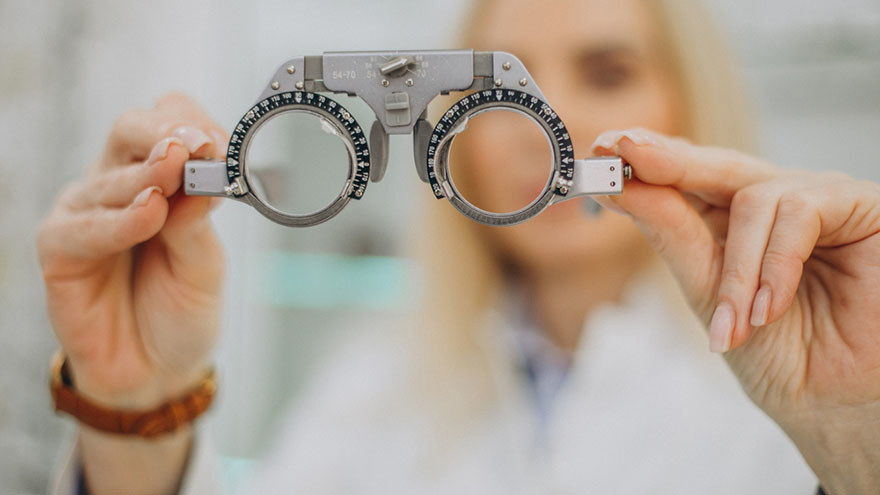
Here’s something many patients don’t realize: the emotional and psychological recovery matters just as much as the physical healing.
Some people feel disoriented or unbalanced when only one eye is corrected. The brain relies on both eyes for depth perception and coordination. A delay between surgeries can cause temporary visual mismatch—which, for some, can be surprisingly uncomfortable.
Others, especially those with busy work lives or caregiving duties, may prefer a staged approach to minimize downtime. We get it. That’s why we help patients plan around their real lives—not just their prescriptions.
We’ve seen patients thrive with either option. The key is preparation. If you're going for bilateral surgery, arrange for a restful few days and avoid screen strain. If spacing them out, prepare for a short period of visual imbalance. Either way, we’ll equip you with what you need.
Even small daily tasks—reading labels, watching screens, or navigating stairs—can feel different when only one eye is corrected. That’s why your personal adaptation style matters as much as your ocular metrics.
So... Which Is Better?
If your eyes are healthy, and you feel confident, same-day bilateral surgery offers convenience, faster adaptation, and high satisfaction rates. It’s what we recommend for most cases at Jryn Eye Clinic—particularly for SMILE LASIK and cataracts.
If you’re unsure, or if your eyes have unique challenges, spacing the surgeries apart can give you more control and peace of mind. For EVO ICL or presbyopia treatments, this approach is sometimes preferred.
In our experience, about 80–90% of patients choose same-day correction. But that remaining 10–20%? They make the right choice for them—and that’s what matters.
We’ve also had patients change their minds during the consultation. That’s why we never schedule surgeries without a full diagnostic review and a thorough conversation about your options.
It’s not just about what’s medically sound—it’s about what feels right to you. That’s why we make time for questions, family discussions, and follow-ups.
Final Thoughts from Jryn Eye Clinic
Whether you choose to correct both eyes on the same day or space out the surgeries, what’s most important is that the decision honors your needs, your lifestyle, and your peace of mind.
At Jryn Eye Clinic, we understand that vision correction isn’t just a technical procedure—it’s a transformative experience. It’s about waking up to clearer mornings, navigating your day with confidence, and reducing your reliance on glasses or contacts. But more than that, it’s about trust—trusting the hands that guide you, the technology that supports you, and the advice you receive along the way.
We take this responsibility seriously. That’s why every recommendation we make is grounded in data, experience, and dialogue. We don’t rush decisions. We listen. We explain. And we plan together—because no two eyes, and no two patients, are ever the same.
If you’re uncertain about whether to correct both eyes at once or take a step-by-step approach, come in for a comprehensive consultation. We'll help you understand your options—not in abstract terms, but in the context of your own eyes, your goals, and your comfort.
Ready for a Personalized 1:1 Eye Consultation?
Schedule your comprehensive 3D eye examination with Chief Director Dr. Sang-Youp Han and our ophthalmology team on the 14th floor of JRYN Medical Center in Seomyeon, Busan.