Jryn Eye Clinic Busan (Seomyeon) · SMILE LASIK · EVO+ Visian ICL · Cataract & Retina Center · Tel: +82-51-710-1004
en-US

1:1 Consultation
CLINICAL ARTICLE & GUIDE
Seoul’s Rise as a Global Hub for EVO Visian ICL Procedures
8% of high school freshmen suffer from myopia. This "myopia crisis" has transformed Seoul into a global epicenter for refractive surgery innovation. 34 billion by 2026.

The prevalence of vision abnormalities in South Korea has reached critical levels, with recent surveys indicating that nearly 74.8% of high school freshmen suffer from myopia. This "myopia crisis" has transformed Seoul into a global epicenter for refractive surgery innovation. As patients move away from traditional corrective lenses, the demand for high-precision, long-term solutions has skyrocketed, fueling a Korean ophthalmic device market projected to reach USD 1.34 billion by 2026.
At the heart of this surge is Jryn Eye Clinic, a premier destination for international and local patients seeking specialized vision correction. While laser-based procedures like LASIK and SMILE Pro remain popular, a significant portion of the population—particularly those with high myopia or thin corneas—is turning toward advanced intraocular solutions. This shift is driven by a desire for "additive" care that preserves the eye's natural structure while delivering superior visual quality.
EVO Visian ICL in Korea: Benefits, Risks, and Ideal Candidates
What is the "Additive" Advantage?
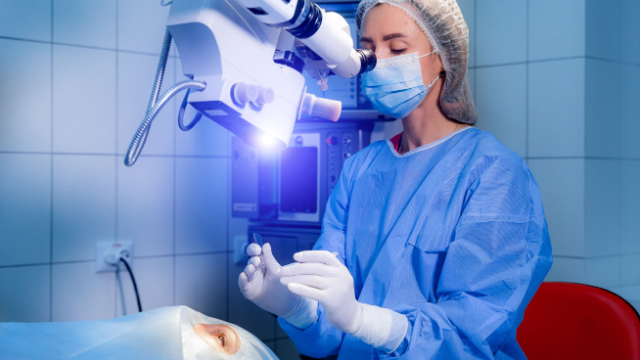
Unlike traditional laser surgeries that reshape the eye by removing corneal tissue, EVO Visian ICL (Implantable Collamer® Lens) functions as an "additive" procedure. A microscopic, biocompatible lens is inserted into the eye, resting behind the iris and in front of the natural lens. This approach is considered a "root-cause" alternative for those whose refractive errors are too severe for lasers.
Who is the Ideal Candidate?
- High Myopia: Patients with prescriptions up to -20.00 diopters.
- Thin Corneas: Individuals disqualified from LASIK due to insufficient corneal thickness.
- Dry Eye Patients: Those concerned that laser ablation might exacerbate chronic dry eye symptoms.
- Stability Seekers: Patients aged 21–45 with a stable prescription for at least one year.
Is the EVO Visian ICL procedure in Korea worth the cost?
Yes. While the upfront cost is higher than LASIK, it provides a "reversible" high-definition vision solution that preserves corneal integrity. In Korea, patients benefit from high-volume pricing, often saving 30–50% compared to US or European clinics while accessing the latest Collamer® technology.
Comparing Vision Correction Costs and Outcomes in Korea
Standard approaches in Korea range from conventional glasses and contacts to established laser surgeries. However, the "lifetime cost curve" of vision care is shifting.
| Feature | Conventional LASIK | SMILE Pro | EVO Visian ICL |
|---|---|---|---|
| Primary Method | Corneal Tissue Removal | Internal Lenticule Extraction | Additive Lens Implant |
| Typical Cost (Korea) | $1,200 – $1,800 | $2,000 – $2,500 | $3,500 – $4,500 |
| Reversibility | No (Permanent) | No (Permanent) | Yes (Removable) |
| Recovery Time | 2–3 Days | 1 Day | 1–2 Days |
| Dry Eye Risk | Moderate | Low | Minimal |
Main Limitations of Standard Care:
- LASIK/PRK: Limited by corneal thickness; cannot treat extreme myopia.
- Glasses/Contacts: Ongoing annual costs (approx. $600/year), which can exceed $15,000 over a lifetime.
- Classic ICL: Older versions required a peripheral iridotomy (a small hole in the iris); the modern EVO model eliminates this step.
Why AI-Assisted Planning is the Future of Vision Care

The hallmark of the Korean medical ecosystem is the integration of AI-driven planning and advanced diagnostics. At specialized centers like Jryn Eye Clinic, the "50-Point Eye Exam" utilizes AI to analyze millions of previous surgical outcomes, predicting the optimal lens size and "vault" (the space between the ICL and the natural lens) with micron-level precision.
The Role of Tech in Safety:
- AI-Assisted Sizing: Reduces the risk of post-operative pressure changes by ensuring a perfect fit.
- Urine & DNA Screening: In Korea, clinics often perform DNA testing to rule out rare corneal dystrophies (like Avellino) before any surgical intervention.
- Digital Mapping: 3D topography creates a "fingerprint" of the eye, allowing for high-precision placement that minimizes night-vision halos.
Local Korea Insights: Why Seoul Leads the World
South Korea's "Bali-Bali" (hurry-hurry) culture has perfected the One-Day Vision Correction model. International patients can undergo comprehensive screening in the morning and receive their EVO Visian ICL implants in the afternoon.
Furthermore, the Special Act on Regenerative Medicine and a robust regulatory environment have encouraged clinics to adopt biocompatible materials like Collamer® faster than Western counterparts. With a medical tourism growth rate of nearly 93% in 2024, Seoul has moved beyond aesthetics into high-tech functional restoration.
Where Jryn Eye Clinic Fits in Vision Correction in Korea
Jryn Eye Clinic distinguishes itself through its "Safety-First" protocol and global leadership. As a designated Global Instructor for ICL, the clinic does not just perform the procedure; it sets the benchmarks for other surgeons.
- High-Volume Precision: Lead surgeon Dr. Sang Youp Han leverages over 20 years of experience, having performed thousands of successful refractive procedures.
- Tailored Protocols: Instead of a one-size-fits-all approach, Jryn utilizes AI-assisted planning to customize the lens selection based on a patient’s specific anterior chamber depth and lifestyle needs.
- Comprehensive EEAT: The clinic is a recipient of the Visian ICL Global Trainer Award, ensuring that patients receive care from a facility recognized by the technology’s manufacturers (STAAR Surgical) for its excellence and safety.
Conclusion
With myopia rates in Korea continuing to climb, the limitations of traditional "subtractive" laser surgery are becoming clearer. For patients seeking a premium, reversible, and tissue-preserving option, the EVO Visian ICL represents a significant leap forward in quality of life. By combining Seoul’s high-precision tech with the expertise of world-class instructors at Jryn Eye Clinic, patients can achieve stable, high-definition vision without the compromises of the past.
Patients considering EVO Visian ICL in Korea can schedule a consultation at Jryn Eye Clinic to discuss whether this additive approach is suitable for their specific ocular anatomy and long-term vision goals.
Ready for a Personalized 1:1 Eye Consultation?
Schedule your comprehensive 3D eye examination with Chief Director Dr. Sang-Youp Han and our ophthalmology team on the 14th floor of JRYN Medical Center in Seomyeon, Busan.