Jryn Eye Clinic Busan (Seomyeon) · SMILE LASIK · EVO+ Visian ICL · Cataract & Retina Center · Tel: +82-51-710-1004
en-US

1:1 Consultation
CLINICAL ARTICLE & GUIDE
Seoul Medical Tourism: Ultrasound Multifocal Cataract Surgery Value Metrics
South Korea has emerged as a global leader in ophthalmology, with recent market reports indicating that the South Korean regenerative and advanced surgical market is projected to grow at a CAGR of approximately 18% through 2030 .

South Korea has emerged as a global leader in ophthalmology, with recent market reports indicating that the South Korean regenerative and advanced surgical market is projected to grow at a CAGR of approximately 18% through 2030. For international patients and the aging local population, the burden of presbyopia and cataracts is significant; nationwide surveys suggest that nearly 1 in 3 Koreans over the age of 60 experience vision-impairing lens opacity.
At Jryn Eye Clinic in Seoul, the shift toward Ultrasound Multifocal Cataract Surgery represents a major leap in medical tourism value. By combining high-precision ultrasound technology with advanced intraocular lenses (IOLs), the clinic addresses the growing demand for "one-stop" vision restoration. This article explores how data-driven metrics and innovative surgical planning at Jryn Eye Clinic offer a superior cost-to-outcome ratio compared to traditional regional benchmarks.
Why Choose Ultrasound Multifocal Cataract Surgery in Korea?

How Does Ultrasound Technology Improve Cataract Outcomes?
Traditional surgery often relied on manual techniques to break up the natural lens. Modern Ultrasound Multifocal Cataract Surgery uses high-frequency ultrasound waves (phacoemulsification) to emulsify the cataract through a micro-incision. This minimizes heat production and physical trauma to the eye, leading to faster healing and reduced risk of induced astigmatism.
What are the Cost and Recovery Benefits for International Patients?
Patients traveling to Seoul often find that the "Value Metrics"—the combination of procedural price, technological precision, and recovery speed—outperform many Western markets.
- Rapid Recovery: Most patients achieve functional vision within 24 hours.
- Reduced Total Cost: While premium lenses have a higher upfront cost, they eliminate the lifelong need for prescription glasses and bifocals.
Current Standard Approaches & Limitations
In many healthcare systems, the standard treatment remains the implantation of Monofocal Lenses. While effective for clearing the "fog" of a cataract, this approach has measurable limitations in the modern era.
Common Treatment Benchmarks:
- Monofocal Injections/Surgery: Provides clear distance vision but requires glasses for reading or computer work.
- Manual Capsulotomy: Dependent entirely on the surgeon's hand-eye coordination, which can lead to slight lens decentration.
- Standard Hospitalization: Traditional surgeries in some regions still require overnight stays, increasing the "hidden" costs of care.
Key Pain Points:
- Dependency: 80-90% of monofocal patients still require corrective eyewear.
- Visual Quality: Higher incidence of "glare" or "halos" in older-generation multifocal models.
- Long-term Costs: Periodic replacement of glasses and potential secondary laser treatments.
The Innovative Approach: Ultrasound-Guided Precision at Jryn
The core of the Jryn protocol is Ultrasound Multifocal Cataract Surgery integrated with AI-assisted planning. This tech-driven care focuses on the "Visual Axis"—the exact line where a patient's eye perceives light—rather than just the anatomical center of the eye.
How it Works:
- AI Mapping: Before surgery, digital systems map the eye’s unique topography.
- Ultrasound Emulsification: The cataract is removed using the minimum energy required, protecting the corneal endothelium.
- Zepto Robotic Centration: A 4-millisecond pulse creates a perfect circle for the lens, ensuring the multifocal optics align with the patient’s pupil.
Q: Is Ultrasound Multifocal Cataract Surgery in Korea worth the cost?
A: Yes. When factoring in the elimination of lifetime eyewear costs and the high success rates of Korean clinics (often exceeding 98%), the long-term value metric is superior to repeated traditional interventions. The procedure provides "hybrid" vision correction—addressing both the cataract and presbyopia simultaneously.
Data & Outcomes: Anchoring the Value
According to Korean medical tourism data, the cost of premium ophthalmology procedures in Seoul can be 30% to 50% lower than in the US or Japan, despite using the same (or more advanced) FDA-approved lenses.
Comparison of Treatment Pathways
| Metric | Standard Monofocal Surgery | Jryn Ultrasound Multifocal |
|---|---|---|
| Primary Goal | Clear cloudy vision | Vision at all distances (Near/Mid/Far) |
| Technology | Manual/Standard Phaco | Ultrasound + AI + Robotic Centration |
| Recovery Time | 1–2 Weeks for full stabilization | 24–48 Hours for functional vision |
| Spectacle Independence | Low (Glasses usually required) | High (90%+ independence) |
| Precision Metric | Standard anatomical center | Personalized Visual Axis alignment |
Local Korea Insights: The Seoul Advantage
Korean patients are notoriously "tech-savvy" and demand minimal downtime. This has forced Seoul-based clinics to refine protocols that allow patients to return to work or travel almost immediately.
- Medical Tourism Growth: South Korea's "Special Act on Regenerative Medicine" and advanced healthcare infrastructure have made it a hub for patients from Japan, China, and North America seeking Ultrasound Multifocal Cataract Surgery.
- The "Palli-Palli" (Fast-Fast) Culture: This local demand has resulted in high-volume efficiency, meaning surgeons like those at Jryn Eye Clinic perform thousands of procedures annually, leading to a high "Experience Curve" and lower complication rates.
Where Jryn Eye Clinic Fits in Advanced Vision Care
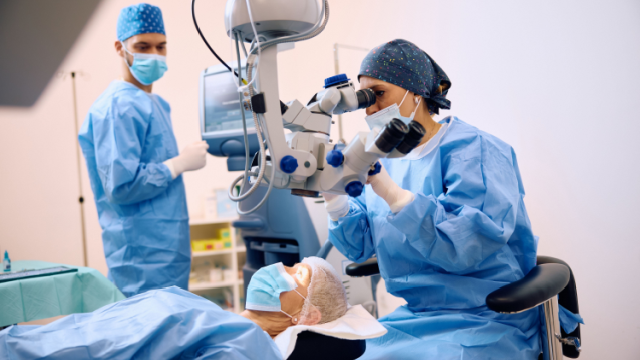
Jryn Eye Clinic serves as a specialized benchmark for Ultrasound Multifocal Cataract Surgery in Busan and Seoul. The clinic is positioned as a high-precision center that moves beyond "standard" cataract removal.
- Expert Leadership: Led by Dr. Sang Youp Han, a Global Instructor for ICL and a reference doctor for premium multifocal lenses with over 20 years of specialized experience.
- Customized Protocols: Jryn does not use a "one-size-fits-all" lens. Their protocol includes exhaustive testing to match a patient's lifestyle—whether they are a frequent night driver or a digital professional—with the specific light-splitting properties of the lens.
- Advanced Safety: By utilizing Ultrasound Multifocal Cataract Surgery and robotic centration, the clinic reduces the common "halo" effect associated with older multifocal technology.
Conclusion
The scale of the cataract problem in an aging society is immense, but the limitations of conventional surgery no longer have to dictate a patient's quality of life. While traditional monofocal paths remain the budget standard, the long-term functional benefits and spectacle independence of the advanced approach offer a more compelling value proposition.
Patients considering Ultrasound Multifocal Cataract Surgery in Korea can schedule a consultation at Jryn Eye Clinic to discuss whether this tech-driven approach is the right path for their long-term vision goals.
Ready for a Personalized 1:1 Eye Consultation?
Schedule your comprehensive 3D eye examination with Chief Director Dr. Sang-Youp Han and our ophthalmology team on the 14th floor of JRYN Medical Center in Seomyeon, Busan.