Jryn Eye Clinic Busan (Seomyeon) · SMILE LASIK · EVO+ Visian ICL · Cataract & Retina Center · Tel: +82-51-710-1004
en-US

1:1 Consultation
CLINICAL ARTICLE & GUIDE
Ptosis Repair & Double Eyelid Surgery Cost in Korea
What drives ptosis repair and double eyelid surgery cost in Korea — severity, technique, and anesthesia — and how you can compare a quote like-for-like.
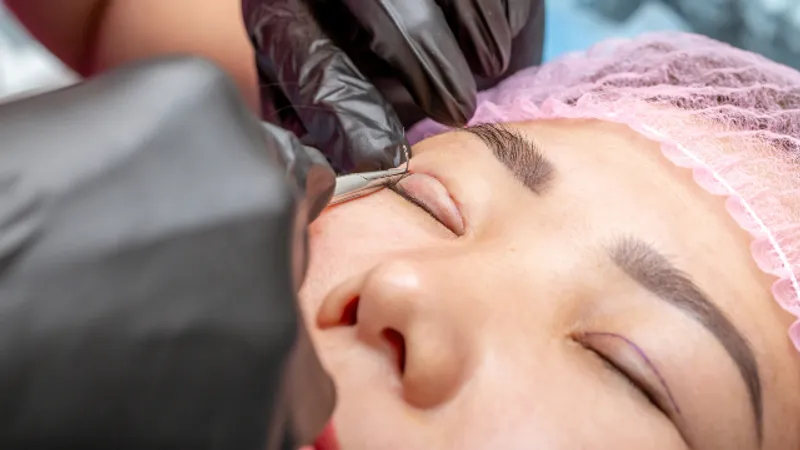
Ptosis Repair and Double Eyelid Surgery Cost for International Patients
Medically reviewed by Dr. Joong Gu Heo, MD, Chief Director, Jryn Eye Clinic · Last updated July 2026
If you are researching ptosis repair cost korea options as an international patient, the first thing to understand is that "eyelid surgery" is not a single procedure with a single price. Ptosis (a drooping upper eyelid) repair can be a functional operation, a cosmetic one, or both at once — and each of those paths carries different technical demands, and therefore different costs. This guide explains the factors that make one eyelid quote higher than another, using the surgical steps documented at Jryn Eye Clinic in Busan, so you can understand why quotes vary by severity rather than being surprised by the range.
Functional vs. Cosmetic: The First Cost Divider
Ptosis is a condition in which the upper eyelid droops because the muscles that lift it are weak. As the American Academy of Ophthalmology explains, the lid may droop slightly or enough to block part of the vision, and it can be present from birth (congenital) or develop later in life (acquired).
This distinction is the biggest single driver of how eyelid surgery is categorized and priced:
- Functional ptosis repair addresses a drooping lid that interferes with vision or forces you to raise your eyebrows or tilt your head to see.
- Cosmetic double eyelid surgery creates or refines an eyelid crease for appearance.
- Combined procedures do both — Jryn Eye Clinic's information notes that ptosis correction can, when appropriate, also create a natural-looking double eyelid fold.
The AAO notes that, in the United States, insurers generally do not cover eyelid surgery when the motivation is cosmetic, whereas functional cases affecting vision may be treated differently. For international patients paying out of pocket, this distinction still matters because a combined functional-and-cosmetic procedure is more complex than a single-purpose one. Understanding which category your case falls into is the starting point for any realistic cost estimate.
Cost Driver 1: Severity and Surgical Technique
The severity of your ptosis determines the surgical technique, and the technique is a major cost factor. Jryn Eye Clinic's documented approach is individualized based on eyelid muscle strength, the severity of drooping, eye movement, and the eye's protective function. Depending on that evaluation, the surgeon performs one of two main techniques:
- Levator muscle resection or advancement. For patients with moderate to good muscle function, the levator (the main eyelid-lifting muscle) is tightened or repositioned. This is the more common approach.
- Frontalis suspension. For severe ptosis with poor levator function, the eyelid is connected to the forehead (frontalis) muscle so the patient can lift the lid using the brow. This is a more involved procedure reserved for cases where the lifting muscle cannot do the work on its own.
Because these techniques differ in complexity, a quote for mild ptosis corrected by a levator procedure is not directly comparable to a quote for severe ptosis needing frontalis suspension. When you request information through the clinic's online inquiry and consultation system, it helps to understand that your quote reflects the technique your specific case requires.
Cost Driver 2: Anesthesia
Anesthesia is another line that varies. Per Jryn Eye Clinic's documented protocol, ptosis correction is usually performed under local anesthesia with mild sedation, keeping you comfortable while relaxed. However, general anesthesia may be recommended for children or selected patients.
The clinic's broader oculoplastic (eye-area surgical) information reflects the same pattern: most procedures use local anesthesia with optional mild sedation, while more complex surgeries may require general anesthesia. Because general anesthesia involves additional staffing and monitoring, it typically adds to the cost — which is why the anesthesia plan, tied to your case and age, is part of the price picture.
Cost Driver 3: The Diagnostic Consultation
Every eyelid procedure begins with an evaluation, and that consultation is a genuine part of the process. Jryn Eye Clinic's documented consultation includes a comprehensive eye examination to assess eyelid position, levator muscle function, protective blinking, eye movement, and overall eye health. The surgeon uses this to determine the severity of the ptosis and to recommend the most appropriate technique.
For international patients, note that Jryn Eye Clinic's in-person consultation is a paid evaluation. This is standard for surgical planning, and it is the step that produces an accurate, personalized quote — something no online estimate can fully replace. You can begin arranging this through the Jryn Eye Clinic contact page.
Cost Driver 4: Combination Procedures
Costs also change when procedures are combined. Jryn Eye Clinic's documented information lists potential combinations alongside ptosis correction, including double eyelid surgery, upper blepharoplasty, lower eyelid surgery, and epicanthoplasty (correction of the inner-corner eyelid fold). Each added element increases surgical time and complexity, and therefore cost. If you are considering more than one change to the eye area, expect the quote to reflect the combined scope rather than a single procedure.
Beyond Ptosis: The Broader Oculoplastic Picture
Ptosis repair sits within a wider field the clinic refers to as oculoplastic surgery — surgery of the eyelids, tear ducts, and eye socket. This context helps explain why quotes vary and why the evaluation is thorough. Jryn Eye Clinic's oculoplastic information describes treating conditions such as droopy eyelids, excess eyelid skin or under-eye bags, eyelid malpositions, tear duct problems, and orbital conditions, as well as serving healthy adults seeking functional or cosmetic improvement around the eyes.
The clinic states these procedures aim to improve eyelid function, comfort, and appearance, and that surgery can enhance vision when a drooping eyelid obstructs the visual field. It also describes preferring the least invasive option when appropriate — for example, observation for mild, non-progressive ptosis — before recommending surgery. For your budget, the practical point is that the recommended procedure, and therefore the cost, follows from a detailed assessment of your specific eyelid anatomy and goals rather than from a fixed menu price.
What Recovery Means for Your Trip
For international patients, recovery timing affects trip planning and total cost. Jryn Eye Clinic's documented timeline for ptosis correction is helpful here:
- The procedure itself takes approximately 1 to 2 hours and is usually performed as day surgery.
- Follow-up visits are typically required within the first week.
- Swelling and bruising are most noticeable during days 1 to 4.
- Sutures may be removed around one week, when light eye makeup can usually resume.
- Contact lenses can typically be worn again after about three weeks.
- The eyelids continue to settle, with the final contour developing gradually over one to three months.
Because sutures and the first follow-up fall within the first week, factor that window — plus travel and accommodation — into your total budget, not just the surgical fee.
Who Is and Isn't a Candidate
Cost only becomes relevant once you know surgery is appropriate for you, and candidacy is confirmed during the evaluation rather than by a quote. Jryn Eye Clinic's documented information indicates good candidates include patients with congenital or acquired ptosis, those whose drooping eyelids affect vision or appearance, and generally healthy adults with realistic expectations seeking functional or cosmetic improvement.
The clinic also documents who may not be suitable: patients with uncontrolled medical conditions, untreated eye infections or severe dry eye, unrealistic expectations, or those found unsuitable after a comprehensive ophthalmic evaluation. This is why the diagnostic consultation is not an optional step — it protects you from paying for a procedure that would not serve you well, and it is where the safest, most appropriate technique for your case is decided.
Preparation and Aftercare
Knowing the preparation and recovery routine helps you plan a trip realistically. Before surgery, Jryn Eye Clinic advises not wearing makeup, sunscreen, or BB cream on the day of the procedure, not wearing contact lenses that day, bringing sunglasses or a hat for comfort afterward, and following all medication instructions from the surgeon.
Afterward, the documented protocol includes applying cold compresses for the first three to four days, keeping the surgical area dry for one week, avoiding rubbing the eyes, and showering carefully so that shampoo and other products do not enter the eyes. Eye makeup is generally permitted after about one week, and contact lenses after roughly three weeks. This routine, combined with the first-week follow-up, is the practical reason to plan enough time near the clinic before traveling home.
Understanding the Risks
Transparent cost information should sit alongside honest risk disclosure. Jryn Eye Clinic documents that possible risks of ptosis correction include swelling and bruising, temporary dry eyes, mild asymmetry, infection or bleeding, under- or over-correction that may require revision in some cases, and temporary difficulty fully closing the eyes during healing.
Understanding these before you book matters for two reasons. First, it lets you weigh the procedure realistically rather than on appearance alone. Second, it underlines why an experienced evaluation and proper follow-up — both part of what you pay for — are central to the procedure, not extras. No surgeon can guarantee a specific outcome, and results vary with individual healing.
Surgeon Background
Jryn Eye Clinic's Chief Director, Dr. Joong Gu Heo, lists oculoplastic surgery among his documented areas of subspecialty technique expertise, alongside cataract and vision correction procedures. He is a graduate of Pusan National University College of Medicine and is a member of professional bodies including the Korean Ophthalmological Society and the American Society of Cataract and Refractive Surgery. You can read more about the clinic on the Jryn Eye Clinic website. As with any surgeon, the right technique and expected outcome for your case can only be confirmed through an in-person evaluation.
The Bottom Line
- Eyelid surgery cost depends first on whether your case is functional ptosis repair, cosmetic double eyelid surgery, or a combination of both.
- Severity drives the technique — levator repair for moderate cases, frontalis suspension for severe cases — and technique is a major cost factor.
- Anesthesia (local with sedation vs. general) and any combined procedures also affect the total.
- The paid in-person consultation is what produces an accurate, personalized quote; online figures are only estimates.
- Plan your trip around the recovery timeline, since sutures and the first follow-up fall within the first week.
Frequently Asked Questions
**What is the difference between ptosis repair and double eyelid surgery?**Ptosis repair strengthens or repositions the muscles that lift a drooping upper eyelid, improving vision and appearance. Double eyelid surgery creates or refines an eyelid crease. Jryn Eye Clinic notes that ptosis correction can, when appropriate, also create a natural-looking double eyelid fold.
**Why do eyelid surgery quotes vary so much?**The main reasons are severity and technique. A levator muscle repair for moderate ptosis differs from a frontalis suspension for severe ptosis, and anesthesia type and any combined procedures also affect the total.
**How long does ptosis surgery take?**Per Jryn Eye Clinic's information, the procedure takes approximately 1 to 2 hours and is usually performed as day surgery, with follow-up visits typically required within the first week.
**What type of anesthesia is used?**The clinic states ptosis correction is usually performed under local anesthesia with mild sedation, though general anesthesia may be recommended for children or selected patients.
**How long is the recovery?**The clinic reports swelling and bruising are most noticeable during days 1 to 4, sutures may be removed around one week, contact lenses can typically be worn after about three weeks, and final results develop over one to three months.
**Can other eyelid procedures be combined with ptosis repair?**Yes. The clinic lists possible combinations including double eyelid surgery, upper blepharoplasty, lower eyelid surgery, and epicanthoplasty. Combining procedures increases surgical scope and therefore cost.
**Does the clinic support international patients?**Jryn Eye Clinic provides English-language coordination for inquiry, consultation, and aftercare, and translated documents are available. The in-person diagnostic consultation is a paid evaluation.
This article is for general informational purposes and does not constitute individualized medical advice. Surgical candidacy, technique, and expected outcomes can only be determined through a consultation with a qualified surgeon.
Ready for a Personalized 1:1 Eye Consultation?
Schedule your comprehensive 3D eye examination with Chief Director Dr. Sang-Youp Han and our ophthalmology team on the 14th floor of JRYN Medical Center in Seomyeon, Busan.