Jryn Eye Clinic Busan (Seomyeon) · SMILE LASIK · EVO+ Visian ICL · Cataract & Retina Center · Tel: +82-51-710-1004
en-US

1:1 Consultation
CLINICAL ARTICLE & GUIDE
Presbyopia Surgery Cost in Korea: LASIK vs Lens Swap
Presbyopia surgery cost Korea patients weigh depends on age and lens condition. Compare Presbyopia LASIK, monovision, and lens-based package cost drivers.
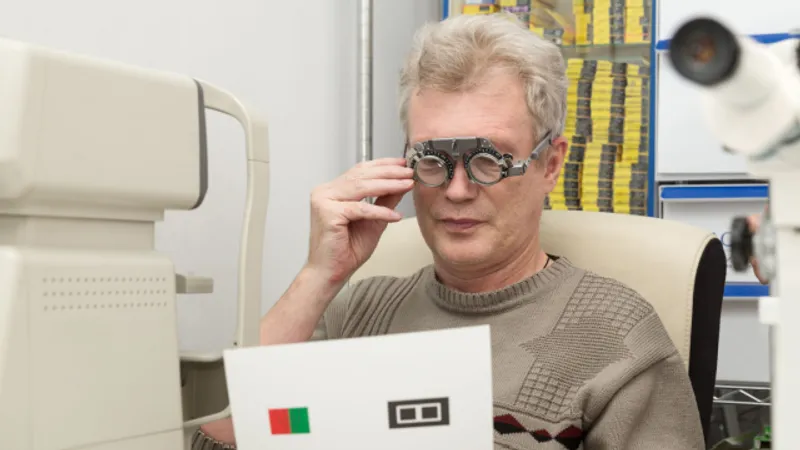
Presbyopia LASIK and Lens-Based Surgery: Comparing Package Costs by Age and Condition
Medically reviewed by Dr. Sang Youp Han, MD, Chief Director, Jryn Eye Clinic · Last updated July 2026
If reading glasses have crept into your daily life, you are probably wondering what it would take to leave them behind. Presbyopia surgery cost Korea patients ask about is not a single figure, because presbyopia is treated along different pathways depending on your age and the condition of your natural lens. A patient in their late forties with a clear lens is a very different case from someone in their sixties who is developing cataracts, and the surgery, and its cost drivers, follow that difference. This guide segments the options so you can see which pathway fits your situation before you compare any numbers.
As with all Jryn Eye Clinic content, a note on prices: the clinic does not publish a fixed price list, so this article does not quote clinic fees. Where it references general or US cost context, that is labeled and cited to independent sources. What it explains reliably is which pathway applies at which stage of life, and what builds the cost of each.
What Presbyopia Is, and Why Age Changes the Answer
Presbyopia is the age-related loss of near focus that typically becomes noticeable in the mid-forties. It happens because the eye gradually loses its ability to shift focus up close. Crucially, treatment depends on whether your natural lens is still clear or has begun to cloud into a cataract, and that is largely a function of age.
- If you have presbyopia and no clinically significant cataracts, laser-based correction is on the table.
- If cataracts have developed, the sensible approach is usually lens replacement, which addresses both the cataract and the near-vision problem at once.
This is why "how much does presbyopia surgery cost" cannot be answered without knowing your age range and lens condition. The pathways below map to exactly that.
Pathway One: Presbyopia LASIK and Monovision
For patients with presbyopia but no significant cataracts, Jryn Eye Clinic offers Presbyopia LASIK, also described as monovision. The idea is to reshape the cornea with a laser so that the dominant eye is optimized for distance and the non-dominant eye is optimized for near, allowing you to handle both distance and near tasks with reduced dependence on reading glasses. Depending on your diagnostic findings, the clinic may perform this using SMILE, LASIK, or LASEK techniques.
Because this is a laser procedure, its cost drivers resemble other laser vision correction:
- The laser platform used, such as the ZEISS VisuMax for SMILE.
- The comprehensive diagnostic workup, which includes dominant-eye testing and detailed corneal and ocular measurements.
- The surgeon's planning and time.
- Follow-up care.
This pathway suits adults with presbyopia and no cataracts, who have clearly identifiable dominant and non-dominant eyes and who are suitable for laser correction based on examination. Not everyone adapts to monovision, which is something the consultation is designed to test before committing.
Pathway Two: Lens-Based Surgery for Presbyopia With Cataracts
Once cataracts are present, reshaping the cornea does not address the clouded lens, so the pathway shifts to lens replacement. Here, cataract surgery removes the clouded natural lens and replaces it with an intraocular lens (IOL). When a presbyopia-correcting lens is chosen, this single operation can address both the cataract and near vision. Jryn Eye Clinic offers standard, ultrasonic multifocal, laser multifocal, and Zepto approaches to cataract surgery.
The cost drivers here are different, and the IOL is the biggest one:
- The IOL choice. A standard monofocal lens behaves differently from a presbyopia-correcting multifocal or extended-depth-of-focus lens. As the American Academy of Ophthalmology explains, presbyopia-correcting IOLs that reduce dependence on glasses generally cost more than standard monofocal lenses. The clinic offers premium IOL brands including ZEISS, Alcon, Johnson & Johnson Vision, and Oculentis.
- The surgical technique. The clinic offers ultrasound-based, laser multifocal, and Zepto capsulotomy approaches.
- Diagnostics and follow-up, as with any lens surgery.
Where Zepto fits
Zepto is one of the clinic's cataract techniques and is relevant to presbyopia when a multifocal lens is planned. It uses the ZEPTO device to create a precise, perfectly circular 360-degree opening in the front of the lens capsule, after which the cataract is removed by ultrasound and a multifocal IOL is implanted. Because it is used alongside multifocal lens implantation, its cost sits within the lens-based pathway, where the IOL choice remains the dominant variable.
Matching Pathway to Age and Condition
The table below is the practical heart of this guide. It maps a typical stage of life and lens condition to the relevant pathway and the main things that drive its cost. Your own examination always takes priority over any general pattern.
| Typical stage | Lens condition | Likely pathway | Main cost drivers |
|---|---|---|---|
| Mid-40s to 50s | Presbyopia, clear lens | Presbyopia LASIK / monovision (SMILE, LASIK, or LASEK) | Laser platform, diagnostics, dominant-eye planning, follow-up |
| Late 50s onward | Presbyopia with early or established cataract | Lens-based surgery (multifocal or Zepto cataract) | IOL choice, surgical technique, diagnostics, follow-up |
| Any age | Not a monovision or laser candidate on exam | Consultation determines the appropriate lens-based or alternative option | Determined by candidacy findings |
The takeaway is simple: age and lens condition point you toward a pathway, and the pathway determines which cost drivers matter most. You can read more about the clinic's presbyopia and cataract options on the Jryn Eye Clinic website.
Why the Consultation Determines the Cost
For presbyopia more than most conditions, the examination is what unlocks a meaningful price, because it establishes which pathway you are on. Jryn Eye Clinic's documented presbyopia workup uses hospital-grade diagnostic equipment and includes ocular biometrics, corneal measurements, anterior segment imaging, lens analysis, vision-quality assessment, determination of the dominant eye, and selection of the most appropriate approach.
That evaluation answers the questions that set the cost: Is your lens clear or clouding? Are you a monovision candidate? If lens-based surgery is right, which IOL suits your eyes and goals? Only after those are answered can a clinic give you a figure that actually applies to you.
Comparing Total Cost, Not Just the Procedure
As with any procedure at the clinic, the surgery is one part of a larger trip. For its vision-correction procedures, Jryn Eye Clinic generally advises international patients to stay in Korea for 3 to 7 days before flying home, and reaching the clinic means traveling to Busan. Factor flights, the stay, and follow-up into whichever pathway applies.
It also helps to weigh cost against the alternative you are replacing. Reading glasses are inexpensive up front but are an ongoing part of daily life; surgery is a larger one-time investment aimed at reducing that dependence. Neither is universally "better value," which is why the decision should rest on candidacy and your goals, discussed at consultation. You can start that conversation through the clinic's online inquiry and contact page.
Preparing for Your Presbyopia Consultation
Because the examination is what determines your pathway and therefore your cost, preparing well for it pays off. Jryn Eye Clinic's documented presbyopia evaluation is thorough, using hospital-grade equipment to assess ocular biometrics, corneal measurements, anterior segment imaging, lens analysis, vision quality, and dominant-eye determination. The more complete a picture you bring to that evaluation, the more precise the resulting plan and quote.
A few steps help. Bring any prior eye records, including previous prescriptions and notes on how your near vision has changed over time. Be ready to describe your daily visual demands, since reading, screen work, and driving pull in different directions and influence whether monovision or a particular lens is a good fit. If you currently wear contact lenses, ask the clinic whether you need to stop wearing them for a period before measurement, as lens wear can affect corneal readings.
It also helps to arrive with realistic expectations. Presbyopia solutions aim to reduce dependence on reading glasses, not always to eliminate every need for them, and results vary between individuals. Some patients still prefer glasses for specific tasks. Discussing your priorities openly at consultation lets the surgeon match the pathway, and its cost, to what matters most to you. This is also the moment to ask how the price shifts across lens options if you are on the lens-based pathway, so the quote you receive reflects real choices rather than a single default.
How to Get a Quote That Applies to You
- Note your age and any history of cataracts or changing near vision, since these steer the pathway.
- Gather prior eye records and prescriptions to support the evaluation.
- Ask specifically whether you are a Presbyopia LASIK/monovision candidate or a lens-based candidate.
- For lens-based surgery, ask how the price changes across standard and presbyopia-correcting IOL options.
- Add travel and follow-up to reach a true total, and confirm payment specifics separately, since they are not published.
The Bottom Line
- Presbyopia is treated along different pathways depending on age and whether cataracts are present, so there is no single price.
- With a clear lens, Presbyopia LASIK or monovision reshapes the cornea; cost drivers are the laser platform, diagnostics, and follow-up.
- With cataracts, lens-based surgery replaces the lens, and the IOL choice is the biggest cost driver, with multifocal and Zepto options available.
- Jryn Eye Clinic does not publish prices, so a meaningful quote depends on the examination that establishes your pathway.
- Compare all-in trip totals, including the 3-to-7-day stay and follow-up, against the cost of continuing with reading glasses.
Frequently Asked Questions
**Do I need laser or lens surgery for my presbyopia?**It depends on your lens condition. If you have presbyopia without significant cataracts, Presbyopia LASIK or monovision may fit. If cataracts are present, lens-based surgery that replaces the lens is usually the sensible route. A comprehensive examination determines which pathway applies to you.
**What is monovision, and who is it for?**Monovision corrects the dominant eye for distance and the non-dominant eye for near, reducing dependence on reading glasses. Jryn Eye Clinic offers it for adults with presbyopia and no significant cataracts who have clearly identifiable dominant and non-dominant eyes and adapt to monovision, which is tested during consultation.
**Why does the IOL choice affect cost so much?**In lens-based surgery, the intraocular lens is the biggest swing factor. As the American Academy of Ophthalmology notes, presbyopia-correcting lenses that reduce glasses dependence generally cost more than standard monofocal lenses. Jryn Eye Clinic offers premium IOL brands including ZEISS, Alcon, Johnson & Johnson Vision, and Oculentis.
**What is Zepto cataract surgery?**Zepto uses the ZEPTO device to create a precise 360-degree circular opening in the front of the lens capsule, after which the cataract is removed by ultrasound and a multifocal IOL is implanted. It sits within the lens-based pathway, so the IOL choice remains the main cost driver.
**Can Presbyopia LASIK use SMILE?**Yes. Depending on diagnostic findings, Jryn Eye Clinic may perform Presbyopia LASIK using SMILE, LASIK, or LASEK techniques. The choice is based on your examination, including corneal measurements and dominant-eye testing.
**How long should I plan to stay in Korea?**For its vision-correction procedures, the clinic generally advises international patients to stay 3 to 7 days before flying home. Confirm the expected stay for your specific pathway, since lens-based surgery and laser correction can differ. Factor this into your total cost.
**Is surgery worth it compared with just wearing reading glasses?**That depends on your goals and candidacy. Reading glasses are cheap up front but are an ongoing daily dependence; surgery is a larger one-time investment aimed at reducing that dependence. The right choice is best decided at consultation based on your eyes and priorities.
This article is for general informational purposes and does not constitute individualized medical advice. Surgical candidacy, technique, and expected outcomes can only be determined through a consultation with a qualified surgeon.
Ready for a Personalized 1:1 Eye Consultation?
Schedule your comprehensive 3D eye examination with Chief Director Dr. Sang-Youp Han and our ophthalmology team on the 14th floor of JRYN Medical Center in Seomyeon, Busan.