Jryn Eye Clinic Busan (Seomyeon) · SMILE LASIK · EVO+ Visian ICL · Cataract & Retina Center · Tel: +82-51-710-1004
en-US

1:1 Consultation
CLINICAL ARTICLE & GUIDE
Presbyopia in Adults: Why Your Vision Changes After 40 and How to Treat It
Introduction Have you noticed that you are holding your smartphone further away just to read a text message? Or perhaps you find yourself squinting at the fine print on a restaurant menu? If so, you are experiencing what many call short-arm syndrome.

Introduction
Have you noticed that you are holding your smartphone further away just to read a text message? Or perhaps you find yourself squinting at the fine print on a restaurant menu? If so, you are experiencing what many call short-arm syndrome. This condition is medically known as presbyopia in adults. It is a natural part of the aging process that affects nearly everyone once they hit their fourth decade of life.
While the sudden change in your vision might feel alarming, it is not a sign of poor health. Instead, it is a biological milestone. Your eyes are simply evolving. In the past the only solution was a pair of drugstore cheaters or reading glasses. Today, however, modern medical technology offers permanent high-tech treatments that can restore your youthful vision.

Why Does Vision Change After 40? (The Science)
To understand presbyopia in adults, we have to look at how the eye focuses. Inside your eye, directly behind the iris sits a clear lens. This lens is responsible for fine-tuning your vision so you can see objects up close.
The Loss of Elasticity
When you are young, this lens is soft and flexible. It can easily change its shape to help you focus on a book or a screen. As you reach your 40s, the proteins in the lens begin to change, causing the lens to harden. This loss of elasticity means the lens can no longer zoom in on close objects.
The Ciliary Muscle Factor
The lens is controlled by tiny muscles called ciliary muscles. Over time, these muscles also become less effective at reshaping the hardening lens. The result is a blurred image for anything within arm's reach.
Presbyopia vs. Hyperopia
It is important to distinguish presbyopia from hyperopia (farsightedness). While both make it hard to see up close, hyperopia is usually caused by the shape of the eyeball and is often present from birth. Presbyopia is strictly age-related and happens because the internal lens loses its ability to flex.
Recognizing the Signs of Presbyopia
The onset of presbyopia in adults is usually gradual. Most people begin to notice symptoms in their early to mid-40s.
Visual Symptoms
Blurred print even when you feel you are focusing hard.
Difficulty seeing clearly in low-light environments.
Slow focusing when switching your gaze from a far object to a near one.
Physical Symptoms
The struggle to focus doesn't just affect your sight it affects your comfort. Many adults report:
Eyestrain or a feeling of heavy eyelids.
Tension headaches especially after long periods of computer work or reading.
The Emotional Toll
Beyond the physical, there is an emotional side to presbyopia. Constantly searching for misplaced reading glasses can be frustrating. For many, it is the first time they truly feel the effects of aging, which can impact their confidence and lifestyle.
The Treatment Spectrum: From Temporary to Permanent

The good news is that there are more ways than ever to treat presbyopia in adults. Treatments range from simple external aids to life-changing surgical procedures.
A. Traditional Management (Non-Surgical)
Reading Glasses: These are the most common first step. They magnify the image but must be taken on and off constantly.
Multifocal Contact Lenses: These use a monovision approach, where one eye is set for distance and the other for near vision.
Prescription Eye Drops: A newer pharmacological fix that temporarily shrinks the pupil to create a pinhole effect, improving near focus for a few hours.
B. Laser Solutions (The "Surface" Fix)
Monovision LASIK: A laser reshapes the cornea so one eye sees far and the other sees near.
PresbyLASIK: This involves multifocal laser reshaping to create different zones of power on the cornea.
C. Refractive Lens Exchange (The Permanent Upgrade)
Refractive Lens Exchange (RLE) is the ultimate solution. Instead of fixing the surface of the eye, the surgeon replaces the aging internal lens with a high-tech Artificial Intraocular Lens (IOL).
The Ultimate Benefit: RLE is the only treatment that is truly permanent. Furthermore, because the natural lens is removed, patients who undergo RLE will never develop cataracts later in life.
Advanced Lens Technology: Choosing Your New Vision
When opting for a permanent solution like RLE, you have a choice in the type of lens used. Modern IOLs are incredibly advanced.
Lens Type | Primary Benefit | Best For |
|---|---|---|
Monofocal | Excellent distance clarity | Those who don't mind wearing light readers for fine print. |
Multifocal & Trifocal | Clear vision at all distances | Patients wanting total freedom from glasses (near, mid, and far). |
EDOF (Extended Depth) | Seamless, natural range | People who use computers often and want smooth transitions. |
Global Treatment Analysis: Why South Korea is the Global Leader
For those seeking the best results for presbyopia in adults, South Korea has emerged as the premier global destination. South Korean eye clinics combine ultra-advanced robotic technology with surgeons who are world-renowned for their precision.
Technological Supremacy
South Korea is often the first to adopt AI-guided diagnostics and the newest IOL models from leading manufacturers like Zeiss and Alcon. Their clinics are designed like high-end tech hubs, ensuring every measurement is perfect.
Unmatched Value
Due to a highly competitive medical market and high patient volumes, South Korea offers premium care at a fraction of the cost found in the United States or Europe.
Global Cost Comparison Table (Per Eye)
Country | Estimated Cost (USD) | Technology Level | Value Rating |
|---|---|---|---|
South Korea | $2,500 – $4,200 | Ultra-Premium / AI-Driven | Best & Cheapest |
United States | $5,000 – $8,500 | Advanced | Expensive |
United Kingdom | $4,500 – $7,500 | High | Expensive |
Australia | $4,000 – $6,800 | High | Moderate |
Are You a Candidate for Permanent Correction?
Not every treatment is right for every person. To determine if you are ready for a permanent solution to presbyopia in adults, doctors look at several factors:
The Age Sweet Spot: The ideal window for Lens Replacement (RLE) is typically between ages 45 and 65.
Eye Health Status: A surgeon will check your corneal thickness and retinal health to ensure your eyes are strong enough for the upgrade.
Lifestyle Assessment: Do you drive a lot at night? Do you spend 10 hours a day on a computer? Your hobbies and work help the surgeon pick the perfect lens.
What to Expect: The Surgical Journey
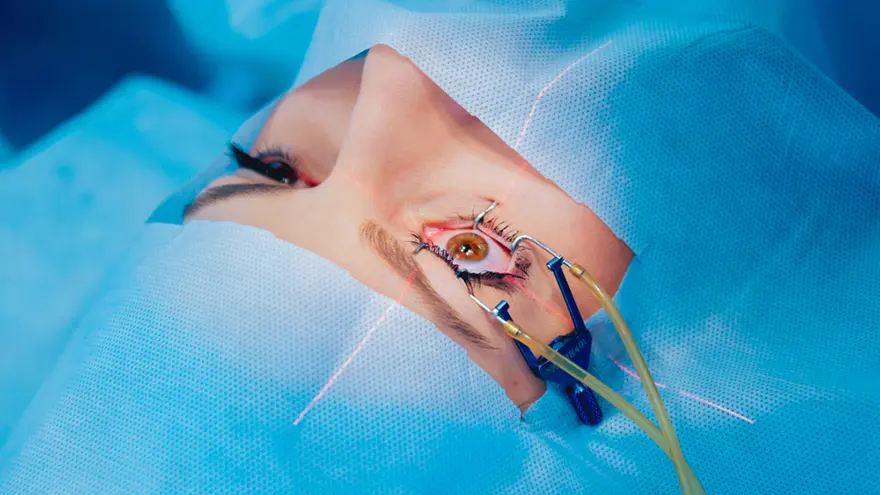
If you decide to pursue a permanent fix in a world-class hub like South Korea, the process is surprisingly simple.
The Consultation: Doctors use Pentacam and IOL Master technology to create a 3D map of your eye. This ensures the replacement lens fits your unique anatomy perfectly.
The Procedure: The surgery takes only about 15 minutes per eye. It is an outpatient experience, meaning you go home the same day.
The Recovery: Most patients notice a massive improvement in vision within 24 hours. Your brain then goes through neuroadaptation where it quickly learns to use the new high-tech lens.
Potential Risks and How to Minimize Them
While RLE is considered one of the safest medical procedures in modern history, it is still surgery.
Common Side Effects: Some patients experience temporary dry eye or see halos (rings around lights) at night during the first few weeks of healing.
Risk Mitigation: The best way to minimize risk is to choose a high-volume surgeon. In South Korea, specialized surgeons perform thousands of these procedures every year, leading to exceptionally low complication rates.
Frequently Asked Questions
1. Is The Surgery Painful?
No. Your eyes are completely numbed with specialized drops before the procedure begins. You may feel a very slight pressure for a few seconds, but there is no pain involved at any stage of the surgery.
2. Can I Get Cataracts After This Surgery?
No. One of the major long-term benefits of this procedure is that cataracts cannot develop afterward. Since your natural lens is replaced with a high-tech artificial lens, future cataract formation is impossible.
3. How Long Does The Recovery Take?
Most patients can safely return to work and resume driving within 48 hours. Vision continues to sharpen and stabilize gradually over the first month as the eyes fully adjust.
4. Why Is South Korea So Much Cheaper For This?
The lower cost is due to efficiency, not reduced quality. South Korea has a highly competitive and high-volume medical system, allowing clinics to use cutting-edge technology while offering significantly lower prices than Western countries.
5\. Will I Really Be Able To Throw Away My Reading Glasses?
Yes. More than 95% of patients who choose multifocal or EDOF lenses in South Korea achieve complete glasses independence for most daily activities, including reading and screen use.
Conclusion
You do not have to just live with the frustrations of presbyopia in adults. While aging eyes are a natural part of life, staying stuck with blurry vision is a choice. We have moved beyond the era of managing symptoms with glasses to an era of curing the problem with surgery.
By investing in your vision through a permanent solution like Refractive Lens Exchange especially in a global center like South Korea you are not just buying a medical procedure. You are buying back your convenience, your confidence, and your visual freedom. Take the first step Consider a virtual consultation with a specialist in South Korea to see how advanced lens technology can change your life.
Ready for a Personalized 1:1 Eye Consultation?
Schedule your comprehensive 3D eye examination with Chief Director Dr. Sang-Youp Han and our ophthalmology team on the 14th floor of JRYN Medical Center in Seomyeon, Busan.