Jryn Eye Clinic Busan (Seomyeon) · SMILE LASIK · EVO+ Visian ICL · Cataract & Retina Center · Tel: +82-51-710-1004
en-US

1:1 Consultation
CLINICAL ARTICLE & GUIDE
Not a Candidate for LASIK? Alternatives to Consider
Not a candidate for LASIK alternatives explained: how EVO ICL, LASEK, and lens-based surgery help thin corneas and high myopia, with candidacy set at exam.
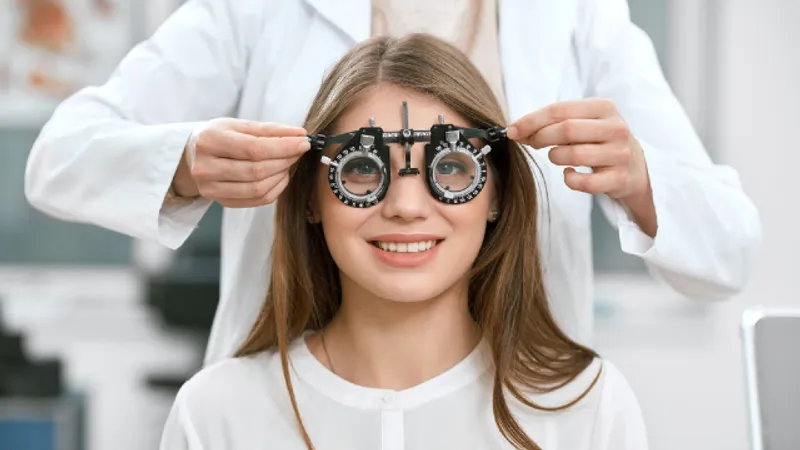
Told You're Not a Candidate for LASIK in the US? Alternative Options
Medically reviewed by Dr. Sang Youp Han, MD, Chief Director, Jryn Eye Clinic · Last updated July 2026
If you have been searching online for not a candidate for LASIK alternatives, you are likely reacting to a specific piece of news: a US clinic told you that your eyes are not suited to standard laser vision correction. That "no" is frustrating, but it is rarely the end of the road. Being turned down for one procedure does not mean every procedure is off the table. It usually means your particular eyes, perhaps thin corneas, a high correction, or another finding, did not fit that specific technique. This guide explains the alternatives available at Jryn Eye Clinic in Busan, South Korea, and, just as importantly, why the only reliable verdict on candidacy comes from a fresh examination rather than a past rejection.
A quick note on scope. This article explains options and how eligibility is decided. It does not promise you will qualify for anything, and it does not quote prices. General eye-health context is drawn from independent sources and cited at the end.
Why LASIK Gets Declined
Standard LASIK reshapes the cornea and creates a corneal flap, which requires a certain amount of corneal tissue to do safely. As the US Food and Drug Administration's LASIK materials explain, not everyone is a good candidate, and factors such as corneal thickness, the size of your correction, and the health of the eye's surface all feed into that decision. The most common reasons a US surgeon declines LASIK include:
- Thin corneas, which may not leave enough tissue for safe flap creation and reshaping.
- High myopia (nearsightedness) or a large correction, which can demand more tissue removal than is prudent.
- Corneal surface issues, such as significant dryness or scarring.
- Unstable vision, where the prescription is still changing.
Each of these is a reason a particular technique may not fit, not a blanket statement about your eyes. Different procedures make different demands, which is exactly why alternatives exist.
Alternative 1: LASEK or Surface Laser (When Flaps Are the Problem)
If the concern is specifically about creating a corneal flap, a surface-based laser approach can sometimes be an option. Jryn Eye Clinic offers LASEK, and its own guidance positions LASEK as the alternative for patients who cannot have a flap- or blade-based procedure, including those with thin corneas, very small eyes that prevent use of a corneal cutting device, a high correction amount, or contact-lens-related corneal scarring. Surface ablation removes tissue from the corneal surface rather than under a flap, which changes the tissue math in some cases. The FDA maintains a list of approved lasers for PRK and other refractive surgeries, a useful independent reference on how surface procedures are evaluated. Whether LASEK fits still depends on having adequate corneal tissue overall, so it is not a universal fix, but it is a genuine option when the flap itself is the sticking point.
Alternative 2: EVO Visian ICL (Implantable Collamer Lens)
The most important alternative for many people declined for corneal laser is the EVO Visian ICL, an implantable collamer lens. Instead of reshaping the cornea, the ICL places a biocompatible lens inside the eye, in front of your natural lens, to correct refractive error. Because it does not remove corneal tissue, it is offered as an alternative to corneal-laser surgery and is frequently the relevant conversation for patients whose corneas are not ideal for reshaping or whose correction is high.
Jryn Eye Clinic's lead surgeon, Dr. Han Sang-yeop, is a STAAR-certified Visian ICL instructor, a status held since 2014, which reflects experience with this specific lens platform (a vendor-issued recognition, not a guarantee of your outcome). The American Academy of Ophthalmology's overview of phakic IOLs is a helpful independent primer on how these lenses work and who tends to be considered.
It is worth being precise, though: the ICL has its own candidacy criteria. The clinic lists ideal candidates as adults with stable vision who qualify after a comprehensive examination, and lists unstable vision, thin corneas, or active eye disease among reasons a person may not be suitable. In other words, "not a LASIK candidate" does not automatically mean "an ICL candidate." What it does mean is that a different procedure, evaluated on its own terms, may open a door that corneal laser closed. The clinic also notes the ICL is designed to remain in the eye long term, with removal, if ever needed, being a delicate procedure discussed with the surgeon.
Alternative 3: SMILE (A Flapless Corneal Option)
Jryn Eye Clinic's flagship laser procedure, SMILE, is performed with a ZEISS VisuMax femtosecond laser and works through a small incision rather than a large flap, as the American Academy of Ophthalmology describes for small-incision lenticule extraction. Because SMILE is still a corneal procedure that removes tissue, it also depends on corneal thickness and correction size; the clinic's own guidance notes that patients with very thin corneas, very small eyes, high corrections, or lens-related corneal scarring may be steered toward LASEK instead. So SMILE is not automatically the answer for someone declined over thin corneas, but for other patients it can be a suitable corneal option, and it is part of why an examination that considers several techniques is more informative than a single yes-or-no on LASIK.
Alternative 4: Lens-Based Surgery (When Appropriate)
For some patients, particularly those who also have age-related lens changes such as early cataracts or presbyopia, a lens-based approach is the more relevant route. This involves working with the eye's lens rather than the cornea, and Jryn Eye Clinic offers cataract and presbyopia lens surgery using ultrasound, laser (with a Catalys femtosecond laser), and Zepto techniques, with a range of intraocular lens options. Whether a lens-based procedure is appropriate depends heavily on your age and the state of your natural lens, and it is a conversation for the examination rather than an assumption. The point here is simply that the menu of possibilities is wider than corneal laser alone.
What "Thin Corneas" and "High Myopia" Actually Mean
Two phrases come up again and again in LASIK rejections, and understanding them helps explain why alternatives can still exist. "Thin corneas" refers to the amount of corneal tissue you have. Because LASIK creates a flap and then reshapes the tissue beneath it, a surgeon needs a safe margin of thickness to work with; below a certain point, corneal-laser reshaping is no longer prudent. That is a limit of the technique, not of your ability to see well again. Since the EVO Visian ICL corrects vision without removing corneal tissue, it sidesteps the specific constraint that thickness imposes, which is why it enters the conversation, subject to its own separate criteria.
"High myopia" means a large degree of nearsightedness. The larger the correction, the more corneal tissue a laser procedure must remove, which is why a high prescription can push an otherwise reasonable candidate past the safe threshold. An implantable lens, by contrast, does its work inside the eye rather than by thinning the cornea, so a high correction is handled differently. None of this guarantees you will qualify for an implant; it simply explains why a "no" for one approach is not automatically a "no" for all of them. The reasoning behind your particular rejection is worth understanding, because it points toward which alternatives are most likely to be relevant.
A Word on Reversibility and Long-Term Fit
Patients weighing an implantable lens often ask how permanent the choice is. The clinic describes the EVO Visian ICL as designed to remain in the eye long term, while also noting that the lens can be removed if ever necessary, though removal is a delicate procedure that calls for careful discussion with the surgeon. That is a fair, balanced way to frame it: the lens is intended as a lasting solution, not a temporary one, but it is not welded in place. Whether that profile suits you is part of the same examination that decides candidacy, alongside your age, your natural lens, and your goals.
Candidacy Is Decided by Examination, Not by a Past "No"
The single most useful idea in this whole discussion is that candidacy is procedure-specific and examination-specific. A rejection for LASIK is information about LASIK and your eyes on that day; it is not a permanent ruling on every option. Jryn Eye Clinic offers four vision-correction technologies (SMILE, LASIK, LASEK, and EVO Visian ICL) plus lens-based surgery under one diagnostic workup, precisely so that candidacy can be matched to your eyes rather than forced onto a single technique. You can review the clinic's full range of options on the Jryn Eye Clinic website.
That said, no article, and no clinic, can promise you will qualify for an alternative. What a thorough evaluation can do is tell you clearly which options, if any, fit your eyes, and why.
What the Evaluation Looks At
If you were declined for LASIK, a fresh evaluation is meaningful because it measures your eyes in detail rather than relying on a prior summary. Jryn Eye Clinic uses named diagnostic equipment for this, including a Tomey CASIA2 anterior-segment imaging system, a Tomey OA-2000 biometer, and a ZEISS IOLMaster 500 for non-contact biometry. Those measurements inform which procedures are even on the table for you. Bringing your prior records and prescription history helps, but the decision rests on current measurements. To start that process, share your history and questions through the clinic's online inquiry and contact page.
The Bottom Line
- Being declined for LASIK usually reflects one technique's demands (often corneal thickness or a high correction), not a verdict on every procedure.
- LASEK or surface laser can help when the corneal flap itself is the obstacle, though adequate tissue is still needed.
- The EVO Visian ICL corrects vision without reshaping the cornea and is a leading alternative, but it has its own candidacy criteria.
- SMILE and lens-based surgery may fit some patients; suitability depends on your eyes, age, and natural lens.
- Candidacy is procedure-specific and set by a current examination, so a past "no" is not the final answer.
Frequently Asked Questions
**Does being declined for LASIK mean I can't have any vision correction?**No. A LASIK decline usually reflects that specific technique's requirements, such as corneal thickness or correction size. Other procedures make different demands, so alternatives like the EVO Visian ICL, LASEK, or lens-based surgery may still be possible. Only a current examination can determine which, if any, fit your eyes.
**Is the EVO Visian ICL good for thin corneas?**The ICL does not reshape the cornea, so it is offered as an alternative to corneal-laser surgery and is often relevant when corneas are not ideal for reshaping. However, it has its own candidacy criteria, and the clinic lists thin corneas, unstable vision, or active eye disease among reasons a person may not qualify. An exam decides.
**What if my myopia is very high?**High myopia is a common reason corneal laser is declined, because it can require removing more tissue than is prudent. An implantable lens such as the EVO Visian ICL is frequently the relevant option for higher corrections, but suitability is confirmed through a comprehensive evaluation rather than assumed.
**How is LASEK different from LASIK?**LASEK is a surface-based laser procedure that does not create a corneal flap, which is why the clinic positions it as an alternative for patients who cannot have a flap- or blade-based procedure. It can change the tissue considerations in some cases, though adequate corneal tissue overall is still needed.
**Should I bring my US test results to the consultation?**Yes, sharing your prescription history and prior records is helpful and can make the evaluation more efficient. That said, candidacy is determined from current measurements taken at the clinic using its diagnostic equipment, not from prior paperwork alone.
**Can you guarantee I'll qualify for an alternative?**No. No clinic can promise candidacy in advance. What a thorough examination can do is tell you clearly which options fit your eyes and which do not, and explain the reasoning, so you can make an informed decision.
**How long would I need to stay in Korea?**For its vision-correction procedures, the clinic generally advises international patients to stay 3 to 7 days before flying home. Confirm the expected stay for whichever procedure suits you when you arrange your consultation.
This article is for general informational purposes and does not constitute individualized medical advice. Candidacy, technique, and expected outcomes can only be determined through a consultation with a qualified eye surgeon.
Ready for a Personalized 1:1 Eye Consultation?
Schedule your comprehensive 3D eye examination with Chief Director Dr. Sang-Youp Han and our ophthalmology team on the 14th floor of JRYN Medical Center in Seomyeon, Busan.