Jryn Eye Clinic Busan (Seomyeon) · SMILE LASIK · EVO+ Visian ICL · Cataract & Retina Center · Tel: +82-51-710-1004
en-US

1:1 Consultation
CLINICAL ARTICLE & GUIDE
Light Sensitivity After Eye Surgery: How Long Does It Last?
Light sensitivity after eye surgery is common. Learn how long it lasts, what affects recovery, and when to worry. Get clear answers today. Read now. By experts.

Introduction

A few days after eye surgery, many patients notice something they weren’t fully prepared for. The vision itself may already be clearer—but the world feels uncomfortably bright.
Sunlight through a window seems harsh. Car headlights at night feel sharper than before. Even indoor lighting, something you never gave much thought to, suddenly makes you squint. Some patients describe it as glare, others as pressure, and some simply say, “My eyes feel overwhelmed.”
If this sounds familiar, you’re not alone.
At Jryn Eye Clinic in Busanjin-gu, Busan, light sensitivity is one of the most common postoperative concerns we hear after procedures such as SMILE LASIK, cataract surgery, and presbyopia correction. Almost every patient asks the same question during follow-up:
“How long is this going to last?”
The honest answer is that light sensitivity after eye surgery is usually not a complication—it is part of the eye’s natural healing and adaptation process. Understanding why it happens and what a normal recovery timeline looks like can replace unnecessary worry with clarity and confidence. This article explains what patients should realistically expect, based on real clinical experience.
What Is Light Sensitivity (Photophobia), Really?
Light sensitivity—medically known as photophobia—is often misunderstood. Many people assume it means the eyes are damaged or that something is “wrong” with the vision itself. In reality, photophobia is not a disease. It’s a symptom, and in most cases, it’s the eye’s way of reacting to temporary stress, inflammation, or change.
To put it simply, photophobia means that light feels more intense or uncomfortable than it should. This can range from mild squinting in bright environments to strong discomfort under everyday indoor lighting. Some patients describe it as glare, others as a sharp sensation, and some feel pressure or eye fatigue rather than pain.
What’s important to understand is that light sensitivity doesn’t originate only in the eyes—it involves the entire visual system, including the brain.
Light Sensitivity Is a Sensory Processing Issue, Not Just an Eye Problem
Vision is not passive. Your eyes constantly send signals to the brain, which then interprets how bright, sharp, or comfortable the world feels. When something disrupts this balance—such as eye surgery, inflammation, dry eye, or sudden changes in vision—the system can temporarily overreact to light.
This is why two people in the same lighting conditions can feel very differently. One person may be comfortable, while another feels the need to squint or turn away.
At Jryn Eye Clinic, we often explain photophobia to patients as a hypersensitivity of the visual pathway, rather than a sign of injury.
Why Photophobia Feels Different for Everyone
Not all light sensitivity feels the same, because not all eyes—and not all causes—are the same.
Some patients experience:
Glare or haloing around lights
Discomfort under LED or fluorescent lighting
Difficulty with sunlight, even on cloudy days
Eye fatigue or headaches triggered by brightness
A need to wear sunglasses more often than before
After eye surgery, this sensitivity is especially common because the eyes are adapting to a new optical environment. For example, after cataract surgery, the eye suddenly receives much more light than it has in years. After laser vision correction, corneal nerves become temporarily more reactive.
In these situations, photophobia is a sign of adjustment, not damage.
Is Photophobia the Same as Eye Pain?
This is a common concern—and an important distinction.
Photophobia does not necessarily mean pain. Many patients with light sensitivity feel discomfort without sharp pain, redness, or vision loss. In these cases, photophobia is usually benign and temporary.
However, when light sensitivity is accompanied by:
Severe or worsening pain
Significant redness
Sudden vision changes
…it requires prompt medical evaluation. The context matters just as much as the symptom itself.
Why Light Sensitivity Happens After Eye Surgery

1. Corneal Nerve Stimulation
The cornea contains one of the highest concentrations of nerve endings in the human body. Procedures like LASIK or SMILE LASIK gently alter the cornea’s structure to correct vision. During healing, these nerves become temporarily hypersensitive, making light feel sharper or harsher.
This is not damage—it’s part of nerve recovery.
2. Inflammation During Healing
Inflammation is a normal biological response. After surgery, mild inflammation can heighten light perception, especially during the first few days. This is why anti-inflammatory eye drops are prescribed and why following instructions carefully is essential.
3. Sudden Increase in Light Transmission
This is especially common after cataract surgery.
For years, cataracts act like a foggy filter, muting brightness. Once the cloudy lens is removed and replaced with a clear artificial lens, the world can suddenly feel too bright. Many patients tell us:
“I didn’t realize how dim my vision had become until after surgery.”
Your brain simply needs time to adapt.
4. Dry Eye Exacerbation
In Korea, where screen use is high and dry eye syndrome is common, surgery can temporarily worsen dryness. Dry eyes scatter light unevenly, intensifying glare and sensitivity.
This is one of the most underestimated contributors to postoperative discomfort.
After LASIK or SMILE LASIK
With modern procedures like SMILE LASIK, light sensitivity tends to be short-lived.
Typical timeline:
First 24–72 hours: Most noticeable sensitivity
1–2 weeks: Rapid improvement
Up to 1 month: Mild sensitivity may linger, especially at night
SMILE LASIK often results in faster nerve recovery compared to traditional LASIK, which is why many patients return to daily life quickly. However, night glare or halos around lights may persist slightly longer as the brain adjusts to sharper vision.
This adaptation phase is neurological—not surgical.
After Cataract Surgery
Cataract patients often experience a different type of light sensitivity.
What’s common:
Brightness feels intense during the first few days
Whites look “too white”
Outdoor light feels overwhelming at first
Adaptation period:
1–2 weeks: Significant improvement
1–3 months: Full visual adaptation, especially with premium or multifocal lenses
Older patients sometimes worry that something is wrong because the world looks “too vivid.” In reality, this means the cataract is gone—and the brain is relearning true brightness.
After Presbyopia Surgery or Multifocal Lens Procedures
Presbyopia correction is unique because it requires neuroadaptation.
Patients may experience:
Glare
Light sensitivity
Visual imbalance early on
This can last several weeks to a few months, depending on the individual. This is why preoperative counseling is critical. At Jryn Eye Clinic, we emphasize expectation-setting just as much as surgical precision.
After Retinal or Intraocular Surgery
Because these surgeries involve deeper eye structures, light sensitivity can last longer—sometimes weeks to months.
The key factor here is steady improvement. Persistent sensitivity without improvement should always be evaluated.
What’s Normal—and What’s Not?
Normal During Recovery
Needing sunglasses outdoors
Discomfort under bright indoor lighting
Mild headaches from brightness
Gradual improvement over time
Not Normal (Seek Evaluation)
Increasing pain
Severe redness
Sudden vision loss
Worsening sensitivity instead of improvement
Patients often sense when something doesn’t feel right. Trust that instinct.
How to Reduce Light Sensitivity While Healing
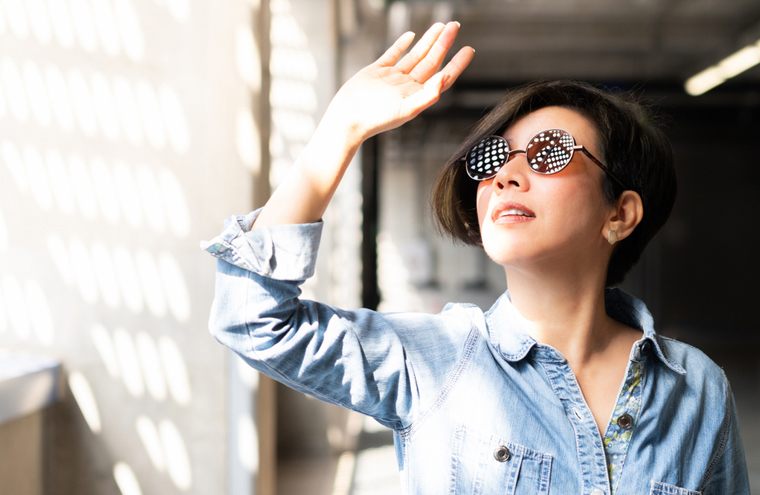
Small, consistent habits make a meaningful difference.
Wear UV-protective sunglasses, even on cloudy days
Use prescribed eye drops exactly as directed
Limit prolonged screen time early on
Choose softer, warmer indoor lighting
Stay hydrated and well-rested
What many patients overlook is that fatigue amplifies light sensitivity. Healing eyes need rest—both visual and physical.
A Clinical Insight You Rarely See Online
Here’s something we observe often at Jryn Eye Clinic:
Many patients improve faster than they realize.
The brain adapts quietly. One day, patients suddenly notice they forgot their sunglasses—or that bright light no longer bothers them. This subconscious adaptation is a sign of healthy recovery.
Objective healing often progresses faster than subjective comfort.
Does Light Sensitivity Affect Long-Term Results?
In nearly all routine eye surgeries, no.
Temporary light sensitivity does not mean:
The surgery failed
Vision will regress
Permanent damage occurred
In fact, many patients with early sensitivity achieve excellent long-term outcomes. The most important factors are accurate diagnosis, advanced technology, and personalized follow-up care.
Conclusion
Light sensitivity after eye surgery can feel unsettling, especially when your vision matters so deeply to your daily life. But in most cases, this sensitivity is not a sign that something is wrong—it is a sign that your eyes are healing, recalibrating, and learning to process light in a new way.
Recovery does not happen overnight. The eyes, the nerves, and the brain all need time to adapt, and each patient does so at a slightly different pace. What matters most is steady improvement, proper follow-up care, and knowing when reassurance is enough—and when evaluation is needed.
At Jryn Eye Clinic, under the care of Dr. Han Sang Yeop, we believe that successful eye surgery is not defined solely by the procedure itself, but by the quality of care that follows. Clear communication, personalized recovery guidance, and long-term vision health are central to how we support our patients.
If you are experiencing prolonged light sensitivity, or if you are considering eye surgery and want clear, experience-based guidance, seeking care at a clinic that prioritizes precision, safety, and patient understanding makes all the difference.
Ready for a Personalized 1:1 Eye Consultation?
Schedule your comprehensive 3D eye examination with Chief Director Dr. Sang-Youp Han and our ophthalmology team on the 14th floor of JRYN Medical Center in Seomyeon, Busan.