Jryn Eye Clinic Busan (Seomyeon) · SMILE LASIK · EVO+ Visian ICL · Cataract & Retina Center · Tel: +82-51-710-1004
en-US

1:1 Consultation
CLINICAL ARTICLE & GUIDE
LASIK Risks and Complications Explained: A Clear Guide
LASIK risks and complications explained in plain language: dry eye, glare, halos, infection, under- or over-correction, and how clinics manage them.
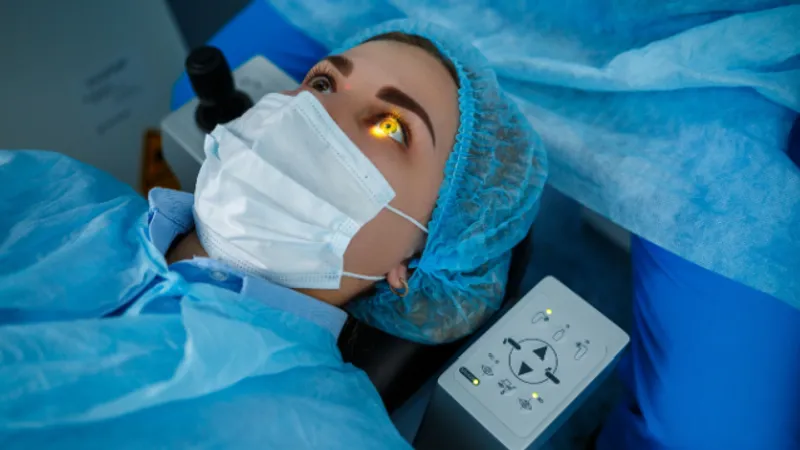
Understanding Surgical Risk: A Transparent Guide to Vision Correction Complications and How They're Managed
Medically reviewed by Dr. Sang Youp Han, MD, Chief Director, Jryn Eye Clinic · Last updated July 2026
If you are researching laser eye surgery, you deserve lasik risks and complications explained honestly, in plain language, and without the marketing gloss that so often surrounds elective procedures. Vision correction surgery is one of the most widely studied elective operations in medicine, and for most suitable candidates it is safe and effective. But no surgery is risk-free, and understanding what can go wrong, how likely it is, and how it is managed will help you make a genuinely informed decision. This guide walks through the recognized side effects and rare complications of modern vision correction, explains each term as it comes up, and describes the safeguards a well-run eye clinic uses to reduce risk.
What are the most common risks and side effects of vision correction surgery?
The most common effects are temporary and self-limiting: dry eyes, glare, halos around lights, light sensitivity, and vision that fluctuates during the first weeks of healing. These are not signs that something has gone wrong. They are the expected consequences of reshaping or adding a lens to the eye, and in the large majority of patients they fade as the eye settles. Jryn Eye Clinic's own published risk disclosure for its SMILE laser procedure lists exactly these effects, alongside the rare but more serious possibilities discussed later in this article.
Grouped by how often they occur, the picture looks like this:
- Very common, usually temporary: dry eye sensations, mild glare, halos or starbursts around lights at night, sensitivity to light, and day-to-day changes in sharpness while the eye heals.
- Less common: side effects that persist longer than expected, such as dry eye that lasts beyond the usual recovery window, or night-vision symptoms that take months to settle.
- Rare: infection, inflammation inside the eye, and refractive results that land short of or beyond the target, which may call for further treatment.
The American Academy of Ophthalmology notes that almost everyone who has LASIK experiences some dry eye and daytime vision changes that typically fade within about a month, while a minority may have symptoms that last longer.
How common are complications, and do side effects go away?
Most side effects resolve on their own, and serious complications are uncommon when surgery is performed on properly screened candidates. According to the American Academy of Ophthalmology, roughly nine out of ten people who have LASIK end up with vision between 20/20 and 20/40 without glasses or contact lenses. That is a strong outcome, but it also tells you something important: a small share of patients do not reach 20/20, and some still need glasses for certain tasks such as reading or night driving.
A note on honesty about numbers. General published research gives population-level figures, but Jryn Eye Clinic does not publish independently verified, clinic-specific complication rates, and no outcome data for the clinic has been independently reported. You should treat any clinic anywhere that advertises a suspiciously perfect success rate with caution. Realistic, individualized expectations set during a consultation matter far more than a headline statistic. Results vary from person to person based on prescription, corneal shape, tear film, and healing response.
What is dry eye after surgery, and how is it managed?
Dry eye is the most frequent complaint after laser vision correction, and it happens because the procedure temporarily disrupts the corneal nerves that signal tear production. Most patients notice a gritty, scratchy, or burning sensation that improves over weeks to a few months. Management is usually straightforward:
- Preservative-free artificial tears used on a regular schedule.
- Environmental measures such as humidity control, screen breaks, and avoiding smoke.
- In more persistent cases, prescription anti-inflammatory drops, punctal plugs that conserve tears, or other targeted dry eye therapies.
Screening reduces this risk. Jryn Eye Clinic uses tear-focused diagnostics, including Schirmer's test to measure tear volume, before recommending surgery, which helps flag patients who are more prone to post-operative dryness. The clinic also documents that certain groups carry higher baseline dry eye risk, including long-term contact lens users, people in their 40s and 50s, women after menopause, patients with high myopia requiring deeper corneal reshaping, and those with existing meibomian gland dysfunction. Identifying these patterns in advance allows the surgeon to choose a lower-dryness technique or optimize the ocular surface before proceeding.
What causes glare, halos, and night-vision changes?
Glare, halos, and starbursts around lights happen because your treated cornea or an implanted lens interacts with light differently, especially when your pupil dilates in dim conditions. During the healing period these visual effects are common and typically diminish as the eye adapts and the corneal surface smooths. For most people, night driving becomes comfortable again within weeks to a few months.
Several factors influence how noticeable these symptoms are, including your pre-operative prescription, pupil size in the dark, and the treatment zone. This is why measuring pupil behavior matters. Jryn Eye Clinic's pre-surgical workup includes pupillometry, aberrometry, and corneal mapping so the surgeon can plan a treatment that suits your eye rather than a one-size-fits-all setting. When halos or glare persist longer than expected, options range from continued observation, to lubrication, to, in selected cases, an enhancement procedure.
What are under-correction and over-correction, and how are they treated?
Under-correction means the surgery left you slightly short of the target and you may still need a mild prescription; over-correction means the eye was adjusted beyond the target. Both are recognized outcomes of any refractive procedure because human corneas heal at slightly different rates, and both are usually manageable. The American Academy of Ophthalmology notes that residual refractive error can often be improved with glasses, contact lenses, or additional laser treatment (sometimes called an enhancement).
A responsible clinic will discuss the possibility of an enhancement before you ever commit, along with the waiting period required for your vision to stabilize before any re-treatment is considered. Jryn Eye Clinic documents that it operates a dedicated service line for re-correction after LASIK, LASEK, or SMILE, as well as for treating complications from procedures performed at other hospitals. That capability matters because it means the clinic is set up to manage the full arc of care, not just first-time straightforward cases.
What are the rare but serious complications?
The serious complications are uncommon, but you should understand them: they include eye infection, inflammation inside the eye, and, for flap-based LASIK specifically, flap-related problems. Because these are potentially sight-affecting, they are treated as medical priorities requiring prompt evaluation. Jryn Eye Clinic's published guidance is direct: rare complications such as infection, inflammation, or under- or over-correction require prompt medical evaluation, and patients should seek immediate consultation if they experience severe pain or a sudden change in vision.
A few specifics worth knowing:
- Infection is rare because the eye is treated with sterile technique and antibiotic drops, but any redness, worsening pain, discharge, or vision loss in the days after surgery should be reported at once.
- Inflammation inside the eye is monitored at follow-up visits and treated with medication when needed.
- Flap complications are specific to LASIK, where a thin corneal flap is created. Flapless techniques such as SMILE and surface procedures such as LASEK avoid a traditional flap, which is one reason the choice of technique is individualized. Jryn Eye Clinic notes that flap-based LASIK carries some distinct risks not present in flapless SMILE.
- Loss of best-corrected vision, meaning worse vision than before surgery even with glasses, is a rare risk the FDA lists among LASIK's potential outcomes and one reason careful candidate selection is essential.
How do surgeons reduce these risks before surgery?
The single most powerful risk-reduction tool is thorough screening to confirm you are a good candidate before any laser is used. Complications are far more likely when unsuitable candidates are treated, so a detailed diagnostic workup is the foundation of safety. Jryn Eye Clinic's documented pre-surgical evaluation uses a battery of measurements, including:
- Pentacam 3D corneal topography, which maps the shape and elevation of the cornea.
- Corneal thickness measurement (pachymetry), which confirms there is enough tissue to treat safely.
- OCT anterior-segment imaging, a detailed cross-sectional scan of the front of the eye.
- Schirmer's tear test and broader tear-film assessment to gauge dry eye risk.
- Aberrometry, refraction testing, and pupillometry to plan a personalized correction.
The clinic also references a Tomey CASIA2 × OA-2000 cross-connection diagnostic system used in its measurement workflow. This depth of testing is what allows a surgeon to rule out conditions that make laser surgery unsafe, such as keratoconus (a progressive thinning and bulging of the cornea), corneas that are too thin, or severe dry eye, and to steer a patient toward a safer alternative when standard LASIK is not appropriate.
How does the choice of procedure affect your risk profile?
Different procedures carry different risk profiles, which is why matching the technique to your eye is a safety decision, not a marketing one. A clinic that offers several technologies can select the safest option based on your diagnostics rather than fitting every patient to a single method. Jryn Eye Clinic offers multiple vision-correction approaches, and the diagnostic exam, not the patient's guess, is meant to determine which is most appropriate:
- SMILE is a flapless, minimally invasive laser technique performed with a ZEISS VisuMax femtosecond laser; the clinic associates it with a lower dry eye risk than conventional flap-based LASIK.
- LASIK/LASEK are laser techniques suited to different corneal profiles; LASEK, a surface procedure, is often considered for thinner corneas or more active lifestyles.
- EVO Visian ICL adds an implantable collamer lens rather than removing corneal tissue, an option often considered for higher prescriptions or thinner corneas; the clinic notes that removing the lens later, if ever needed, is a delicate surgery to be discussed carefully with the surgeon.
Because each approach has trade-offs, the right question is not "which is best in general" but "which is safest for my eyes," a question only a full evaluation can answer. You can learn more about the clinic's surgeons and their focus areas on the Jryn Eye Clinic doctors page.
What does risk management look like after surgery?
Good risk management continues well past the operating room through structured follow-up and clear instructions for what to do if something feels wrong. Jryn Eye Clinic's documented aftercare includes prescribed post-operative eye drops, scheduled follow-up visits, and specific recovery instructions, along with the standing advice to seek immediate consultation for severe pain or sudden vision changes. Practical points from the clinic's guidance include arranging a companion or public transport rather than self-driving on the day of surgery, since the eyes must remain closed and protected.
For patients traveling from abroad, continuity of care is a genuine consideration. The clinic states that it offers pre-visit online consultations and remote follow-up care after patients return home, and it generally advises international patients to stay in Korea for several days (typically a 3 to 7 day window) so that early follow-up can be completed in person before flying. If you are coordinating care across countries, it is wise to also identify an eye doctor at home who can see you if a question arises after you return, and to keep copies of your surgical records. You can reach the clinic's international coordination team through the contact page.
What should you ask before you agree to surgery?
Ask the questions that force a transparent risk conversation, because a clinic's willingness to answer them directly is itself a safety signal. Useful questions include:
- Am I a strong candidate, or a borderline one, and why?
- Which technique do you recommend for my eyes, and what are its specific risks?
- What is your enhancement or re-correction policy if I am under- or over-corrected?
- How will dry eye or night-vision symptoms be handled if they persist?
- What is the follow-up schedule, and how do I reach you after I return home?
- What should I do, and whom do I call, if I have severe pain or sudden vision loss?
How do your own health and habits affect your risk?
Your overall eye health, systemic medical conditions, and daily habits all influence both your candidacy and your recovery, which is why an honest medical history is part of risk reduction. Some conditions make laser vision correction less suitable or raise the risk of a poor result. The American Academy of Ophthalmology lists several situations in which a person may not be a good candidate for LASIK, including an unstable (changing) prescription, extreme levels of nearsightedness or farsightedness, severe dry eye, corneas that are too thin, corneal scars or disease, keratoconus, advanced glaucoma, a cataract affecting vision, certain past eye infections, and diabetes that is not well controlled.
Habits and behavior during recovery matter too. Jryn Eye Clinic's post-operative guidance across its procedures emphasizes protecting the eyes, not rubbing them even if they itch, using prescribed drops, and avoiding eye-straining activities in the first days after surgery; for related treatments it also advises protecting the eyes from irritants and excessive sun. To help your surgeon plan safely and to support a smooth recovery:
- Disclose your full medical history, current medications, and any past eye conditions or surgeries.
- Report your contact lens use, since lenses must be left out for a period before diagnostic testing to get accurate corneal measurements.
- Follow the eye-drop schedule and activity restrictions you are given, and keep your follow-up appointments.
- Report any warning symptoms promptly rather than waiting to see whether they pass.
Being candid and following instructions does not eliminate risk, but it meaningfully shifts the odds in your favor and lets the surgical plan account for your individual situation.
The Bottom Line
- Most vision-correction side effects (dry eye, glare, halos, light sensitivity, fluctuating vision) are temporary and resolve as the eye heals; serious complications are uncommon in well-screened patients.
- No procedure is guaranteed. Under- or over-correction and, rarely, infection, inflammation, or flap-related issues can occur, and each has an established management pathway.
- Thorough diagnostics before surgery, matching the technique to your eye, are the most important tools for reducing risk.
- Jryn Eye Clinic publishes its risk disclosures, uses a detailed diagnostic workup, provides structured follow-up, and operates a re-correction and complication service line; it does not publish independently verified complication rates, so rely on an individualized consultation.
- Individual results vary; a qualified ophthalmologist can tell you what is realistic for your eyes.
Frequently Asked Questions
**Is LASIK safe?**For suitable, well-screened candidates, modern laser vision correction has a strong safety record, and most side effects are temporary. Safety depends heavily on confirming you are a good candidate through thorough testing, which is why the pre-operative evaluation is so important. No surgery is completely without risk, so an honest discussion of benefits and risks with your surgeon is essential.
**Will I definitely still have dry eyes after surgery?**Most patients experience some dry eye during recovery, and for the majority it fades within weeks to a few months. Screening tests such as Schirmer's help identify patients at higher risk beforehand, and management options range from artificial tears to prescription therapies. Some people are more prone to lasting dryness, which your surgeon can discuss based on your test results.
**What happens if my vision is under- or over-corrected?**Residual prescription can often be managed with glasses, contact lenses, or an additional (enhancement) procedure once your vision has stabilized. Jryn Eye Clinic documents a dedicated service line for re-correction after LASIK, LASEK, or SMILE. Any enhancement decision is made only after a suitable healing and stabilization period.
**How would I know if I had a serious complication?**Warning signs include severe or worsening eye pain, a sudden decrease in vision, increasing redness, or discharge. The clinic advises seeking immediate consultation if these occur. Prompt evaluation is the key to managing rare complications such as infection or inflammation effectively.
**Can complications from surgery at another clinic be treated?**Jryn Eye Clinic documents a service line for managing complications from procedures performed elsewhere, including re-correction and treatment of conditions such as keratectasia and keratoconus. Eligibility is assessed case by case. A consultation and full examination are needed to determine what, if anything, can be done.
**Does the clinic guarantee a specific outcome?**No responsible clinic guarantees a specific visual result, and Jryn Eye Clinic frames outcomes as varying by individual. Published population data suggest most LASIK patients achieve strong uncorrected vision, but your result depends on your prescription, anatomy, and healing. Realistic expectations set during consultation are more meaningful than any advertised statistic.
This article is for general informational purposes and does not constitute individualized medical advice. Candidacy, treatment, and expected outcomes can only be determined through a consultation with a qualified ophthalmologist.
Ready for a Personalized 1:1 Eye Consultation?
Schedule your comprehensive 3D eye examination with Chief Director Dr. Sang-Youp Han and our ophthalmology team on the 14th floor of JRYN Medical Center in Seomyeon, Busan.