Jryn Eye Clinic Busan (Seomyeon) · SMILE LASIK · EVO+ Visian ICL · Cataract & Retina Center · Tel: +82-51-710-1004
en-US

1:1 Consultation
CLINICAL ARTICLE & GUIDE
LASEK Eye Surgery Korea: Complete US Patient Guide 2026
Explore LASEK Korea at Jryn Eye Clinic with cost, recovery timeline, candidacy for thin corneas, dry eye benefits, and expert surgeon care for US patients.
Introduction
Every year, thousands of Americans wearing contact lenses for 5, 10, even 15 years quietly reach the same conclusion: the daily grind of lenses, solution, and dry, screen-fatigued eyes is a problem with a permanent solution — and that solution is available in Seoul, South Korea, at a fraction of the US price, performed by surgeons with case volumes that dwarf most American practices. For US patients with thin corneas, significant astigmatism, or a history of dry eye who have been told they may not be ideal LASIK or SMILE Pro candidates, LASEK Korea represents not just a cost-smart alternative but often the clinically superior choice.
Marcus — a software engineer in Los Angeles with a –4.50 prescription and corneas his US optometrist described as "borderline for LASIK" — spent six weeks on Reddit, YouTube, and WhatsApp before he found a clinic in Seoul willing to give him a transparent, data-rich answer to every question he had. The problem most US patients face is not the procedure itself but the information gap: finding a Seoul clinic that communicates in precise, honest English, publishes real cost breakdowns, and has the surgeon credentials to back up every claim on its website.
By the end of this guide, you will understand whether LASEK is the right procedure for your prescription and corneal profile, how LASEK Korea compares to LASIK and SMILE Pro in outcomes, recovery, and dry eye risk, the true all-in cost of LASEK in Seoul versus your home city in the US, what a day-by-day recovery in Seoul actually looks like for an international patient, and how Jryn Eye Clinic's surgeon credentials, technology, and post-operative care make it the informed choice for American patients.
As a board-certified ophthalmologist who has performed 600+ vision correction procedures annually over 20+ years, Dr. Sang Youp Han and the Jryn Eye Clinic team provide expert, evidence-based guidance on whether LASEK is the right procedure for your specific corneal profile, prescription, and lifestyle.
What Is LASEK Eye Surgery? Understanding the Procedure Korea Has Perfected
How LASEK Works — The Alcohol Epithelial Technique Explained
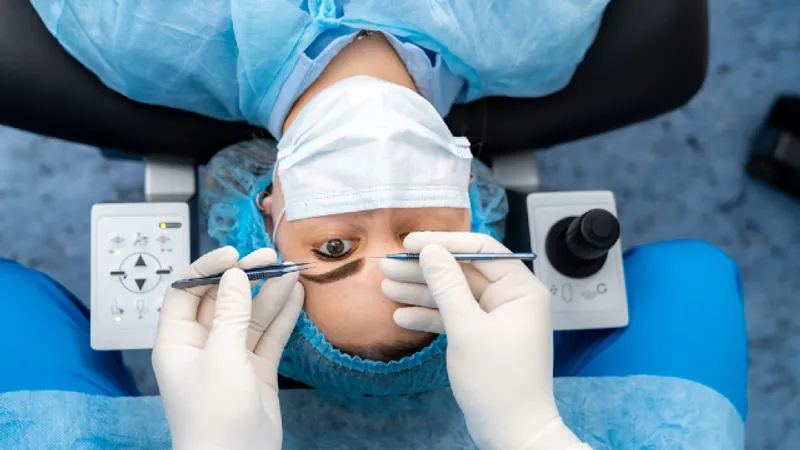
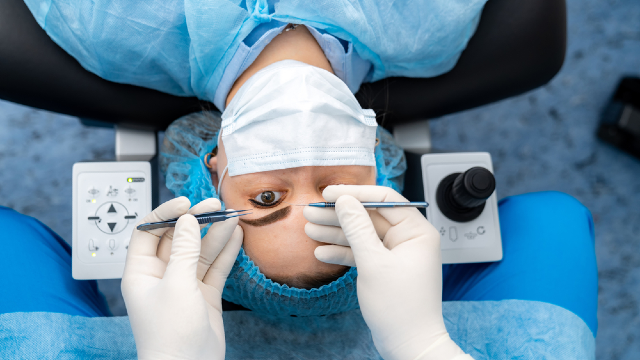
LASEK — Laser-Assisted Sub-Epithelial Keratectomy — is a surface ablation procedure that corrects refractive errors by reshaping the underlying corneal stroma without creating the deep stromal flap that defines LASIK. The procedure begins with topical anaesthetic drops applied to both eyes to eliminate discomfort. A dilute alcohol solution — typically 18–20% ethanol — is then applied to the corneal surface for approximately 20–30 seconds, which gently loosens the epithelial layer (the outermost cellular layer of the cornea, approximately 50–55 microns thick) without damaging the underlying tissue.
The epithelial flap is then carefully lifted and folded aside — crucially, it is not cut with a blade or laser and is not discarded, as in PRK (photorefractive keratectomy). With the epithelium moved aside, the excimer laser reshapes the underlying corneal stroma with sub-micron precision to correct your refractive error — myopia, hyperopia, or astigmatism. The epithelial flap is then repositioned over the treated surface, and a bandage contact lens is placed to protect the delicate epithelium as it re-adheres over the following 3–5 days.
The key distinctions matter clinically. LASEK does not cut a deep corneal stromal flap with a microkeratome or femtosecond laser — this means significantly more corneal tissue depth is preserved compared to LASIK for the same prescription correction. Unlike PRK, where the epithelium is removed and discarded, LASEK repositions the epithelial flap, which many surgeons believe reduces immediate post-operative discomfort and supports faster epithelial re-adhesion. SMILE Pro uses a femtosecond laser to create an intrastromal lenticule without any surface disruption — a fundamentally different approach with its own candidacy advantages. For a deeper comparison of SMILE Pro's unique advantages, see our SMILE Pro Korea guide.
At Jryn Eye Clinic, LASEK is performed using current-generation excimer laser technology, with pre-operative corneal mapping via Pentacam 3D corneal topography to ensure the ablation profile is precisely calibrated to your individual corneal shape.
How LASEK Eye Surgery Korea Differs From US Procedures
The procedure technique itself is clinically identical in Korea and the United States. The meaningful differentiation lies in three specific areas that directly affect your outcome and experience.
The first is surgeon annual case volume. Jryn Eye Clinic performs 600+ refractive procedures per year, compared to the US national average of approximately 200–250 per surgeon per year. The relationship between case volume and surgical outcome is well-established in procedural medicine — and in refractive surgery, where micron-level precision determines visual acuity outcomes, it is particularly significant.
The second is pre-operative diagnostic thoroughness. Jryn's full pre-operative assessment includes Pentacam 3D topography, corneal pachymetry (thickness measurement), wavefront aberrometry, tear film assessment, and pupil size measurement under scotopic (low-light) conditions — a diagnostic suite that typically takes 60–90 minutes. Most US practices compress this assessment into 20–30 minutes, which means less diagnostic data informing the surgical decision.
The third is post-operative continuity planning for international patients — a structured protocol that most US practices simply do not need to offer and therefore have not developed. All equipment used at Jryn Eye Clinic holds KFDA (Korean Food and Drug Administration) approval.
What Prescriptions Can LASEK Correct?
LASEK corrects myopia (nearsightedness) in the range of approximately –1.00 to –8.00 diopters, with some surgeons treating up to –10.00 in patients with appropriate corneal profiles. Hyperopia (farsightedness) in the range of +1.00 to +4.00 diopters can be corrected in suitable cases. Astigmatism of up to –4.00 to –5.00 diopters of cylindrical correction is within the LASEK treatment range.
It is essential to understand that prescription range is always secondary to corneal thickness and topography as a candidacy determinant. A patient with –5.00 myopia and thin corneas is a significantly better LASEK candidate than the same prescription in a LASIK context — a distinction that is not always clearly explained at initial US consultations.
Prescription Type | LASEK Range | LASIK Range | SMILE Pro Range |
|---|---|---|---|
Myopia | –1.00 to –8.00 D | –1.00 to –8.00 D | –1.00 to –10.00 D |
Hyperopia | +1.00 to +4.00 D | +1.00 to +6.00 D | Not indicated |
Astigmatism | Up to –4.00 D cyl | Up to –4.00 D cyl | Up to –5.00 D cyl |
Thin Corneas | ✅ Preferred | ⚠️ Caution | ✅ Suitable |
Dry Eye History | ✅ Lower risk | ⚠️ Higher risk | ✅ Lowest risk |
LASEK vs LASIK Korea — Which Procedure Is Right for You?
The Thin Cornea Advantage — Why LASEK Is the Clinically Superior Choice for Many US Patients
The fundamental candidacy distinction between LASEK and LASIK comes down to where in the cornea the surgical work occurs. LASIK requires creating a corneal flap of approximately 90–160 microns depth using a microkeratome blade or femtosecond laser. This flap cut permanently reduces the residual stromal bed — the corneal tissue that must remain intact for structural safety. The standard clinical safety threshold for residual stromal bed after LASIK is 250 microns. Patients with pre-operative central corneal thickness below approximately 490–510 microns are at higher risk under LASIK and may be categorically excluded from LASIK candidacy.
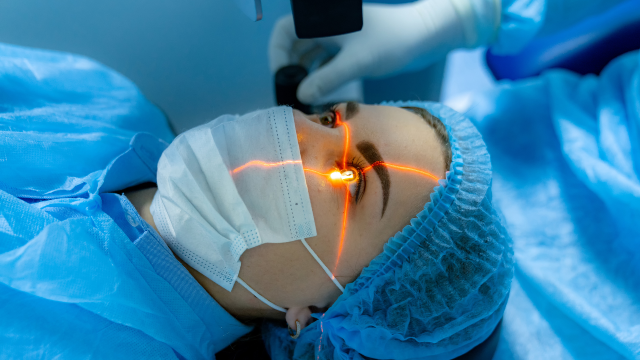
LASEK, by contrast, ablates only at the epithelial surface level. Because the epithelial layer is approximately 50–55 microns thick and the ablation occurs at the stromal surface beneath — rather than within — a deep flap, significantly more corneal stromal tissue is preserved for the same prescription correction. The practical result is clinically significant: patients with central corneal thickness of 460–490 microns who are categorically excluded from LASIK candidacy may be fully suitable LASEK candidates after a thorough Pentacam evaluation.
This is directly relevant to the "borderline for LASIK" conversation that US optometrists have with patients like Marcus. That phrase — "borderline for LASIK" — is almost always describing a thin-cornea concern. It does not mean "borderline for all laser vision correction." It frequently means "an excellent LASEK candidate, if properly assessed." The Pentacam 3D corneal topography map used at Jryn provides a comprehensive 3D profile of the anterior and posterior corneal surfaces, corneal thickness at multiple points, and curvature data — all of which inform the LASEK vs LASIK candidacy determination with far greater precision than standard optometry measurements.
For patients whose prescription is above –8.00 D and who are not LASEK candidates, ICL surgery Korea offers an excellent lens-based alternative that requires no corneal ablation at all.
LASEK vs LASIK vs SMILE Pro — Dry Eye Outcomes Compared
Dry eye is one of the most common concerns among US patients researching refractive surgery — and the procedure-specific dry eye risk profiles are meaningfully different, a fact that most competitor sites either gloss over or ignore entirely. For a detailed look at managing dry eye specifically in the context of vision correction planning, see our dry eye treatment Seoul guide.
LASIK's dry eye mechanism is the most significant of the three procedures. The femtosecond laser or microkeratome flap cut severs corneal nerves in the stromal bed, reducing corneal sensitivity and the tear secretion reflex. Nerve regeneration takes 6–24 months post-operatively. Clinically significant dry eye is reported in 20–40% of LASIK patients at 1 month post-operatively in published literature — a rate that most LASIK marketing materials do not headline.
LASEK's dry eye mechanism is shallower. Surface ablation does not cut stromal nerves; epithelial nerve disruption is limited to the surface layer and recovers significantly faster than stromal nerve regeneration. Dry eye rates post-LASEK are consistently lower than post-LASIK in comparative studies — though they are higher than SMILE Pro, which preserves corneal nerves most comprehensively of any current refractive procedure.
At Jryn, patients with significant pre-existing dry eye are counselled toward SMILE Pro or ICL where their prescription and corneal profile allows. Patients with mild-to-moderate dry eye who are thin-cornea candidates are specifically advised LASEK over LASIK.
Procedure | Nerve Disruption | Post-Op Dry Eye Risk | Recommended if Pre-Existing Dry Eye |
|---|---|---|---|
LASIK | High (stromal flap) | 20–40% at 1 month | ⚠️ Caution |
LASEK | Moderate (epithelial surface) | 10–20% at 1 month | ✅ Preferred over LASIK |
SMILE Pro | Low (intrastromal) | 5–10% at 1 month | ✅ Best option |
ICL | None (no ablation) | Minimal | ✅ Best for high myopia + severe dry eye |
For more detail on how LASIK specifically compares as a procedure option, see our LASIK Korea complete guide.
Am I a Good LASEK Candidate? The Jryn Pre-Screening Checklist
The ideal LASEK candidate profile at Jryn typically includes myopia of –1.00 to –8.00 D, astigmatism up to –4.00 D, corneal thickness of 460–510 microns (thinner than the LASIK minimum threshold), a stable prescription for 12+ months, age 21–45, mild-to-moderate dry eye history, and an active lifestyle that may include contact sports — LASEK has no flap dislocation risk post-surgery, unlike LASIK, making it genuinely better suited to high-impact activities.
Relative contraindications include keratoconus or forme fruste keratoconus (Pentacam evaluation is essential to rule this out before any procedure), corneal scarring, severe dry eye syndrome, autoimmune conditions that affect corneal healing, and prescriptions outside the ablation range.
Before booking any flights, Jryn offers a free WhatsApp pre-screening service. Submit your current US prescription, any existing optometry report or corneal scan, your age, and relevant medical history — and receive a preliminary LASEK candidacy assessment within 24–48 hours. Final candidacy is confirmed on-site after the full Pentacam and pachymetry assessment.
LASEK Korea Cost — The True All-In Breakdown for US Patients
LASEK Surgery Seoul — All-In Cost Breakdown for US Patients
The single most important financial question US patients ask — and the one almost no competitor site answers honestly — is not "what does LASEK cost in Seoul?" but "what does the entire trip cost me, and how does that compare to having the procedure done in New York or Los Angeles?" The answer, with full itemised transparency, is below.
At Jryn Eye Clinic, the procedure cost covers a comprehensive package that eliminates the hidden-charge experience that is common at US ophthalmology centres:
Item | Included? | Estimated Cost |
|---|---|---|
Initial consultation and pre-op diagnostic assessment | ✅ Included | $0 additional |
Pentacam 3D topography mapping | ✅ Included | $0 additional |
LASEK procedure (both eyes) | ✅ Core procedure | Contact Jryn for current pricing |
Bandage contact lens fitting | ✅ Included | $0 additional |
All Seoul post-op visits (Days 1, 3, 7) | ✅ Included | $0 additional |
Post-op eye drop kit (full course) | ✅ Included | $0 additional |
English-speaking patient coordinator | ✅ Included | $0 additional |
English medical records package | ✅ Included | $0 additional |
Total Jryn LASEK Procedure Cost | Contact Jryn for current pricing |
On consultation fee policy: if a patient travels to Seoul and is found not to be a LASEK candidate on full assessment, Jryn's policy on consultation fees is confirmed directly by the clinic — contact the international patient coordinator via WhatsApp for the current policy before traveling.
For context, LASEK in the US typically costs $2,000–$3,500 per eye ($4,000–$7,000 for both eyes) at major metropolitan ophthalmology centres — and that price often does not include the depth of pre-operative diagnostics that Jryn provides as standard.
City-by-City Total Trip Cost: Seoul vs Your Home City
This is the calculation Marcus ran on a spreadsheet during week three of his research. Here it is, done for you, for five major US departure cities. Flight estimates are based on economy class; hotel estimates reflect 3-star to 4-star accommodation in the Gangnam area near Jryn Eye Clinic. For comprehensive travel planning guidance specific to your eye surgery trip, see our Seoul eye surgery travel guide and, for city-specific detail, the total cost of Korea eye surgery including flights and hotel resource.
US City | Round-Trip Flight (est.) | 5-Night Seoul Hotel (est.) | Jryn LASEK Procedure | Total Seoul Cost | US LASEK Cost (both eyes) | Estimated Saving |
|---|---|---|---|---|---|---|
Los Angeles | $700–$1,000 | $400–$700 | Contact Jryn | Calculate on inquiry | $4,000–$7,000 | Significant |
New York City | $900–$1,300 | $400–$700 | Contact Jryn | Calculate on inquiry | $4,000–$7,000 | Significant |
Chicago | $900–$1,200 | $400–$700 | Contact Jryn | Calculate on inquiry | $4,000–$7,000 | Significant |
Houston | $800–$1,100 | $400–$700 | Contact Jryn | Calculate on inquiry | $4,000–$7,000 | Significant |
Phoenix | $850–$1,150 | $400–$700 | Contact Jryn | Calculate on inquiry | $4,000–$7,000 | Significant |
For Los Angeles-specific travel and procedure planning detail, see the LASIK Korea from Los Angeles guide. For New York City patients, the LASIK Korea from New York guide covers departure-specific logistics.
The framing that matters here: this is not budget surgery abroad. This is the same or superior technology, higher surgeon case volume, a more thorough pre-operative diagnostic assessment, and a structured international patient care protocol — at a total all-in cost that is meaningfully lower than the US equivalent for the majority of departure cities listed above.
Does US Insurance Cover LASEK Done in Korea?
LASIK, LASEK, and SMILE Pro are classified as elective refractive procedures and are excluded from virtually all US health insurance plans — regardless of where the procedure is performed. This means the insurance comparison between having LASEK in Seoul versus having LASEK in Los Angeles is equal: zero coverage in both cases.
What can offset costs are FSA (Flexible Spending Account) and HSA (Health Savings Account) funds, which can typically be used for elective vision correction procedures. Confirm with your individual plan administrator, as plan rules vary. Jryn provides full itemised invoicing documentation in English specifically for FSA/HSA submission.
International medical travel insurance for elective procedures is also worth exploring — it can cover unforeseen post-operative care costs during your Seoul stay in the unlikely event that a complication requires additional attention before you fly home.
LASEK Recovery in Seoul — Your Day-by-Day Guide
The LASEK Recovery Timeline — What to Expect in Seoul
The most critical recovery distinction to understand before choosing LASEK over LASIK or SMILE Pro is this: LASEK has a longer initial recovery period, and that is expected, not a complication. Because the corneal epithelium must regenerate and re-adhere over 3–5 days following surface ablation, the bandage contact lens worn during this period is functional — it is protecting the healing epithelial surface. Vision during Days 1–4 is blurry, and mild discomfort (sensitivity to light, mild aching) is normal. By Day 5–7, functional vision improves significantly for the majority of patients.
This is not a disadvantage. It is the direct trade-off for a flap-free, tissue-conservative procedure with meaningfully lower dry eye risk, no risk of flap dislocation during sports or physical impact post-recovery, and preservation of more corneal stromal tissue for long-term corneal health.
Day | Vision Status | Activity Allowed | Eye Drop Schedule | Seoul Activity |
|---|---|---|---|---|
Day 0 (Surgery Day) | Blurry; bandage lens placed | Rest; no screens | Antibiotic + steroid drops begin | Rest at hotel; companion or coordinator recommended for transport |
Day 1 | Blurry; mild discomfort | Rest; minimal screen use | Continue drop schedule | Rest; gentle walk if comfortable |
Day 2 | Improving; still sensitive | Light screen use (30 min max) | Continue drops | Rest; hotel room; audiobook or podcast recommended |
Day 3 (Post-op check) | Noticeably improving | Screen use up to 1–2 hours | Post-op check at Jryn; drop schedule reviewed | Post-op visit; gentle exploration if comfortable |
Day 4 | Functional vision returning | Desk work possible (limited) | Continue drops | Explore Gangnam area; light sightseeing |
Day 5 | Good functional vision | Full desk work; no driving yet | Continue drops | Seoul sightseeing; restaurants; shopping |
Day 6 | Near-full functional vision | Full activity except sports/driving | Final pre-departure check at Jryn | Departure preparation |
Day 7 | Functional; continuing improvement | Fly home ✅ | Eye drops for in-flight use; instructions provided | Fly home |
Flying Home After LASEK — When Is It Safe?
Most LASEK surgeons recommend a minimum of 5–7 days before long-haul flying. Jryn's standard recommendation for US patients is Day 7 post-surgery for transpacific flights — which is why the standard Seoul itinerary for US LASEK patients is structured around a 7-night stay from surgery day.
In-flight care is non-negotiable, not optional. Cabin air is extremely dry, with humidity typically running at 10–20% — significantly lower than normal ambient humidity. Preservative-free artificial tear drops every 30–60 minutes during the flight are mandatory for healing LASEK eyes. Do not wear contact lenses. Protect your eyes from overhead air vents by directing them away from your face.
Jryn provides every international LASEK patient with a sealed in-flight eye care kit including preservative-free tears, UV-protective sunglasses, and written in-flight instructions in English. Your Day 6 pre-departure post-op check with Dr. Han or Dr. Heo confirms whether your individual healing progress permits Day 7 departure as planned.
Post-Repatriation Care — Managing Your Recovery Back in the US
This is the section that no other Seoul eye clinic publishes in English — and it is the section that answers the question Marcus spent hours on Reddit trying to find: what happens to your post-operative care when you leave Seoul and go back to Los Angeles?
Jryn's international patient post-repatriation protocol is built into the care plan from Day One, not added as an afterthought when you mention you are flying home at the end of the week.
The WhatsApp follow-up component involves Jryn's patient coordinator checking in at Day 10, Day 21, and Day 45 post-surgery via WhatsApp with a structured visual acuity self-assessment form. This is not a courtesy check — it is a structured clinical touchpoint that flags any deviation from expected healing trajectories.
The English medical records package that every international patient receives contains a complete post-operative clinical summary including pre-operative measurements, ablation parameters, surgeon notes, and a 3-month follow-up schedule that any qualified US optometrist or ophthalmologist can implement without specialist knowledge. This document is designed to be handed directly to your existing US eye care provider at your 1-month check. Your 1-month and 3-month post-op assessments can be performed entirely by your US optometrist using Jryn's standardised follow-up protocol — no return trip to Seoul is required.
For surgeon-to-surgeon queries, Jryn's clinical team is available via email for direct communication if your US provider has technical questions about the ablation parameters or post-operative management. Emergency protocol: any urgent visual concern post-repatriation — sudden vision change, significant pain, photophobia — should be evaluated by a US ophthalmologist immediately. Jryn's WhatsApp line is available for remote guidance but cannot replace in-person emergency assessment.
LASEK Results — What Outcomes Can US Patients Expect at Jryn Eye Clinic?
Visual Acuity Outcomes After LASEK — What the Evidence Shows
Published clinical data on LASEK outcomes is well-established. Approximately 90–95% of patients with myopia up to –6.00 D achieve 20/20 or better uncorrected visual acuity at 3 months post-operatively. Approximately 98–99% achieve 20/40 or better — the legal driving standard in most US states. These are not marketing claims; they are the ranges consistently reported in peer-reviewed refractive surgery literature for properly selected LASEK candidates.
Prescription-specific outcomes matter, and Jryn discusses them with every patient proactively rather than defaulting to the best-case number:
Pre-Operative Myopia | % Achieving 20/20 (3 months) | % Achieving 20/40 or Better | Regression Risk at 5 Years |
|---|---|---|---|
–1.00 to –4.00 D | 93–96% | 99% | Low (< 5% regression > –0.50 D) |
–4.00 to –6.00 D | 88–93% | 98% | Moderate (5–10% regression > –0.50 D) |
–6.00 to –8.00 D | 82–88% | 95% | Higher (10–15% regression > –0.50 D) |
Higher prescriptions carry higher regression risk — this is a property of the corneal tissue response to ablation depth, not a reflection of surgeon skill or technique quality. Jryn discusses regression risk directly during the pre-operative consultation for every patient with a prescription above –4.00 D.
On enhancement policy: patients who experience clinically significant regression — typically defined as greater than –0.75 D reduction in correction — after full corneal stabilisation (typically 12 months post-surgery) may be candidates for a LASEK enhancement procedure, subject to residual corneal thickness adequacy confirmed by pachymetry at that time.
Managing Halos, Starbursts, and Night Vision After LASEK
Halos and starbursts around light sources at night are a common transient finding in the first 1–3 months post-LASEK, particularly in patients with larger mesopic pupil diameters. At Jryn, pupil size under scotopic (low-light) conditions is measured as part of the standard pre-operative assessment — patients with large scotopic pupils greater than 7.0 mm are counselled specifically on the increased halo and starburst risk before making their surgical decision.
Clinically significant persistent halos that affect night driving are reported in approximately 3–7% of patients at 6 months post-LASEK. The majority of patients with early halo symptoms describe marked improvement by months 3–4 as the epithelial surface stabilises and the neural adaptation process advances. Night driving restriction applies until the operating surgeon confirms adequate mesopic visual acuity — typically assessed at the 1-month post-op check.
Before and After LASEK — Real Patient Outcomes at Jryn Eye Clinic
Jryn's before/after patient outcome documentation includes pre-operative prescription, procedure performed, and post-operative uncorrected acuity at 1 month — annotated on each case for transparency. Clinical photography and outcome data are used with full patient consent and are not stock imagery.
One recent patient outcome (anonymised, with consent): a 31-year-old software developer from Houston presented with –4.50 myopia and –1.25 astigmatism and corneas his US optometrist had flagged as borderline for LASIK. Post-LASEK at Jryn, his uncorrected visual acuity at the 1-month post-op check was 20/20 in both eyes. He described the Seoul experience as "the best-researched decision I've made — more thorough pre-op than anything I'd been offered back home, and the WhatsApp follow-up after I got back to Houston actually felt like continuity of care."
Is LASEK Safe? Risks, Complications, and How Jryn Manages Them
Known Risks and Complications of LASEK Surgery
Transparent risk disclosure is not a weakness in a medical procedure article — it is the most important trust signal a clinic can provide. Patients who understand realistic risk profiles make better surgical decisions and have better outcomes. The following table presents LASEK's known risk and complication profile with clinical accuracy, not minimisation:
Risk/Complication | Incidence | Severity | Management |
|---|---|---|---|
Transient dry eye (< 6 months) | 10–20% | Mild | Preservative-free drops; resolves in most cases |
Subepithelial haze | 1–5% (clinically significant) | Mild–Moderate | MMC applied intra-operatively at Jryn for higher prescriptions; topical steroid treatment |
Undercorrection | 3–8% | Mild | Enhancement procedure after 12-month stabilisation |
Overcorrection | 1–3% | Mild–Moderate | Typically resolves with healing; rarely requires enhancement |
Persistent halos/starbursts | 3–7% at 6 months | Mild–Moderate | Managed with dark adaptation; majority improve to 12 months |
Corneal infection (keratitis) | < 0.1% | Serious | Antibiotic protocol; urgent treatment; Jryn provides emergency contact protocol |
Corneal haze (severe, vision-affecting) | < 0.5% with MMC prophylaxis | Moderate–Serious | MMC prophylaxis standard at Jryn for all prescriptions > –4.00 D |
Vision loss (best corrected) | < 0.01% | Serious | Extremely rare; managed with all available clinical resources |
A specific clinical differentiator at Jryn: Mitomycin-C (MMC) — an agent that inhibits fibroblast proliferation and thereby reduces the risk of subepithelial haze (scarring beneath the corneal surface) — is applied intra-operatively as standard protocol for all LASEK patients with prescriptions above –4.00 D. Not all Seoul clinics offer MMC as a standard component of their LASEK protocol. At Jryn, it is non-negotiable for higher prescriptions.
Jryn's Complication Management and International Patient Safety Protocol
Pre-operative risk mitigation begins with the Pentacam and pachymetry assessment that rules out keratoconus (progressive corneal thinning that would contraindicate any ablative procedure) and corneal irregularity before any surgical decision is made. This is the single most important safety step in refractive surgery and is performed at Jryn on every patient without exception.
Intra-operatively, LASEK at Jryn is performed under direct surgeon supervision — Dr. Han or Dr. Heo for refractive cases. The excimer laser system incorporates real-time eye-tracking technology that compensates for micro-movements during the treatment delivery, maintaining centration accuracy throughout the ablation.
Post-operative monitoring for international patients is structured specifically to account for the fact that you will be in Seoul for a limited window. All international patients receive a post-op check on Day 3 before any independent activity is resumed, and a final pre-departure check on Day 6 before flying. No international patient is cleared to fly without a confirmed post-op examination by a Jryn surgeon.
Post-repatriation emergency protocol is clear and specific. In the unlikely event that you develop a complication after returning to Los Angeles, Chicago, New York, or Houston, the protocol is: first, seek in-person assessment from a US ophthalmologist immediately for any urgent concern — the English medical records package allows any US ophthalmologist to understand your procedure parameters and manage a complication appropriately. Second, Jryn's clinical team is available via WhatsApp for remote guidance. Third, Jryn can be contacted directly by your treating US physician if specialist input is required, surgeon to surgeon.
Why Choose Jryn Eye Clinic for LASEK Surgery in Korea
Dr. Sang Youp Han's Expertise & Experience

Dr. Sang Youp Han, Chief Director of Jryn Eye Clinic, brings 20+ years of ophthalmology experience and a personal surgical volume of 600+ vision correction procedures annually. His annual refractive surgery volume significantly exceeds the US national average, placing him among the highest-volume refractive surgeons in the Gangnam medical district.
Dr. Han holds board certification from the Korean Board of Ophthalmology and his primary specialties cover the full spectrum of vision correction: SMILE Pro, LASIK, LASEK, ICL implantation, cataract surgery, and comprehensive refractive assessment. As Chief Director and lead refractive surgeon at Jryn, his 20+ years of advanced eye care experience represents a depth of procedural knowledge that is rare outside the highest-volume refractive centres globally.
The Jryn Difference — 20+ Years, Advanced Diagnostics, and International Patient Commitment
Several features differentiate Jryn Eye Clinic specifically for US patients among the broader Seoul refractive surgery landscape.
The 20+ years of operational history is not a minor detail — Jryn is not a recently established clinic operating on early-career volume. It is a mature, established practice with accumulated clinical data, refined protocols, and long-term outcome tracking. The three-surgeon team covers the full clinical spectrum: Dr. Han leads refractive surgery; Dr. Heo Joong Gu brings specialist expertise in cataract surgery and oculoplastics; Dr. Lee Jae Jung holds specialist capability in retinal assessment and dry eye management — a combination that is uncommon in a clinic that primarily positions itself as a refractive surgery destination. Full Pentacam 3D topography, pachymetry, wavefront aberrometry, and tear film assessment are standard pre-operative protocol components, not add-on services charged separately. MMC haze prophylaxis is standard for all LASEK patients above –4.00 D, not an optional upgrade. English-language clinical communication is direct with the surgical team, not filtered exclusively through a booking coordinator. And the structured international patient post-repatriation protocol — WhatsApp follow-up, English medical records, US optometrist coordination package — is designed and implemented, not improvised.
International Patient Support at Jryn Eye Clinic
Jryn's international patient infrastructure is built for the reality of how US patients research, communicate, and make decisions — which is to say, late at night, via phone, with a preference for direct and specific answers over polished brochure language.
A dedicated English-speaking patient coordinator manages every US patient's journey from the first WhatsApp contact through to post-departure follow-up. Services provided include free WhatsApp pre-screening candidacy assessment, appointment scheduling, accommodation recommendations near the clinic, post-operative transportation guidance, in-flight eye care kit, English medical records package, and the 90-day WhatsApp follow-up protocol.
Contact availability is via WhatsApp and email during Korean business hours — 9 AM to 6 PM KST, which corresponds to 8 PM to 5 AM EST and 5 PM to 2 AM PST. This overlap with US late-evening research and contact hours is intentional and practical for Persona 1 patients doing their outreach after work.
How to Book Your LASEK Surgery at Jryn Eye Clinic
Step 1 — Get Your Free Pre-Screening Assessment
Before booking any flights, take advantage of Jryn's free WhatsApp pre-screening service. This is the step that Marcus wishes he had found in week one rather than week six of his research.
What to send: your current US prescription for both eyes, any existing US optometry report or corneal scan if available, your age, and any relevant medical history — dry eye history, prior eye surgery, contact lens history, medications. What you receive: a preliminary LASEK candidacy assessment within 24–48 hours. This includes a preliminary view on whether your prescription and approximate corneal profile suggest LASEK, LASIK, SMILE Pro, or ICL would be most appropriate — with the important and honest caveat that final candidacy is always confirmed on-site after the full Pentacam assessment. This service is provided at zero cost and zero obligation.
Step 2 — Schedule Your Consultation and Surgery
Once preliminary candidacy is confirmed via the pre-screening assessment, you can schedule your Seoul appointment. Jryn offers same-day consultation and surgery for appropriately pre-screened international patients, minimising the total Seoul stay required.
During the consultation, you will receive the full Pentacam 3D topography, pachymetry, wavefront aberrometry, pupil size measurement, and tear film assessment — followed by a direct surgeon consultation with Dr. Han or Dr. Heo. After the consultation, you receive a personalised written treatment recommendation, full pricing confirmation, and a proposed surgery time for the same day or next available slot. For patients who wish to speak with the clinical team before traveling, virtual pre-consultation via WhatsApp video call is available on request.
Contact Jryn Eye Clinic
📞 Phone: +82517101004
💬 WhatsApp: Clinic WhatsApp here
📧 Email: info@jryneyeclinic.com
🌐 Website: https://www.jryneyeclinic.com/
📍 Location: Busanjin-gu, Busan, Republic of Korea
🕐 Response Hours: Mon-Fri: 09:00 to 18:00, Sat: 09:00 to 13:00, Sun-PublicHolidays: Closed, LunchBreak: 12:30 to 14:00
Frequently Asked Questions
Q1: Is LASEK The Same As LASIK?
A1: No. LASEK and LASIK are different procedures. LASEK is a surface based technique that loosens and repositions the corneal epithelium, while LASIK creates a deeper corneal flap. LASEK preserves more corneal tissue, making it suitable for patients with thin corneas or dry eye.
Q2: How Long Does LASEK Surgery Take At Jryn Eye Clinic?
A2: The LASEK procedure takes about 10 to 15 minutes per eye under topical anesthesia. Including preparation and recovery time at the clinic, patients should expect to spend around 2 to 3 hours on surgery day.
Q3: Can I Have LASEK If My Corneas Are Too Thin For LASIK?
A3: Yes, in many cases. LASEK is often suitable for patients with thinner corneas between 460 and 490 microns. A detailed Pentacam assessment at Jryn confirms eligibility. Many patients previously told they are not suitable for LASIK may qualify for LASEK.
Q4: How Much Does LASEK In Korea Cost Compared To The US?
A4: LASEK in Korea is significantly more affordable than in the US. While US pricing ranges from 4000 to 7000 dollars for both eyes, the total cost in Seoul including procedure, flights, and accommodation is often competitive or lower.
Q5: How Many Days Do I Need To Stay In Seoul For LASEK Surgery?
A5: The recommended stay is 7 nights from surgery day. This allows time for Day 3 and Day 6 follow up checks and ensures safe clearance before flying.
Q6: Can I Fly Home 7 Days After LASEK?
A6: Yes, most patients can fly after Day 7 if the Day 6 check confirms proper healing. During the flight, frequent use of artificial tears, UV protection, and avoiding direct airflow are important.
Q7: Will LASEK Worsen My Dry Eye Symptoms?
A7: LASEK has a lower risk of dry eye compared to LASIK because it does not cut deep corneal nerves. Dry eye rates are around 10 to 20 percent at one month, making it a better option for patients with mild to moderate dryness.
Q8: What Is The Subepithelial Haze Risk After LASEK And How Is It Prevented?
A8: Subepithelial haze occurs in about 1 to 5 percent of patients. At Jryn, Mitomycin C is used for higher prescriptions to reduce this risk to below 0.5 percent.
Q9: Can My US Optometrist Manage My LASEK Follow Up Care?
A9: Yes. Jryn provides a complete English medical report with all necessary data and follow up guidelines. US eye doctors can manage post operative care without any difficulty.
Q10: Does Jryn Eye Clinic Offer A Free Consultation?
A10: Yes. Jryn offers a free WhatsApp pre screening assessment before travel. Patients can submit their prescription and medical details to receive a preliminary candidacy response within 24 to 48 hours.
Conclusion
LASEK Korea offers a clinically superior surface ablation option for US patients with thin corneas, dry eye history, or significant astigmatism who may be unsuitable or borderline for LASIK — and at Jryn Eye Clinic, that clinical superiority is supported by 20+ years of experience, a three-surgeon team, and a diagnostic pre-operative protocol that most US practices simply do not match. The true all-in cost of LASEK in Seoul — including flights and accommodation from Los Angeles, New York City, Chicago, Houston, or Phoenix — is meaningfully lower than comparable US LASEK pricing at $4,000–$7,000 for both eyes, with a more thorough pre-operative assessment included. Recovery takes a minimum of 7 days before flying home, and the day-by-day guide above sets precise expectations for every day of that window in Seoul. Jryn Eye Clinic's structured international patient post-repatriation protocol — WhatsApp follow-up, English medical records, US optometrist coordination — makes it a uniquely well-suited choice for American patients who need continuity of care to extend beyond Seoul.
With 600+ procedures annually, Dr. Sang Youp Han and the Jryn Eye Clinic team bring a depth of clinical experience to every LASEK case that is genuinely difficult to match in a single US practice — and their international patient protocol ensures your care does not end when you board your flight home.
If you are ready to find out whether LASEK Korea is the right choice for your prescription and corneal profile, start with Jryn's free WhatsApp pre-screening assessment — share your prescription and receive a preliminary candidacy response within 24–48 hours, before you commit to anything. Schedule the consultation today via Inquiry Form
About the Author
Dr. Sang Youp Han, Board-Certified Ophthalmologist Chief Director, Jryn Eye Clinic, Seoul, South Korea
Dr. Han brings 20+ years of ophthalmology experience and performs 600+ vision correction procedures annually. His specialties include SMILE Pro, LASIK, LASEK, ICL implantation, cataract surgery, and comprehensive refractive assessment. He holds board certification from the Korean Board of Ophthalmology and leads the international patient programme at Jryn Eye Clinic, Gangnam.
For consultations and pre-screening assessments:
Phone: +82517101004
WhatsApp: Clinic WhatsApp here
Email: info@jryneyeclinic.com
Website: https://www.jryneyeclinic.com/
Ready for a Personalized 1:1 Eye Consultation?
Schedule your comprehensive 3D eye examination with Chief Director Dr. Sang-Youp Han and our ophthalmology team on the 14th floor of JRYN Medical Center in Seomyeon, Busan.