Jryn Eye Clinic Busan (Seomyeon) · SMILE LASIK · EVO+ Visian ICL · Cataract & Retina Center · Tel: +82-51-710-1004
en-US

1:1 Consultation
CLINICAL ARTICLE & GUIDE
Korea's Role in Global ICL Training for Surgical Complications
With the global ophthalmology market seeing a significant rise in high-myopia treatments, South Korea has emerged as a critical hub for advanced corrective care. 5% in 5–10 year follow-ups) or endothelial cell loss can occur.
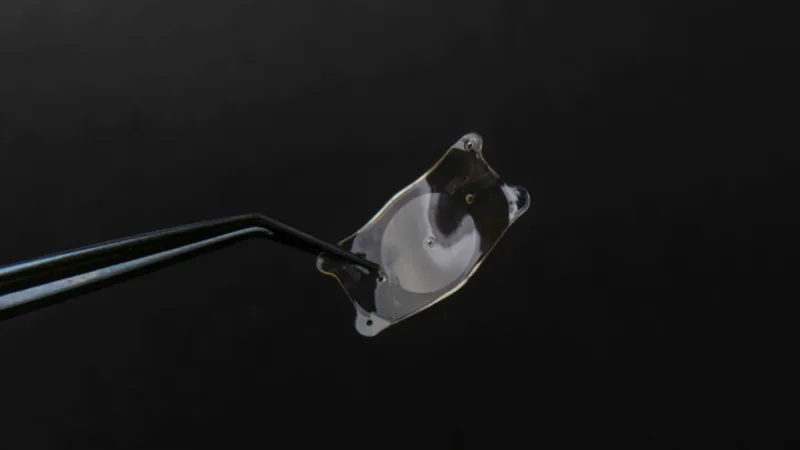
With the global ophthalmology market seeing a significant rise in high-myopia treatments, South Korea has emerged as a critical hub for advanced corrective care. While Implantable Collamer Lens (ICL) surgery is highly effective, long-term studies, including those published in PMC (2024), indicate that late-stage complications such as cataract formation (incidence of ~10.5% in 5–10 year follow-ups) or endothelial cell loss can occur. As these complexities rise, the demand for specialized "second opinion" clinics has transformed Korea into a global training ground for surgical complication management.
At Jryn Eye Clinic, we specialize in the Treatment of Surgical Complications, specifically addressing the needs of patients who have experienced vision regression, lens-related issues, or corneal instability following primary surgeries. As the South Korean regenerative and advanced medical market is projected to reach approximately USD 1,288 million by 2030 with an 18% CAGR, the integration of high-precision diagnostics and restorative surgical protocols is no longer just an option—it is the new benchmark for patient safety.
ICL Complications in Korea: Why Precision Diagnostics Matter

ICL surgery is often the preferred choice for patients with thin corneas who cannot undergo LASIK. However, improper sizing or "vaulting" (the space between the ICL and the natural lens) can lead to secondary issues.
- Prevalence: While ICL is generally safe, international data suggest intraocular pressure (IOP) complications can range from 0% to 19.9% depending on the lens type and surgical precision.
- Target Audience: This care is vital for patients aged 30–70 who may be developing early cataracts post-ICL or experiencing "vision fog" that standard clinics struggle to diagnose.
- The Korean Advantage: Clinics like Jryn utilize 3D Diagnostic Systems and wavefront analysis to map the internal eye environment with micron-level accuracy, identifying the "root cause" of the complication rather than just treating the symptoms.
How to Manage Surgical Eye Complications in Korea
Standard Approaches vs. High-Precision Care
Traditional management of surgical complications often involves a "wait and see" approach or standard steroid prescriptions. However, for active patients, this often leads to frustration and further vision loss.
| Feature | Conventional Standard Care | Advanced 3D-Guided Protocol |
|---|---|---|
| Diagnostic Focus | Symptom management (drops) | Root cause (3D structural mapping) |
| Approach | General observation | Customized 1:1 Surgical Revision |
| Technology | Standard Slit Lamp | Catalys Laser & Tomey Systems |
| Patient Outcome | Temporary relief | Structural and Visual Restoration |
Common Pain Points of Standard Care:
- Recurrence: Symptoms like light halos or high pressure often return without structural correction.
- Downtime: Traditional invasive re-operations may require long recovery periods.
- Emotional Stress: Patients often feel "alone" when their primary surgeon cannot resolve the issue.
Advanced 3D-Guided Revision: A Dynamic Approach to Recovery
For complex complications, Jryn Eye Clinic utilizes 3D-Guided Revision and Digital Mapping. This approach is considered high-precision because it allows surgeons to visualize the exact position of an implanted lens or the thickness of a compromised cornea before a single incision is made.
How 3D-Guided Revision Works:
- Digital Mapping: High-resolution 3D imaging identifies lens vaulting or corneal ectasia.
- Micron-Level Planning: The surgeon uses the Tomey Precision Cataract System or Catalys Laser to plan the safest entry point.
- Restorative Surgery: The primary goal is to stabilize the eye (e.g., strengthening the cornea or exchanging the ICL) to prevent long-term damage like glaucoma.
Q&A: Is specialized complication treatment in Korea worth the cost?
Answer: While the cost of ICL re-treatment or revision can be higher than primary surgery—often ranging from ₩4,000,000 to ₩6,000,000—the investment is critical for preventing permanent vision loss. Addressing the root cause early via 3D diagnostics reduces the need for lifelong medication and emergency interventions for conditions like secondary glaucoma.
Local Korea Insights: A Global Hub for Excellence
Korea’s medical infrastructure is uniquely positioned to handle surgical complications due to:
- Tech-Driven Expectations: Korean patients demand fast recovery and minimal downtime, pushing clinics to adopt "flapless" and "minimally invasive" revision techniques.
- Regulatory Support: The Act on the Safety of Regenerative Medicine in Korea has fostered an environment where advanced biological and structural treatments are strictly monitored for safety.
- Global Training: Since Korea is home to top-tier "Global Trainers" for companies like STAAR Surgical, local experts often possess more "hands-on" experience with complex cases than surgeons in many other developed nations.
Where Jryn Eye Clinic Fits in Surgical Complications in Korea

Jryn Eye Clinic is a designated SMILE LASIK Excellence Center, a title held by only three centers in South Korea. Led by Dr. Sang Youp Han, who brings over 20 years of experience, the clinic serves as a secondary referral hub for Busan and the Gyeongnam region.
The clinic’s expertise lies in 3D-Guided Revision. By utilizing the VISUMAX laser system and specialized ICL management protocols, the surgical team can address complications that standard refractive centers are not equipped to handle. Their approach is multidisciplinary, often involving retinal specialists (like Dr. Lee Jae Jung) to ensure the back of the eye is protected during complex anterior revisions.
Conclusion
Surgical complications, while statistically rare, require a level of diagnostic precision that goes beyond standard eye care. In Korea, the shift toward 3D-Guided Revision represents a major leap in patient safety and long-term functional outcomes. By focusing on the root cause and utilizing high-tech infrastructure, clinics are successfully restoring vision for those who thought their options were exhausted.
Patients considering the Treatment of Surgical Complications in Korea can schedule a consultation at Jryn Eye Clinic to discuss whether a 3D-guided revision approach may be suitable for their specific condition and goals.
Ready for a Personalized 1:1 Eye Consultation?
Schedule your comprehensive 3D eye examination with Chief Director Dr. Sang-Youp Han and our ophthalmology team on the 14th floor of JRYN Medical Center in Seomyeon, Busan.