Jryn Eye Clinic Busan (Seomyeon) · SMILE LASIK · EVO+ Visian ICL · Cataract & Retina Center · Tel: +82-51-710-1004
en-US

1:1 Consultation
CLINICAL ARTICLE & GUIDE
Is Your ICL Outdated? Signs You Need a Checkup
Is your ICL outdated? Discover key signs it’s time for a checkup to protect your vision and eye health. Don’t wait—book your eye exam today!
Introduction

You had ICL surgery, your vision sharpened, and life moved on. But if you’re reading this, maybe you’ve started to wonder: is everything still working as well as it should? It’s a question more people should be asking.
At Jryn Eye Clinic, located in the heart of Busan’s Busanjin-gu, we specialize in the kind of long-term, precision-focused eye care that doesn’t stop when the surgery ends. We’ve helped countless patients navigate the years after their ICL implantation—monitoring subtle changes, spotting early issues, and ensuring their vision stays clear well into middle age and beyond.
This guide isn’t about scare tactics—it’s about smart, responsible vision care. If you’ve had an ICL implanted, here’s what you need to know about how your eye changes with time, what signs might indicate your ICL is outdated, and why regular follow-ups are your best tool for lifelong visual clarity.
Why Checkups After ICL Still Matter?
To be honest, one of the biggest misconceptions we see is this idea that ICL is a "forever fix." Yes, ICLs are designed to be long-lasting, biocompatible, and incredibly safe. But the eye itself is dynamic. It keeps changing. Your natural lens matures. Your corneal cells age. Even your eye pressure and internal fluid dynamics can evolve. That’s why a lens that worked perfectly at age 28 might need re-evaluation by age 43.
Three key reasons stand out:
The eye continues to age. You might develop presbyopia, dry eye syndrome, or early cataracts. These aren't necessarily caused by the ICL, but they can affect the ICL's performance or your overall visual clarity. This is especially common in South Korea, where screen time is high, and visual demand is intense due to digital lifestyles. We often remind patients that their ICL is only one part of a much more complex visual ecosystem.
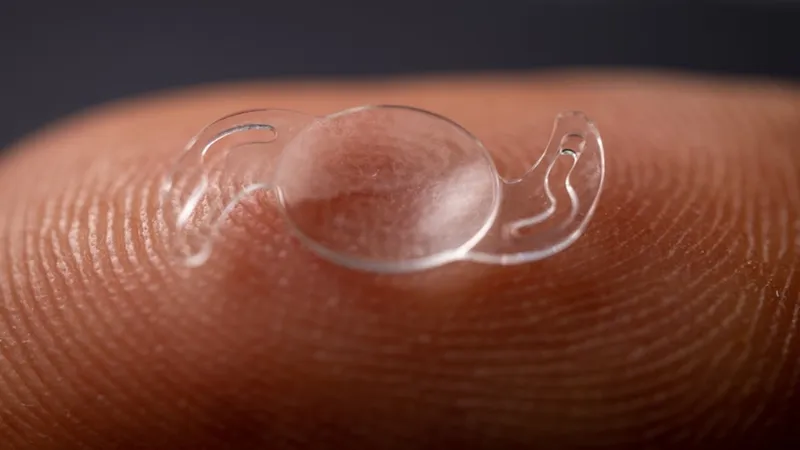
Older ICL models are less advanced. Newer ICLs, especially those with the KS-Aquaport design (central port), allow better fluid flow and reduce certain risks like pupillary block. Patients who received ICLs before these innovations may unknowingly carry a higher long-term risk, especially if they’ve never had a vault check or anterior chamber scan.
Delayed complications are rare, but real. Vaulting issues (how the ICL sits in the eye), intraocular pressure spikes, endothelial cell loss, or lens opacification can occur quietly. These are not things you feel immediately. Often, they develop over time and are only detectable with specialized imaging tools like anterior segment OCT or specular microscopy.
And here’s something patients rarely hear: Some complications show no symptoms at all—until it’s too late to reverse the damage. That’s why periodic evaluation is not optional; it’s essential.
Signs Your ICL Might Need a Recheck

So what should raise a red flag? If you recognize any of these symptoms or scenarios, it’s time to schedule a visit—ideally with a clinic experienced in long-term ICL monitoring like Jryn Eye Clinic.
Your vision feels subtly different.
Maybe your clarity isn't what it used to be. Or night driving has become more stressful due to halos or glare. These issues may seem minor but often indicate early optical misalignment or beginning cataract changes. In some cases, light scatter from aging lens fibers behind the ICL may be involved.
You’re in your 40s or older.
This is the stage when presbyopia becomes a major factor. Your near vision might begin to deteriorate. This doesn’t mean the ICL has failed—it just means your natural lens is stiffening, changing the overall dynamics of your visual system. We often explain it like this: your ICL hasn’t changed, but the "environment" around it has. Just like a perfect tire wears differently on an older car, a great ICL may be affected by age-related lens changes.
You feel dryness, discomfort, or new eye strain.
Dry eye can reduce visual quality and mimic the feeling that your ICL isn’t working well. But sometimes, it also masks deeper issues like endothelial cell stress or anterior segment inflammation. This is increasingly common in urban environments like Busan, where air quality, long commutes, and prolonged digital device use all compound ocular surface stress.
You had the surgery years ago with no recent follow-up.
If your last full anterior segment imaging or endothelial cell count was over 2 years ago, it's time. Even if you feel fine. The absence of symptoms is not proof of ocular stability. At Jryn, we’ve seen patients who felt "fine" but had dangerously low vaults or early endothelial cell compromise.
You notice asymmetry between eyes.
One eye feels "sharper" than the other, or your depth perception has subtly changed. These can be signs of shifting refractive balance, early cataract formation, or even slight rotation of the ICL if you had a toric version for astigmatism.
What We Check at Jryn Eye Clinic?

We don’t just look at your vision. We examine the full picture. Our ICL follow-up includes:
Refraction & Visual Acuity: Measuring changes in sharpness, especially under different lighting conditions. Night glare testing is included.
OCT Vault Imaging: Checking the space between your ICL and natural lens. Too low? Cataract risk. Too high? Pressure risk. Vault should ideally remain between 250-750 microns depending on eye anatomy.
Endothelial Cell Count: Corneal health is critical. Cell loss must be monitored because once these cells are lost, they do not regenerate. An annual count helps us detect slow damage.
Lens Clarity: Early cataracts can show up without major symptoms. We catch them before they affect daily life. Even subtle nuclear sclerosis can change your color perception and contrast.
Intraocular Pressure (IOP): High IOP could indicate fluid blockage or angle issues. Especially important if your ICL was placed in a narrower eye.
Ocular Surface Analysis: Dry eye diagnostics, meibomian gland imaging, tear break-up time, and staining patterns are all assessed to ensure your surface is not undermining your clarity.
Anterior Chamber Depth & Angle Evaluation: Using gonioscopy or anterior segment OCT to ensure angle closure is not developing silently, especially in older eyes.
Most importantly, we interpret this data in the context of your unique eye history and lifestyle. That’s where experience matters most. It’s not about checking boxes—it’s about understanding patterns over time.
What Happens If Something Is Off?
Not every finding means surgery. Sometimes, we just monitor. But if there's a concern, options include:
Enhanced correction via glasses or contact lenses for minor shifts. We often recommend blue-light protection or progressive lenses for patients experiencing presbyopia.
ICL exchange if the model is outdated or malpositioned. Newer ICLs may provide better optics and safer long-term vaulting.
Cataract surgery with ICL removal, if your natural lens is clouding. This is a safe and effective procedure, especially when performed by experienced surgeons familiar with ICL extraction techniques.
Dry eye treatment, especially if surface health is impacting clarity. Treatments include IPL, LipiFlow, punctal plugs, and prescription anti-inflammatory drops.
ICL rotation, for toric ICLs that have shifted, impacting astigmatic correction.
Laser touch-up (LASIK/PRK) for minor refractive errors if corneal thickness allows.
Whatever the plan, we walk you through it step by step. No guesswork. Just clarity.
Closing Thought: Maintenance Is Vision Insurance
Think of your ICL like a precision car engine. Would you drive it for 10 years with no service? Probably not. Same with your eyes. A 20-minute check-up can preserve 20 years of vision.
Vision isn’t static, and neither is your eye health. That’s why, at Jryn Eye Clinic, we emphasize continuity of care. Whether it’s your first ICL checkup or your fifth, we bring the same level of care and attention to detail. Because we believe your sight deserves a lifetime plan—not just a quick fix.
If you’ve noticed changes—or if it’s simply been a while since your last detailed eye exam—consider booking a follow-up. At Jryn Eye Clinic, we specialize in complex ICL care, aging eyes, and long-term vision management. We’re not just fixing vision; we’re helping you protect it for life.
Ready for a Personalized 1:1 Eye Consultation?
Schedule your comprehensive 3D eye examination with Chief Director Dr. Sang-Youp Han and our ophthalmology team on the 14th floor of JRYN Medical Center in Seomyeon, Busan.