Jryn Eye Clinic Busan (Seomyeon) · SMILE LASIK · EVO+ Visian ICL · Cataract & Retina Center · Tel: +82-51-710-1004
en-US

1:1 Consultation
CLINICAL ARTICLE & GUIDE
Is LASIK Safe for High Myopia? Busan Surgeons Answer
Is LASIK safe for high myopia? Top Busan surgeons explain risks, benefits & alternatives. Get expert insights before your procedure—learn more now!
Introduction: The Dilemma of the Highly Nearsighted
Imagine waking up in your apartment in Busan and reaching for your glasses just to see the time on your phone. Or fumbling with contact lenses before a morning hike along Igidae. If you have high myopia, this is your reality. And you’ve likely heard of LASIK—a quick laser procedure that promises freedom from glasses. But is it truly safe if your prescription is very high?
It’s a question we hear daily at Jryn Eye Clinic. With South Korea’s soaring rates of severe nearsightedness, particularly among younger adults, LASIK has become both a hope and a hesitation. Some patients come in excited, others nervous, and many confused by the flood of opinions online.
This article offers a clear, medically grounded answer to that question—from the perspective of Busan-based specialists who see high myopia cases every single day. Whether you’re a student, teacher, developer, or retiree, this guide will help you understand your options.
What Is Considered High Myopia?
High myopia is typically defined as a nearsighted prescription greater than -6.00 diopters. But it’s not just about blurry vision.
In high myopia:
The eyeball is abnormally elongated.
Light focuses in front of the retina, not on it.
The retina and underlying tissues are stretched thinner, making them more vulnerable to damage.
In South Korea, myopia rates are among the highest in the world—especially among young adults. With so much screen use, exam pressure, and indoor lifestyle, many people are developing severe myopia at a younger age than previous generations.
Severe myopia affects not only day-to-day life—such as constantly misplacing glasses, struggling with thick lenses fogging up in winter, or irritation from prolonged contact lens use—but also long-term ocular health. The structural changes that accompany high myopia aren’t just inconvenient. They can predispose the eye to sight-threatening complications later in life.
That’s why understanding the nature of your myopia is critical before considering any corrective procedure.
How LASIK Works—and Why Prescription Strength Matters
LASIK (Laser-Assisted In Situ Keratomileusis) works by reshaping the cornea to correct how light enters the eye. For mild myopia, this is relatively straightforward. For high myopia, it’s more complex.
The LASIK Process:
A flap is made in the cornea.
A laser removes microscopic amounts of tissue to reshape the underlying layer.
The flap is repositioned.
The higher the prescription, the more tissue needs to be removed. But here’s the catch: the cornea is only so thick. If too much tissue is removed, the structural integrity of the eye is compromised. This is why high myopia patients need additional screening before LASIK.
The goal of LASIK is to create a new corneal shape that bends light more effectively, reducing the need for glasses or contacts. But that reshaping has its limits. Each eye has a certain amount of corneal thickness that must be preserved to maintain long-term health.
Even small miscalculations or outdated laser platforms can affect results. That’s why choosing a center with state-of-the-art technology and detailed imaging systems is essential, especially for high prescriptions.
Is LASIK Safe for High Myopia? It Depends.
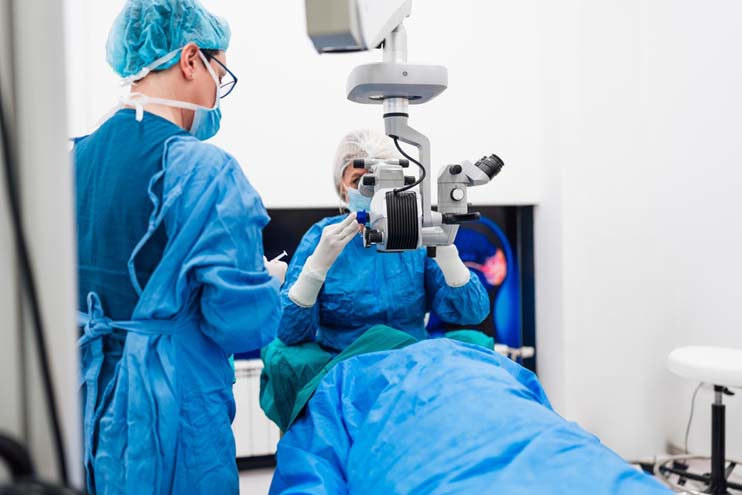
Let’s be clear: LASIK is not automatically unsafe for high myopia. But it does require:
Adequate corneal thickness
A regular corneal shape (no keratoconus or early signs of it)
Stable prescription for at least a year
No untreated retinal issues
When these boxes are checked, LASIK can be done safely—even with -8.00 diopters or more. But safety also depends on the skill of the surgeon, the technology used, and whether the patient’s goals align with the reality of the outcome.
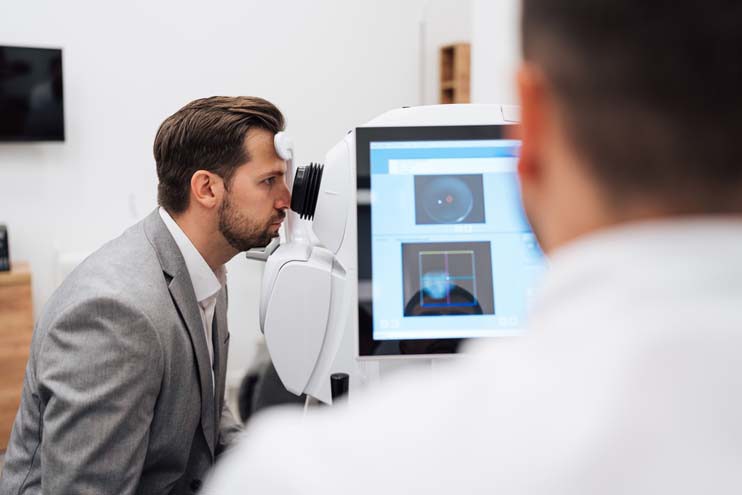
At Jryn Eye Clinic, we use tools like Pentacam and anterior segment OCT to create high-resolution corneal maps. These show us whether your eye has the biomechanical stability to undergo LASIK safely. We also check for signs of corneal asymmetry, dryness, and other hidden risk factors that can only be detected through specialized scans.
The most responsible clinics won’t rush this process. LASIK is a life-changing procedure, not a consumer product—and it deserves to be treated with respect.
Risks Specific to High Myopia in LASIK Patients
1. Ectasia
This is when the cornea becomes progressively thinner and weaker over time, bulging forward. It’s rare, but more likely when too much tissue is removed. Corneal ectasia may require specialty lenses or even corneal transplants if severe.
2. Night Vision Disturbances
Higher corrections can sometimes lead to halos or glare, especially if the pupil is large in low light. At night, the eye may use parts of the cornea that were not optimally reshaped, causing light scatter.
3. Dry Eye
Corneal nerves are temporarily disrupted during LASIK. In Korea’s dry seasons and screen-heavy culture, this effect can be more noticeable. Some patients with high myopia already experience dry eye due to heavy contact lens wear, which can be exacerbated post-surgery if not properly managed.
4. Retinal Risks
High myopes already face a greater chance of retinal tears. LASIK doesn’t increase that risk, but a thorough retinal check is a must before surgery. At our clinic, dilated retinal exams are standard before all high myopia procedures.
These risks aren’t meant to scare—they’re meant to guide thoughtful decisions.
Alternatives When LASIK Isn’t Ideal
The good news is that LASIK isn’t the only option—and in many cases, better alternatives exist for high myopia.
SMILE (Small Incision Lenticule Extraction)
This is a flapless laser procedure that’s often better for high myopia:
Less disruption of corneal nerves (less dry eye)
Preserves more corneal structure
Excellent visual outcomes with less risk of ectasia
Smaller incision = faster healing and fewer complications
SMILE has become especially popular among Korean patients with higher prescriptions because it fits well with active lifestyles and visual needs.
EVO ICL (Implantable Collamer Lens)
This is not a laser at all. Instead, a lens is implanted inside the eye, like a permanent contact lens:
Suitable for very high prescriptions (even beyond -10.00D)
No corneal tissue removal
Reversible and customizable
UV protection and high optical quality
ICL is often the preferred choice when the cornea is too thin for LASIK or SMILE. It’s also ideal for patients who may have dry eyes, irregular corneas, or strong night vision requirements.
Refractive Lens Exchange (RLE)
For older patients, especially those with presbyopia or early cataracts, replacing the eye’s natural lens can correct high myopia and near vision simultaneously. It also eliminates the risk of cataracts later in life.
Each of these options requires careful evaluation, but their availability means there’s almost always a safe, effective way to improve vision.
Real Talk: What We See in Busan Patients
We’ve treated university students, IT workers, teachers, and even surgeons—all with high myopia. Many had assumed LASIK was off-limits. But with thorough diagnostics, many were safely eligible for SMILE or ICL.
One patient told us:
“I was scared I’d be rejected because of my high prescription. Instead, I left with a better option than I expected.”
At Jryn Eye Clinic, our job isn’t to “sell” LASIK. It’s to guide people toward what’s truly safest and most effective for their eyes. Sometimes that’s LASIK. Other times, it’s not.
We’ve seen firsthand how precision diagnostics and honest communication lead to better patient outcomes—and more trust in the process.
Questions to Ask Before Choosing LASIK
Here are questions we encourage all patients with high myopia to ask:
Is my cornea thick and healthy enough?
Have I had a detailed topography and tomography scan?
Would SMILE or ICL offer a safer outcome?
How experienced is my surgeon with high myopia cases?
What happens if I need an enhancement later?
How will my lifestyle (night driving, digital screen use, outdoor activity) affect the choice of procedure?
Asking the right questions doesn’t just protect your vision—it empowers you.
Conclusion: Safe Vision Correction Starts With Smart Evaluation
So, is LASIK safe for high myopia?
Yes—for many patients, it absolutely can be. But only when certain anatomical, optical, and lifestyle factors align. At Jryn Eye Clinic, we don’t rush patients toward surgery. We investigate, measure, and recommend the procedure that makes the most long-term sense for your eyes—not just today, but ten years from now.
If LASIK isn’t safe for you, it’s not a dead end. Procedures like SMILE and EVO ICL have opened doors for thousands of patients once told they weren’t candidates for laser vision correction. In fact, many of our most satisfied patients were initially turned away elsewhere.
Don’t let fear—or misinformation—make the decision for you. If you have high myopia and want visual freedom, start by asking the right questions and choosing a clinic that puts safety and personalization first.
At Jryn Eye Clinic in Busan, your vision is our priority. And if you’re ready to explore your options, we’re ready to help.
Ready for a Personalized 1:1 Eye Consultation?
Schedule your comprehensive 3D eye examination with Chief Director Dr. Sang-Youp Han and our ophthalmology team on the 14th floor of JRYN Medical Center in Seomyeon, Busan.