Jryn Eye Clinic Busan (Seomyeon) · SMILE LASIK · EVO+ Visian ICL · Cataract & Retina Center · Tel: +82-51-710-1004
en-US

1:1 Consultation
CLINICAL ARTICLE & GUIDE
Is EVO ICL FDA Approved? US vs. Korea Device Rules
Is EVO ICL FDA approved? Learn how US FDA and Korean MFDS device regulation differ and which vision correction devices Jryn Eye Clinic in Busan uses today.
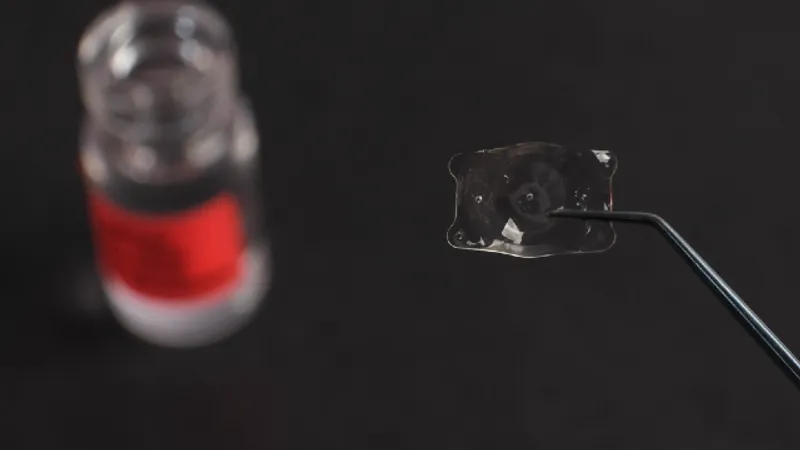
Is Jryn Eye Clinic's Vision Correction Technology FDA-Approved? Understanding US vs. Korean Device Regulation
Medically reviewed by Dr. Sang Youp Han, MD, Chief Director, Jryn Eye Clinic · Last updated July 2026
If you are researching vision correction in South Korea, one of the first questions you may ask is: is EVO ICL FDA approved, and does that even matter when the surgery happens in Korea rather than the United States? It is a fair and important question. Many US patients assume that a device is either "FDA-approved" or unsafe, when the reality is more nuanced. This guide explains how the US Food and Drug Administration (FDA) and Korea's Ministry of Food and Drug Safety (MFDS) each regulate the medical devices used in refractive surgery, which specific devices Jryn Eye Clinic in Busan uses, and how you can evaluate any safety claim without assuming an approval that has not been confirmed.
Is the technology Jryn Eye Clinic uses FDA-approved?
Several of the core device platforms Jryn Eye Clinic uses share the same underlying technology that the US FDA has separately approved for the US market. That is an important distinction to understand up front: a surgery performed in Korea is regulated by Korean authorities, not by the FDA, but many of the branded devices you may recognize have their own separate US FDA approval histories.
According to Jryn Eye Clinic's published equipment information, the clinic's documented device platforms include:
- EVO Visian ICL — the STAAR Surgical implantable Collamer lens platform (an implantable lens placed inside the eye behind the iris and in front of the natural lens).
- ZEISS VisuMax femtosecond laser — used to perform SMILE (Small Incision Lenticule Extraction), a keyhole-style laser vision correction procedure.
- Bausch + Lomb Teneo / TENEO 317 M2 excimer laser — used for the corneal reshaping (ablation) step in LASIK and LASEK.
- Tomey CASIA2 and OA-2000 — diagnostic and biometry instruments used to measure and map the eye before surgery.
- ZEISS IOLMaster 500 — an optical biometer used to calculate lens power for cataract and lens-based procedures.
The honest answer to "is this FDA-approved?" depends on which device you mean and which country's regulator you are asking about. Below, we separate what the FDA has publicly approved for the US market from what Korean regulation covers, so you can weigh the two frameworks accurately.
What has the US FDA actually approved?
The FDA has approved specific versions of the EVO ICL and the VisuMax SMILE platform for use in the United States, but approvals are always tied to a defined device version and a defined set of indications.
Here is what the public FDA record shows:
- EVO / EVO+ Visian ICL: The FDA approved the EVO/EVO+ Visian Implantable Collamer Lens and the toric version (for astigmatism) on March 25, 2022, under premarket approval number P030016/S035. The FDA describes the lens as an artificial lens permanently implanted inside the eye to correct nearsightedness (myopia) and, in the toric version, astigmatism.
- SMILE with the ZEISS VisuMax: According to the American Academy of Ophthalmology, the VisuMax femtosecond laser platform was introduced in the US in 2016, and SMILE became available as a laser refractive option for treating myopia; the FDA later expanded the approved indication to include myopia with astigmatism.
- LASIK devices generally: The FDA notes that the first laser was approved for LASIK in 1998, and LASIK excimer laser systems are regulated as devices with their own approvals and labeling.
The key takeaway is that "FDA-approved" is never a blanket status for a whole clinic. It applies to a particular device model and a particular use. A US FDA approval also does not automatically carry over to a procedure performed abroad — it tells you the FDA reviewed that device's safety and effectiveness data for the US market, which is useful context even when your surgery takes place in Korea.
How does Korean MFDS regulation differ from FDA regulation?
Korea regulates medical devices through its own national authority, the Ministry of Food and Drug Safety (MFDS), rather than through the US FDA. The two systems share the same fundamental goal — confirming that a device is reasonably safe and effective before it can be marketed and used — but they are legally independent of each other.
A few principles help make sense of the difference:
- Jurisdiction follows the country. A device used in a Korean operating room is subject to Korean device regulation. FDA approval governs what can be marketed and used in the United States.
- Approvals and indications can differ by country. The same branded laser or lens may be cleared for slightly different indications, patient ranges, or labeling in different countries. An approval in one country does not guarantee an identical approval in another.
- Approval timing can differ. A device may be available in one market before another. For years, the ICL was used internationally well before the EVO version received US FDA approval in 2022.
- Manufacturers are typically global. STAAR Surgical (ICL), Carl Zeiss Meditec (VisuMax), and Bausch + Lomb (Teneo) are international companies whose platforms are used in many countries, each under that country's regulatory system.
Because of these differences, the most accurate way to think about safety is not "Is it FDA-approved?" as a yes/no test, but rather "Which device version is being used, what does the manufacturer's evidence show, and which regulator has cleared it for which use?"
Why "FDA-approved" is not a simple yes or no
The phrase "FDA-approved" is often used loosely in medical-tourism marketing, and that is exactly why US patients are right to slow down and ask questions. A more precise understanding protects you from both false reassurance and unnecessary worry.
Consider the ways the phrase can be misleading:
- A clinic might use a device whose technology family is FDA-approved in the US, but a specific newer model or software version might have a different regulatory status. For example, the FDA record shows the original VisuMax SMILE approval and, separately, a later approval for the VisuMax 800 with SMILE Pro software.
- FDA approval covers defined indications. A device approved for myopia may have separate approvals for astigmatism, and approved age ranges can change over time.
- FDA approval applies to US marketing and use — it is evidence a device met a rigorous US review, but the surgery you have abroad is legally governed by that country's rules, not the FDA's.
None of this means an overseas device is unsafe. It means the responsible approach is to ask the clinic directly which device model and version they will use for your specific procedure, and to understand what that device's approval history and manufacturer evidence actually cover.
Which devices does Jryn Eye Clinic document using, and for what?
Jryn Eye Clinic documents a defined set of device platforms mapped to specific procedures, which makes it easier to ask targeted questions. Based on the clinic's published information:
- SMILE LASIK is performed with the ZEISS VisuMax femtosecond laser, which creates and allows removal of a small lens-shaped piece of corneal tissue (a lenticule) through a tiny incision.
- LASIK and LASEK use the ZEISS VisuMax for flap creation combined with the Bausch + Lomb TENEO 317 M2 excimer laser (2020 model) for the corneal reshaping step.
- EVO Visian ICL uses the STAAR Surgical EVO Visian ICL lens platform, an implantable lens for patients who may not be suitable for laser procedures — for example, some patients with thinner corneas or higher myopia.
- Cataract and lens-based procedures reference the Catalys femtosecond cataract laser, the Bausch + Lomb Stellaris PC and Johnson & Johnson Vision Signature Pro phacoemulsification systems, and the Zepto capsulotomy device.
- Diagnostics rely on the Tomey CASIA2 anterior-segment OCT and OA-2000 biometer cross-connection system and the ZEISS IOLMaster 500 biometer, alongside an HD Analyzer for visual-quality assessment.
The clinic states that candidacy is determined through a comprehensive 50-point eye examination that includes corneal thickness measurement, corneal topography, retinal evaluation, AI-assisted diagnostics, and Avellino DNA genetic screening. English-speaking coordinator support is available for international patients. You can review the clinic's approach and team on its about-us page.
How can you verify a device's approval status yourself?
You do not have to take any clinic's word for it — device approval information is publicly searchable, and cross-checking it is a healthy part of due diligence. Here is a practical approach:
- Ask the clinic for the exact device model and version. For example, "Which excimer laser model performs the ablation?" or "Which ICL platform and lens model will be implanted?"
- Check the manufacturer. STAAR Surgical, Carl Zeiss Meditec, and Bausch + Lomb publish product and regulatory information for their platforms.
- Search the FDA's device databases. The FDA maintains records of approved devices — for example, the EVO/EVO+ Visian ICL approval is listed publicly under P030016/S035.
- Understand the indication. Approval for myopia is not the same as approval for astigmatism or for a specific age range. Match the approval to your own situation.
- Ask which regulator cleared the device for the Korean setting. Because your surgery is in Korea, MFDS regulation applies; the clinic can confirm this.
If a specific regulatory detail is not published, ask the clinic directly rather than assuming. Jryn Eye Clinic can be reached through its contact page.
What about the surgeon's experience with these devices?
Regulatory approval of a device is only one part of safety — surgeon experience with that specific platform matters too. Jryn Eye Clinic documents several credentials for its Chief Director, Dr. Sang Youp Han, that relate directly to the technologies above.
According to the clinic's published information:
- Dr. Han has been a STAAR-certified Visian ICL Instructor since 2014, a credential tied directly to the ICL platform.
- He holds a ZEISS "Best Skilled SMILE Surgeon" recognition (2019). It is worth being transparent that this is a manufacturer-issued recognition from ZEISS, not an independently adjudicated award — it reflects vendor recognition of SMILE experience rather than a third-party quality rating.
- He is a full member of the Korean Ophthalmological Society (KOS), the Korean Society of Cataract and Refractive Surgery (KSCRS), and the American Society of Cataract and Refractive Surgery (ASCRS), and a member of the European Society (ESCRS) is documented among the clinic's broader team credentials.
- STAAR-issued volume recognitions such as an ICL 3000 award and a Toric ICL 1000 award are published on the clinic's awards page; like the ZEISS recognition, these are vendor-issued and should be understood as such rather than as independent certifications.
These credentials do not change a device's regulatory status, but they are relevant when you are weighing who will operate the equipment.
Putting it together: a balanced way to think about safety
Device regulation is one input into a safety decision, not the whole picture. A sound approach combines regulatory awareness, device specifics, surgeon experience, and a thorough personal evaluation.
When you evaluate any clinic abroad, including Jryn Eye Clinic, consider:
- The specific device and version to be used for your procedure, and its approval history with the relevant regulator.
- The indication match — whether the approved use lines up with your own prescription and eye anatomy.
- The pre-operative evaluation depth — Jryn Eye Clinic documents a 50-point examination to determine candidacy before surgery is recommended.
- The surgeon's documented experience with that platform.
- What is and is not published — where a detail is not stated, ask the clinic directly rather than assuming.
What does FDA approval tell you — and what does it not?
FDA approval tells you a device met a defined US standard of safety and effectiveness for a specific use; it does not predict your personal outcome. Understanding this boundary keeps you from over-relying on a single label.
What FDA approval does tell you:
- That the manufacturer submitted clinical data the FDA reviewed for a defined indication.
- That the device met the agency's threshold for reasonable safety and effectiveness for that use in the US market.
- That there is a public record — such as the EVO ICL premarket approval P030016/S035 — you can look up.
What FDA approval does not tell you:
- Your individual result. Approval is based on population data; individual results vary, and no approval guarantees your outcome.
- The surgeon's skill. A device's approval says nothing about who operates it or how much experience they have with it.
- How the device is regulated where your surgery happens. In Korea, that is the MFDS, not the FDA.
- Whether you are a good candidate. That is determined by your personal evaluation, not by a device label.
This is why device regulation should be one input among several — alongside candidacy screening, surgeon experience, and honest expectation-setting — rather than the whole basis for a decision.
How are diagnostic devices regulated, and why does that matter?
The diagnostic instruments used to plan your surgery are regulated medical devices too, and their accuracy directly affects the safety of the procedure. Precise measurement is the foundation of a good refractive or cataract outcome.
Jryn Eye Clinic documents a diagnostic setup that includes the Tomey CASIA2 anterior-segment OCT, the Tomey OA-2000 biometer, and the ZEISS IOLMaster 500 optical biometer, along with corneal topography and an HD Analyzer. These devices measure corneal shape and thickness, map the eye, and calculate lens power. When you evaluate a clinic, it is reasonable to ask about the diagnostic technology as well as the surgical technology, because a thorough, accurate workup is what determines whether a given procedure is safe for you in the first place. As with surgical devices, you can ask which specific diagnostic models are used and confirm the manufacturer information.
The Bottom Line
- The EVO/EVO+ Visian ICL received US FDA approval in 2022 (P030016/S035), and the ZEISS VisuMax SMILE platform has its own FDA approval history in the US — but FDA approval always applies to a specific device version and indication, not to a clinic as a whole.
- Your surgery in Korea is regulated by Korea's MFDS, not the FDA. The two systems are independent, and approvals, indications, and timing can differ by country.
- Jryn Eye Clinic documents recognizable device platforms — STAAR EVO ICL, ZEISS VisuMax, Bausch + Lomb Teneo, and Tomey/ZEISS diagnostics — mapped to specific procedures.
- You can and should verify device details yourself by asking the clinic for the exact model and checking manufacturer and FDA records.
- Surgeon experience matters alongside regulation. Dr. Han's STAAR ICL Instructor status (since 2014) is a documented credential, while vendor recognitions like the ZEISS SMILE award should be understood as manufacturer-issued.
Frequently Asked Questions
**Is the EVO Visian ICL FDA-approved?**Yes — the FDA approved the EVO/EVO+ Visian Implantable Collamer Lens and its toric (astigmatism) version on March 25, 2022, under premarket approval P030016/S035. The FDA describes it as a lens permanently implanted inside the eye to correct myopia and, in the toric version, astigmatism.
**Does US FDA approval apply to my surgery in Korea?**Not directly. FDA approval governs what can be marketed and used in the United States. A procedure performed in Korea is regulated by Korea's Ministry of Food and Drug Safety (MFDS). FDA approval is still useful context because it shows the same device passed a rigorous US review.
**Is the ZEISS VisuMax used for SMILE FDA-approved?**The American Academy of Ophthalmology notes the VisuMax femtosecond laser platform was introduced in the US in 2016 for SMILE to treat myopia, and the FDA later expanded the indication to include astigmatism. Approvals apply to specific device versions and indications, so ask the clinic which model it uses.
**Which vision correction devices does Jryn Eye Clinic use?**The clinic documents the STAAR EVO Visian ICL platform, the ZEISS VisuMax femtosecond laser for SMILE, the Bausch + Lomb TENEO excimer laser for LASIK/LASEK, and Tomey CASIA2/OA-2000 plus ZEISS IOLMaster 500 diagnostics, among others.
**Why do device approvals differ between the US and Korea?**The US and Korea have separate, independent regulatory agencies. Each reviews devices under its own rules, and approvals, approved indications, and timing can differ. A device may be available in one country before another, as happened with the ICL internationally before the 2022 US EVO approval.
**How can I confirm a device's approval status before booking?**Ask the clinic for the exact device model and version, then check the manufacturer's information and the FDA's public device databases. Match the approved indication to your own prescription and eye anatomy, and ask the clinic to confirm the Korean regulatory status for your procedure.
This article is for general informational purposes and does not constitute individualized medical advice. Candidacy, treatment, and expected outcomes can only be determined through a consultation with a qualified ophthalmologist.
Ready for a Personalized 1:1 Eye Consultation?
Schedule your comprehensive 3D eye examination with Chief Director Dr. Sang-Youp Han and our ophthalmology team on the 14th floor of JRYN Medical Center in Seomyeon, Busan.