Jryn Eye Clinic Busan (Seomyeon) · SMILE LASIK · EVO+ Visian ICL · Cataract & Retina Center · Tel: +82-51-710-1004
en-US

1:1 Consultation
CLINICAL ARTICLE & GUIDE
How University Students in Busan Are Ditching Glasses
Discover how university students in Busan are ditching glasses with modern eye care solutions. Explore benefits, trends, and options—learn more today!

Introduction: A Changing Campus Look

If you walk across the campus of Pusan National University, Dong-Eui University, or Kyungsung University today, you’ll notice something subtle but striking. Compared to just a decade ago, far fewer students are wearing glasses. Instead, young faces appear clear and unframed, with many enjoying the freedom of uncorrected vision. This isn’t a sudden fashion shift—it’s the result of a quiet but powerful trend: university students in Busan are turning to advanced vision correction procedures like SMILE LASIK and EVO ICL to leave glasses and contact lenses behind.
This shift says a lot about changing student lifestyles, the pressures of academic life, and Korea’s forward-thinking embrace of medical technology. At Jryn Eye Clinic, we’ve witnessed this change firsthand. Every semester, more young adults walk through our doors, curious about whether they too can enjoy clear vision without glasses.
The Burden of Glasses in Student Life
South Korean students already face intense demands—long hours of study, heavy screen use, and the constant pressure of academic performance. In this environment, eye strain is almost unavoidable. Many students complain of headaches, tired eyes, or dryness after endless nights preparing for exams. Glasses, while reliable, can feel like one more barrier in an already demanding lifestyle.
Beyond the physical, there’s also the matter of self-image. Korea places a strong cultural emphasis on presentation, especially as students prepare for job interviews, graduation photos, and professional networking. Many young people quietly admit that glasses make them feel less confident, or that they’re inconvenient when exercising, attending social events, or keeping up with fashion trends.
Contact lenses are the alternative, but they come with their own challenges. Students often tell us that contacts dry out their eyes after a long day, or that they worry about infections from late-night use. In the fast pace of student life, maintaining strict lens hygiene isn’t always practical.
Why Surgery Has Become a Popular Choice
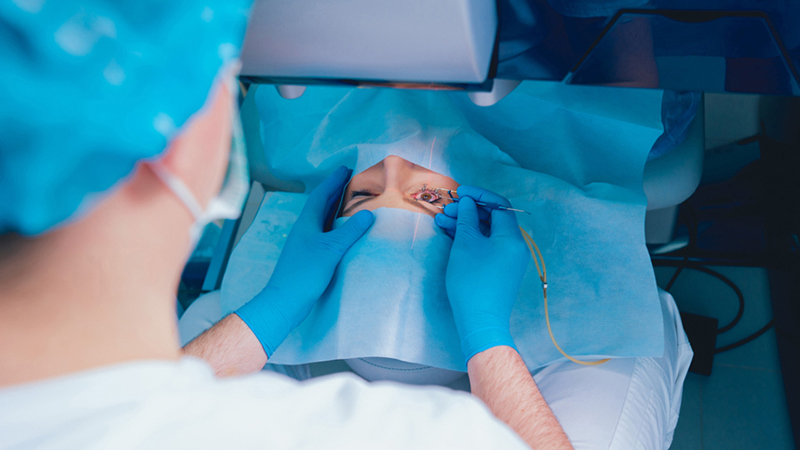
So why are more Busan students now opting for surgical solutions? The answer lies in technology and accessibility.
SMILE LASIK, the latest generation of laser vision correction, involves creating a tiny incision (just a few millimeters) to reshape the cornea. Compared to older LASIK methods, it is less invasive, causes less disruption to corneal nerves, and often results in quicker recovery with fewer dry eye symptoms.
For students with higher prescriptions, thin corneas, or irregular eye shapes, EVO ICL offers another option. This procedure places a thin, implantable lens inside the eye—working much like a permanent contact lens, but without the daily maintenance. Unlike LASIK, ICL is reversible and does not remove corneal tissue, making it a safe choice for many patients who were once told they couldn’t have surgery.
The key appeal? One short procedure, a few days of rest, and years of freedom. When compared to the lifelong expense of contact lenses or premium glasses, many students see surgery not just as a lifestyle decision but as a cost-effective investment in their future.
The Busan Student Trend
At Jryn Eye Clinic, we’ve noticed that vision correction has become something of a social trend among students. Often, patients come in groups—friends who have been talking about their experiences, roommates curious about each other’s procedures, or classmates encouraging one another after seeing positive results.
We’ve also observed a ripple effect: seniors who undergo SMILE LASIK or ICL before graduation often inspire juniors. They show up to job interviews, graduation ceremonies, and professional networking events without glasses—and that confidence spreads. Younger students see the change and want it too.
In Busan, where social connections run deep and word-of-mouth carries weight, this trend has accelerated in recent years. It’s no longer unusual for an entire circle of friends to schedule consultations within the same semester.
What Students Need to Know Before Surgery
Of course, it’s important to be clear: not everyone is automatically a candidate for these procedures. Safety and precision must come first. That’s why thorough diagnostic testing is essential.
At Jryn Eye Clinic, every student undergoes a comprehensive exam, which includes:
Corneal mapping to check shape and thickness
Tear film analysis to assess dry eye risk
Retinal scans to rule out hidden conditions
Prescription stability checks to ensure the eyes are ready
These tests are not simply formalities—they are safeguards. A student with unstable myopia, for example, may be advised to wait until their prescription stabilizes. Another with signs of keratoconus (a corneal thinning disease) may be better suited for ICL rather than LASIK. Our goal is never just to perform surgery, but to match each individual with the safest, most effective solution.
The Role of Culture and Career Pressure

What people often overlook is how much cultural and career pressure drives these decisions. In Korea, job interviews and corporate entry exams are highly competitive, and every detail counts. Appearance may not be officially scored, but many students believe looking confident and professional gives them an edge. A clear, glasses-free face is often associated with energy and focus, which can subtly influence first impressions.
Social media also plays a role. Students who are active on Instagram, YouTube, or TikTok often share their surgery journeys, demystifying the process for their peers. This visibility makes the idea less intimidating and encourages others to consider it earlier in their lives.
Cost, Safety, and Accessibility
One of the common questions students ask is about cost. While the upfront price of SMILE LASIK or EVO ICL may seem significant, many realize it balances out when compared with years of contact lens expenses, glasses replacements, and maintenance. Some clinics, including Jryn Eye Clinic, also provide installment plans to make the procedures more accessible to younger patients.
Safety remains the top concern, and understandably so. Students often ask: “Will this affect me 20 years from now?” Fortunately, both SMILE and EVO ICL have been studied extensively, with long-term data showing stable outcomes. SMILE has been performed globally for over a decade, while EVO ICL has a long safety record with millions of implants worldwide.
Beyond Vision: A Boost in Confidence
What surprises many students most isn’t just the convenience of ditching glasses, but the emotional change that follows. Patients often describe it as a new sense of freedom—being able to wake up and see clearly, to join sports without worry, or to take photos without adjusting glasses.
For young adults entering the professional world, this matters. Confidence in appearance can translate into confidence in interviews, networking events, and presentations. It’s not vanity—it’s about feeling fully present and unrestricted in moments that shape the future.
Jryn Eye Clinic’s Approach
Our philosophy at Jryn Eye Clinic is simple: personalized, precision-driven care. Dr. Han Sang Yeop and our team have seen thousands of cases and understand that every student’s eyes are unique. That’s why we do not push one procedure over another. Instead, we guide patients through options, balancing safety, effectiveness, and long-term health.
We also know that university students have concerns—about cost, recovery time, and long-term safety. That’s why we provide clear guidance, transparent pricing, and careful follow-up. Many students are reassured to know that recovery from SMILE LASIK often takes just a few days, meaning they can return to classes or part-time jobs quickly.
Conclusion: A New Generation Without Glasses
The sight of Busan’s campuses is changing—literally. As more university students embrace SMILE LASIK and EVO ICL, glasses are becoming less common, replaced by a new kind of confidence and freedom. This isn’t simply a cosmetic choice, but a reflection of modern student life in Korea: practical, forward-thinking, and invested in the future.
If you’re a student considering whether glasses are holding you back, know that you’re not alone. Thousands of your peers in Busan have already taken this step. The first move isn’t surgery—it’s consultation. A professional eye exam can determine whether you’re a candidate and which procedure suits you best.
Ready for a Personalized 1:1 Eye Consultation?
Schedule your comprehensive 3D eye examination with Chief Director Dr. Sang-Youp Han and our ophthalmology team on the 14th floor of JRYN Medical Center in Seomyeon, Busan.