Jryn Eye Clinic Busan (Seomyeon) · SMILE LASIK · EVO+ Visian ICL · Cataract & Retina Center · Tel: +82-51-710-1004
en-US

1:1 Consultation
CLINICAL ARTICLE & GUIDE
How to Read Your Vision Correction Prescription
Understand your vision correction prescription with ease. Learn what OD, OS, SPH, CYL, and Axis mean, and how they affect your eyewear. Start here!

Introduction

You leave the exam room with a small piece of paper in hand. It’s filled with unfamiliar abbreviations and a scattering of numbers that seem more mathematical than medical. You know it’s your vision prescription — but what exactly does it say about your eyes?
If that sounds familiar, you’re not alone.
At Jryn Eye Clinic in Busan, this is one of the most common questions we hear from patients. And it makes sense. Your vision is deeply personal, yet the numbers that define it often feel distant and clinical. But once you understand how to read them, those figures can become empowering. They reveal not just how clearly you see today — but what you might need tomorrow.
Whether you're picking out new glasses, trying contact lenses for the first time, or exploring permanent vision correction like SMILE LASIK or EVO ICL, understanding your prescription helps you make better, more confident decisions about your eye health.
In this guide, we’ll walk you through the essentials of your prescription — in plain language, from the perspective of a clinic that’s deeply invested in precision care. Because when it comes to your eyes, clarity isn’t just about what you see — it’s about what you understand.
Why It Matters to Know Your Prescription
Most people think of their prescription as a means to get glasses. But it's much more than that. It reflects the exact optical correction your eyes need to focus light clearly onto the retina. It’s your blueprint for clear vision.
When you understand your prescription:
You make smarter decisions about glasses vs. contacts
You communicate better with your eye doctor
You’re better prepared if you want vision correction surgery
You can detect changes in your vision over time
In a place like South Korea, where many people undergo regular eye exams and increasingly seek out procedures like SMILE or EVO ICL, understanding this slip of paper is the first step in taking control of your long-term eye health. It also helps you become an informed partner in your care, not just a passive recipient.
Many patients also appreciate knowing how their eye health is evolving. For example, if your prescription has stabilized over time, it could mean you're a good candidate for refractive surgery. On the other hand, a rapidly changing prescription might indicate an underlying issue like keratoconus or early cataract development.
Decoding the Basics: What Each Section Means
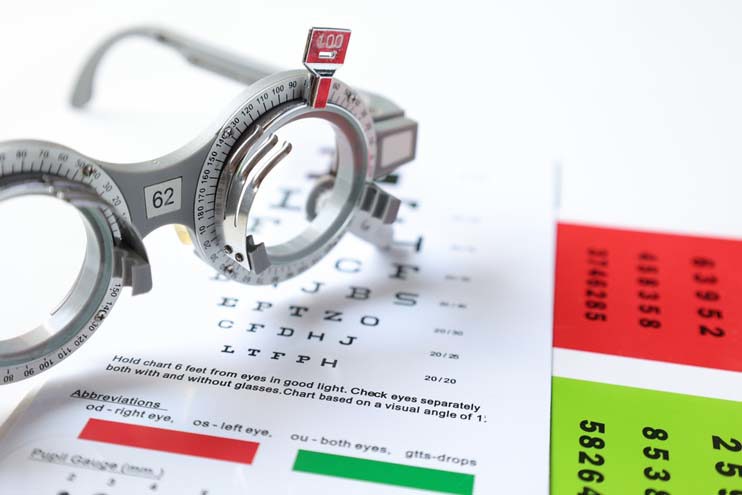
When you receive your prescription, it will typically be separated by eye and include a set of abbreviations and numbers. The first thing to recognize is which eye is being referred to:
Right Eye is typically labeled with an abbreviation derived from Latin.
Left Eye follows the same system.
Each eye will have several measurements, starting with what’s called the "sphere" value.
Sphere (SPH)
This number shows whether you're nearsighted or farsighted. A negative value means you have difficulty seeing things far away, while a positive value suggests that close-up vision is more of a challenge.
The size of this number (not just the sign) tells you how strong your corrective lenses need to be. The higher the number, the more powerful the lens required.
Cylinder (CYL) and Axis
These two measurements relate to astigmatism, which happens when the cornea is shaped more like a football than a basketball. The cylinder number indicates the degree of astigmatism, and the axis shows its orientation.
Many people don’t realize they have astigmatism until it shows up on a prescription. It can cause everything from mild blurriness to more noticeable distortion, especially in low-light settings.
Understanding ADD for Reading Support
As we age, it's common for our near vision to decline, even if our distance vision remains stable. This condition is known as presbyopia. When this happens, an additional value is included in the prescription to indicate how much extra help your eyes need for close tasks like reading or using a smartphone.
This number, labeled as "ADD," is used to tailor multifocal or progressive lenses, which support vision at various distances. It's a crucial measurement for anyone moving into their 40s and beyond.
Pupillary Distance: The Overlooked Number
Pupillary Distance (PD) is the measurement of space between your pupils. While it might seem minor, it ensures that the center of each lens aligns with the center of your eye. When this number is incorrect, even the most accurate lens prescription can feel off.
This measurement becomes even more critical when ordering glasses online or getting high-performance lenses like multifocals. At Jryn Eye Clinic, we use digital tools to measure PD with high precision.
Why Contact Lens Prescriptions Are Separate
Many patients are surprised to learn that they need a different prescription for contact lenses. That's because glasses sit a few millimeters away from your eye, while contacts rest directly on its surface.
A contact lens prescription includes additional values:
Base curve, to match the curvature of your eye
Diameter, to ensure a proper fit
These small differences significantly impact comfort and visual clarity. Fitting contact lenses is a clinical process, not a retail one—it considers tear film, blink rate, and corneal shape.
How and Why Your Prescription Changes

Vision is not static. Just like your skin or muscles, your eyes change with age, lifestyle, and health conditions. Your prescription might shift for several reasons:
Age-related changes such as presbyopia
Digital eye strain from prolonged screen time
Medical conditions like diabetes or early cataracts
Natural growth, especially in children and young adults
In Korea, it's common for adults to have annual eye exams, and for good reason. Monitoring your prescription gives clues about overall eye health. At Jryn Eye Clinic, we combine this data with advanced diagnostics to catch issues early and intervene effectively.
Prescription and Surgery Planning
If you're considering vision correction surgery, your prescription is where we begin. It offers the foundation for deciding whether you’re a candidate for procedures like:
SMILE LASIK, which is excellent for treating myopia and mild astigmatism
EVO ICL, ideal for those with high myopia or thinner corneas
Multifocal lens implants, used during cataract surgery for people who also have presbyopia
In our clinic, we don’t just rely on your prescription. We look at corneal topography, tear film stability, pupil size, and lifestyle needs. That’s what turns a good result into an exceptional one.
Common Misconceptions
Patients often have some mistaken assumptions about what their prescription means:
That both eyes should have the same numbers (they usually don’t).
That a stronger prescription means something is wrong (not necessarily).
That contacts and glasses use the same numbers (they don’t).
By learning what your prescription reflects, you can spot red flags and better understand your options. Even more, you’ll feel more confident discussing your vision with your provider.
Final Thoughts: Your Numbers, Your Vision
Every number in your eye prescription reflects something personal about the way you see the world. It’s not just data — it’s a story about your eyes, your habits, your health, and even your future.
Understanding this story isn’t just for doctors. It’s for anyone who wants to take an active role in their vision care — whether you’re comparing glasses, exploring contact lenses, or considering laser or lens-based surgery.
At Jryn Eye Clinic, we’ve learned something simple but powerful: patients who understand their prescriptions make better decisions. They ask the right questions. They feel more confident. And most importantly, they take better care of their eyes over time.
If you've been handed a prescription and you're unsure what it means — don’t toss it in a drawer. Bring it with you. Let’s talk about it. Let it be the starting point of a clearer, more informed vision plan.
Ready for a Personalized 1:1 Eye Consultation?
Schedule your comprehensive 3D eye examination with Chief Director Dr. Sang-Youp Han and our ophthalmology team on the 14th floor of JRYN Medical Center in Seomyeon, Busan.