Jryn Eye Clinic Busan (Seomyeon) · SMILE LASIK · EVO+ Visian ICL · Cataract & Retina Center · Tel: +82-51-710-1004
en-US

1:1 Consultation
CLINICAL ARTICLE & GUIDE
How to Qualify for SMILE Eye Surgery in Korea
How to Qualify for SMILE Eye Surgery in Korea | Learn eligibility criteria, age requirements, and eye health tips to qualify for SMILE eye surgery in Korea. Find out more now!

Introduction

In today’s Korea, vision correction isn’t just about vanity—it’s a lifestyle decision. From young professionals preparing for civil service exams to travelers tired of contact lenses on long-haul flights, more people are choosing laser eye surgery to simplify daily life. Among the available options, SMILE (Small Incision Lenticule Extraction) stands out as one of the most precise, minimally invasive technologies available. At Jryn Eye Clinic in Busan, we see firsthand how SMILE can transform lives. But not everyone is a match for it.
To be clear, SMILE is not a shortcut or a cosmetic tweak. It’s a delicate surgery that depends on a patient’s eye structure, corneal health, tear stability, and visual goals. Our role isn’t to push a procedure; it’s to make sure each person receives the safest, most effective option for their long-term visual health.
This guide is for anyone wondering: “Am I a candidate for SMILE surgery in Korea?” Whether you live in Busan, Seoul, or overseas and are considering surgery during a visit to Korea, this article will walk you through the key qualification steps—from real clinical experience.
What Exactly Is SMILE Surgery?
Rather than offering a textbook definition, think of SMILE as a corneal reshaping procedure done with a femtosecond laser. The laser creates a tiny disc (called a lenticule) inside your cornea, which is then removed through a micro-incision. No large flap is created, unlike LASIK. The result? Better structural stability, fewer nerves cut, and often fewer dry eye symptoms.
Compared to traditional LASIK, SMILE is a gentler approach. Since there is no flap, there's less trauma to the corneal surface, meaning a lower chance of flap-related complications, faster healing of nerves, and often a smoother recovery experience. In Korea, this technology has been widely adopted in urban clinics in Busan and Seoul, and many young professionals and active individuals favor it for its safety profile.
Still, it’s not suitable for everyone. And this is where proper qualification matters.
Step 1: Comprehensive Eye Examination
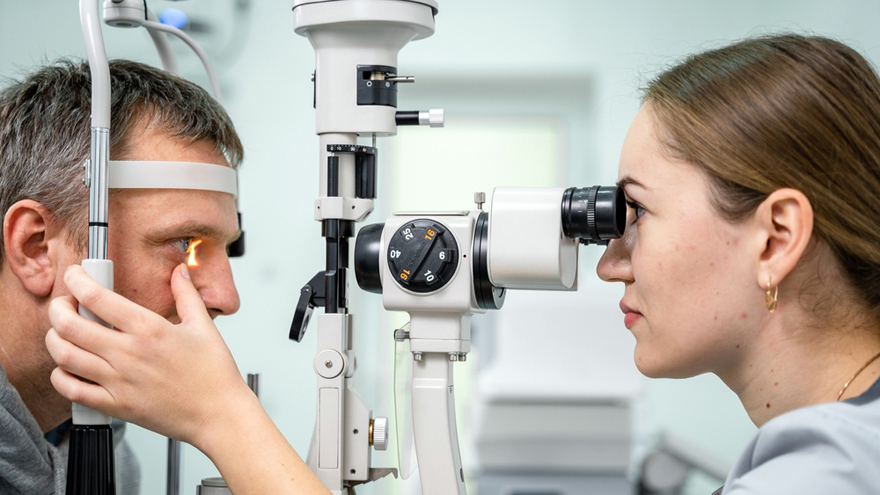
To determine if you qualify, we begin with a full pre-operative evaluation. This is not your average optometrist visit. At Jryn Eye Clinic, your evaluation includes:
Visual acuity and refraction testing
Corneal topography (mapping corneal shape)
Corneal pachymetry (measuring thickness)
Wavefront analysis (to detect subtle optical imperfections)
Tear film and ocular surface evaluation
Intraocular pressure (IOP) check
Pupil size measurement under different lighting
Dilated fundus exam (to rule out retinal pathologies)
These tests give us a 360-degree view of your eye health. We look at not just your prescription, but the biological readiness of your eye for laser surgery.
In Korea, it’s quite common for patients to undergo routine eye exams before procedures like this, so don’t be surprised if your clinic recommends additional imaging or dry eye scans before even discussing dates for surgery.
Step 2: Prescription Requirements
Your glasses prescription plays a big role in determining eligibility:
Myopia (nearsightedness): Ideal range is –1.00D to –10.00D, though some clinics may treat up to –12.00D depending on corneal health.
Astigmatism: Up to -3.00D is generally treatable with SMILE. More complex astigmatism, especially with an irregular axis, might require different strategies.
Hyperopia (farsightedness): Not currently an approved indication for SMILE in Korea.
Patients with very high myopia or irregular astigmatism may be better suited for EVO ICL or other advanced procedures.
Also important: your prescription must be stable. That means your vision shouldn’t have changed more than 0.50D over the past 1 to 2 years.
Step 3: Corneal Thickness and Topography
This is one of the most critical factors. Your cornea must be thick enough to allow safe tissue removal while leaving a strong residual bed.
Thin corneas can disqualify you from SMILE due to risk of post-op complications like ectasia, a condition where the cornea weakens and bulges forward.
Irregular topography or early signs of keratoconus also rule you out, as the structural integrity of your cornea may already be compromised.
Our corneal imaging systems in Busan are equipped with AI-aided keratoconus detection and biomechanical assessments. We can pick up early signs that even patients with 20/20 vision wouldn’t suspect.
Step 4: Dry Eye Assessment

What many patients overlook is tear quality. Even though SMILE is known for causing fewer dry eye symptoms than LASIK, existing dry eye disease can affect both healing and visual outcomes.
We test:
Tear breakup time (TBUT)
Meibomian gland function
Corneal surface integrity
Non-invasive tear film imaging
In Korea, where environmental dryness from heaters and air conditioning is common, dry eye is a routine finding. At Jryn, we frequently manage dry eye for a few weeks using heat masks, lipid-based eye drops, and in some cases IPL therapy before considering surgery.
Step 5: Age and Prescription Stability
We typically recommend SMILE for patients aged 20 to 45. Younger patients may still experience prescription changes, while older patients may begin to develop presbyopia.
We also look at:
Prescription stability: Has your vision changed significantly in the last 12–24 months?
Eye maturity: Has your cornea reached a stable shape?
In our experience, university students in their early 20s often rush to get surgery before exams or employment. But unless the prescription is truly stable, it’s worth waiting a little longer.
Step 6: Lifestyle and Expectations
Some of the most important questions aren’t medical. They’re personal:
What do you want your vision to feel like?
Are you okay with occasional glare or halos at night?
Do you need perfect night vision for work or driving?
Are you an athlete who can’t risk flap complications?
We discuss these openly with each patient. For example, SMILE tends to result in fewer night vision complaints compared to LASIK. But it’s not zero. If you drive long distances at night or are sensitive to halos, we help manage those expectations from the start.
Step 7: Understanding Risks and Consent
All surgeries come with risk. SMILE is no exception. While complications are rare, we make sure every patient understands the potential downsides:
Undercorrection or overcorrection
Glare or halos
Temporary blurry vision
Dryness (though usually milder than LASIK)
Rare chance of needing enhancement with another laser technique
Informed patients make better, safer decisions. That’s why consent at Jryn isn’t a rushed form—it’s a full conversation.
Who Usually Doesn’t Qualify for SMILE?
Corneas that are too thin or have irregular shapes
Highly unstable prescriptions
Moderate to severe dry eye
Certain autoimmune disorders
Pregnant or breastfeeding patients (due to hormonal vision shifts)
We’ve also seen patients with long-term contact lens wear who had temporarily warped corneas. In these cases, we ask patients to stop wearing lenses for a few weeks, then re-measure before making any final decisions.
If You Don’t Qualify: Your Alternatives
Good clinics don’t push SMILE for everyone. At Jryn Eye Clinic, we tailor solutions:
EVO ICL (Implantable Collamer Lens): A great option for high myopia or thin corneas. Offers excellent night vision and is reversible.
Surface Ablation (PRK/LASEK): No flap, longer healing, but safe for thinner corneas. Preferred by military recruits and athletes.
Presbyopia Management: If your main issue is near vision, you may benefit more from multifocal lens implants or monovision strategies.
Every eye is different. What matters is choosing the right method for your eye structure and your visual goals.
Cost and Insurance in Korea
SMILE is an elective surgery in Korea. It is not covered by standard health insurance. Pricing varies depending on the clinic, technology, and the surgeon’s experience. Always ask for a full breakdown:
Pre-op testing
Surgery day charges
Follow-up visits
Enhancement policy
At Jryn, we provide a transparent estimate during your first consultation so there are no surprises.
Conclusion: Your Eyes, Your Decision
Qualifying for SMILE surgery is more than a checklist. It’s a full conversation about your eyes, your lifestyle, and your goals. At Jryn Eye Clinic, we prioritize precision and safety. That means not everyone walks out with a surgery date—but everyone walks out with clarity.
We understand that for many in Korea and abroad, choosing SMILE is not just a medical decision—it’s an investment in your freedom, comfort, and confidence. That’s why we treat every consultation with the respect and depth it deserves.
If you’re curious whether you qualify for SMILE, schedule a consultation with our team in Busan. We use state-of-the-art diagnostics and a patient-first approach to guide you to the best option for your vision.
Ready for a Personalized 1:1 Eye Consultation?
Schedule your comprehensive 3D eye examination with Chief Director Dr. Sang-Youp Han and our ophthalmology team on the 14th floor of JRYN Medical Center in Seomyeon, Busan.