Jryn Eye Clinic Busan (Seomyeon) · SMILE LASIK · EVO+ Visian ICL · Cataract & Retina Center · Tel: +82-51-710-1004
en-US

1:1 Consultation
CLINICAL ARTICLE & GUIDE
How to Find Emergency Eye Care in Busan
Find emergency eye care in Busan fast. Get help for eye injuries, infections, or vision issues. Call 119 or visit trusted clinics. Learn more now!

Introduction

Imagine this: you're enjoying your day in the heart of Busan, walking through the colorful streets of Seomyeon or relaxing on Haeundae Beach, when suddenly, something's not right. Your vision blurs. Or maybe you feel a sharp pain in your eye. It could be a chemical splash, an accidental poke, or even a sudden curtain-like darkness that wasn’t there a second ago. Panic sets in. What do you do next?
In a bustling city like Busan, known for its coastal beauty, vibrant neighborhoods, and modern infrastructure, medical resources are generally easy to access. But when it comes to eye health, emergencies can feel disorienting—especially when time is critical, and you're not sure where to go. Whether you're a local resident or a tourist in South Korea, knowing how to find emergency eye care in Busan is not just useful—it could be sight-saving.
This in-depth guide is designed to empower you with knowledge and step-by-step strategies. We’ll walk you through the symptoms that warrant immediate action, the hospitals and clinics equipped to help, how the Korean emergency system works, and what to do in follow-up care. Think of it as your local compass to protecting your vision, even in the most unexpected moments.
What Is an Eye Emergency?
Let’s start with clarity: not every red or itchy eye is an emergency. However, certain symptoms signal the need for immediate attention. In ophthalmology, an emergency is defined as any condition that poses a threat to vision or the structural integrity of the eye. Unlike mild irritation or fatigue, these symptoms require urgent intervention:
Sudden loss or significant reduction of vision in one or both eyes
Blunt trauma to the eye (from sports injuries, accidents, or assaults)
Foreign bodies lodged in the eye, especially metallic or glass
Chemical exposure, such as household cleaners or industrial substances
Acute eye pain, particularly when combined with nausea or light sensitivity
Flashes of light or sudden onset of numerous floaters, which can indicate a retinal detachment
Double vision that comes on suddenly, or drooping of one eyelid
Even if you’re unsure whether your condition qualifies as an emergency, it’s better to act than wait. In eye care, hours—not days—can make the difference between recovery and irreversible damage.
Step One: Use Korea’s Emergency System Effectively
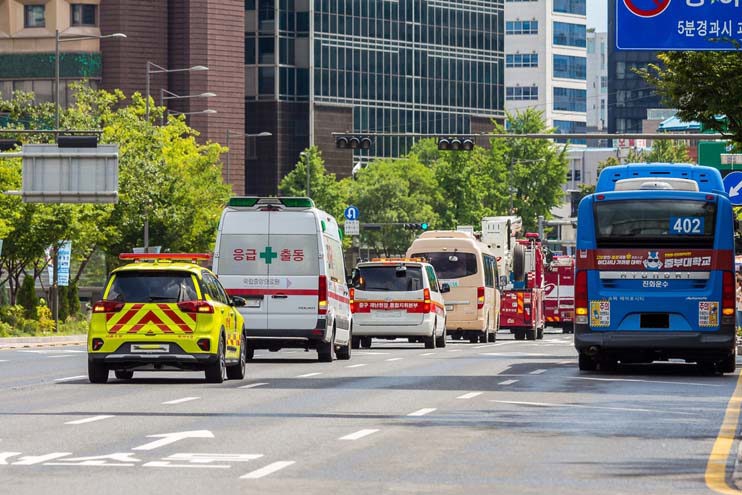
In South Korea, emergency services are efficient and highly responsive. If you experience sudden or severe eye symptoms, begin by contacting emergency assistance:
Call 119, Korea’s emergency ambulance and rescue service. The line offers support in English, Chinese, and Japanese in addition to Korean. You can request an ambulance to take you to a nearby hospital or get advice on first aid measures until help arrives.
When speaking with the dispatcher, provide:
Your exact location or a recognizable nearby landmark
A clear description of your symptoms
Your age and any known medical conditions
In true emergencies, ambulance transport is free of charge. Korean paramedics are trained in triage and can determine whether you need to be taken to a general emergency room or directly to a hospital with ophthalmology services.
Hospital Emergency Departments in Busan That Handle Eye Emergencies
Unlike small clinics, large general hospitals in Busan operate 24/7 and are fully equipped to handle a broad range of emergencies, including acute eye issues. These institutions often have ophthalmologists on-call, or at least diagnostic tools such as slit-lamp microscopes, CT scanners, and emergency medications.
Recommended hospitals with reliable ER departments include:
Pusan National University Hospital (Seo-gu) – A flagship university hospital with comprehensive emergency services and specialists on call.
Busan St. Mary’s Hospital (Busanjin-gu) – Known for its rapid triage and access to multiple specialty departments.
Busan Medical Center (Dongnae-gu) – A public hospital with 24-hour emergency care and multilingual support.
Inje University Haeundae Paik Hospital (Haeundae) – Conveniently located for those staying in the eastern coastal areas.
On General Hospital (Busanjin-gu) – Offers emergency and general medical services with high patient satisfaction ratings.
These hospitals are the best starting point if you experience trauma, chemical exposure, or symptoms that suggest serious internal eye damage. Upon arrival, you will typically be evaluated by a general emergency physician, with an ophthalmologist consulted when needed.
Eye Clinics in Busan for Urgent, Same-Day Care
If your symptoms are not life-threatening but still need prompt attention—such as sudden blurry vision, eye infections, or worsening dry eye—a specialized ophthalmology clinic can often provide more focused care than a general ER.
Recommended eye clinics in Busan include:
Jryn Eye Clinic (Busanjin-gu) – A state-of-the-art eye care center known for precision diagnostics, advanced surgical procedures, and compassionate care. The clinic handles urgent cases involving dry eye, corneal inflammation, retinal abnormalities, and post-surgical complications. It is also one of the few clinics offering multilingual services and tailored follow-up plans for international patients.
BGSS Eye Clinic – Offers wide-ranging ophthalmic services and modern diagnostic equipment.
Eye City Eye Hospital – A reputable option for both basic and complex eye conditions.
Bright St. Mary’s Eye Clinic (Balgeun Seongmo Ahn-gwa) – Focuses on patient-centered care and post-operative support.
Operating hours for clinics typically run from 9:00 AM to 6:00 PM on weekdays, with some offering half-day service on Saturdays. These clinics are excellent for follow-up after an ER visit, sudden worsening of chronic conditions, or when you suspect early symptoms of something more serious.
Always call ahead, describe your symptoms clearly, and ask whether urgent appointments are available. Korean clinics appreciate precise communication—it helps them prepare the right equipment and prioritize urgent cases.
What to Do Outside of Regular Hours
Eye emergencies don’t wait for business hours. If you find yourself needing care on a weekend or late at night, and a clinic isn’t open, head to a hospital emergency room.
Though most hospital ERs are not staffed with ophthalmologists 24/7, they can still provide pain management, antibiotic drops, temporary patches, or pressure control for glaucoma until you’re referred to a specialist the next day. Large hospitals like those listed above may have ophthalmology specialists on call or accessible through teleconsultation.
Another useful resource for foreigners is the Korea Tourism Organization’s Travel Hotline (1330), which provides 24/7 support in multiple languages and can help direct you to hospitals or clinics that are currently open and able to help.
Follow-Up: The Often-Ignored but Critical Step

One of the most dangerous assumptions is believing that once the pain subsides, the crisis is over. In truth, many eye conditions require follow-up treatment to ensure long-term recovery.
For example:
A corneal abrasion may heal superficially but leave scar tissue that affects vision
Acute glaucoma attacks may respond to medication but require surgery to prevent recurrence
A retinal tear that stabilizes temporarily can still lead to detachment without intervention
Clinics like Jryn Eye Clinic specialize in follow-up diagnostics using tools such as OCT imaging, corneal topography, and tear film analysis. Patients who visit the ER are encouraged to bring their discharge paperwork or medication list to ensure continuity of care.
If you’re a visitor in Busan, follow-up is even more essential. A dedicated eye clinic can provide written reports, imaging results, and treatment summaries in English—useful for ongoing care after you return home.
Final Checklist: What to Do in an Eye Emergency
Don’t delay. Eye symptoms can worsen rapidly.
Call 119 for ambulance or emergency dispatch if symptoms are severe.
Head to a general hospital ER for trauma, pain, or sudden vision changes.
Visit a specialty clinic during daytime hours for acute but non-traumatic symptoms.
Schedule a follow-up within 24–48 hours with a trusted ophthalmologist.
Preparation is your best defense. Save emergency contact numbers, know the names of local hospitals, and familiarize yourself with at least one reputable eye clinic. When emergencies arise, having a plan reduces stress and protects your vision.
Final Word from Jryn Eye Clinic
At Jryn Eye Clinic, we understand how frightening an eye emergency can feel—especially when you're in a foreign environment or unsure what steps to take. Our team, led by Dr. Han Sang Yeop, brings decades of experience in managing both routine and complex eye conditions, with an emphasis on precision, technology, and personalized care.
We’ve treated patients from around the world—tourists, expats, and lifelong residents of Busan—each case handled with the same urgency and respect. Whether it's sudden retinal problems, complications after eye surgery, or unrelenting eye pain, our doors are open to guide you toward the right outcome.
Emergency or not, your eyesight is too important to take chances with. If you're experiencing symptoms, or simply want to know how to prepare for unexpected eye issues, reach out to us. At Jryn Eye Clinic, we don't just treat eyes—we protect futures.
Ready for a Personalized 1:1 Eye Consultation?
Schedule your comprehensive 3D eye examination with Chief Director Dr. Sang-Youp Han and our ophthalmology team on the 14th floor of JRYN Medical Center in Seomyeon, Busan.