Jryn Eye Clinic Busan (Seomyeon) · SMILE LASIK · EVO+ Visian ICL · Cataract & Retina Center · Tel: +82-51-710-1004
en-US

1:1 Consultation
CLINICAL ARTICLE & GUIDE
How Patients Are Fixing Botched Surgeries from Abroad
Discover how patients are correcting botched surgeries done abroad. Learn about safe revision options, expert care, and what to do next. Start your recovery now!
Introduction
Every year, thousands of people board planes with one goal in mind: affordable surgery abroad. For some, the results are life-changing in the best way. But for others, what was meant to be a simple fix becomes a long journey of regret, discomfort, and uncertainty. At Jryn Eye Clinic in Busan, we see firsthand the emotional and medical consequences of botched vision correction surgeries performed in foreign clinics.
The reasons for seeking treatment abroad are understandable. Many countries advertise competitive prices, quick turnarounds, and “vacation” packages that promise convenience and recovery in a scenic location. But the risks, especially when it comes to your eyes, can be far greater than most patients are told.
This article explores the reality behind these surgeries gone wrong—and more importantly, how patients are fixing them. Drawing from our own experience treating these cases, we offer a roadmap for recovery, clarity, and the restoration of trust in your vision.
Why Patients Travel for Surgery—and What They’re Not Told
Cost is a major driver. Many international clinics offer LASIK, SMILE, or ICL procedures at a fraction of the cost charged in Korea or other developed countries. These clinics often promise minimal wait times, luxury facilities, and high-tech tools.
But what patients aren’t told is that:
Preoperative evaluations may be rushed or incomplete.
Diagnostic tools might be outdated or inconsistently used.
Aftercare is minimal or nonexistent—especially once you’re back home.
If something goes wrong, revision options are limited or risky.
Unfortunately, vision correction is not just about removing glasses—it’s about preserving the long-term health of your eyes. Once a cornea has been reshaped or a lens implanted, the changes are permanent. If those changes were made hastily or inaccurately, the damage can be difficult, though not always impossible, to repair.
The Most Common Post-Surgical Complications We See

At Jryn Eye Clinic, we specialize in complex cases, many of which come from patients who had surgery abroad. Some of the most common issues we see include:
Residual Refractive Error
Patients may be undercorrected or overcorrected, leaving them still dependent on glasses or contact lenses. These errors often stem from poor preoperative measurements or the use of generalized treatment plans rather than customized correction.
Irregular Corneal Shape or Ectasia
Ectasia is one of the most serious complications. It occurs when the cornea becomes too thin or structurally weak, causing it to bulge. This can distort vision and even lead to permanent damage if not treated early.
Severe Dry Eye Syndrome
Improper surgical technique can damage corneal nerves, leading to decreased tear production and chronic dry eye. This isn’t just uncomfortable—it can severely affect vision quality and eye health.
Visual Disturbances: Halos, Glare, and Ghosting
Night vision problems are common in post-operative patients from abroad. These issues are often caused by decentered ablation zones or poorly calibrated lasers.
First Steps Toward Recovery: Comprehensive Diagnostics
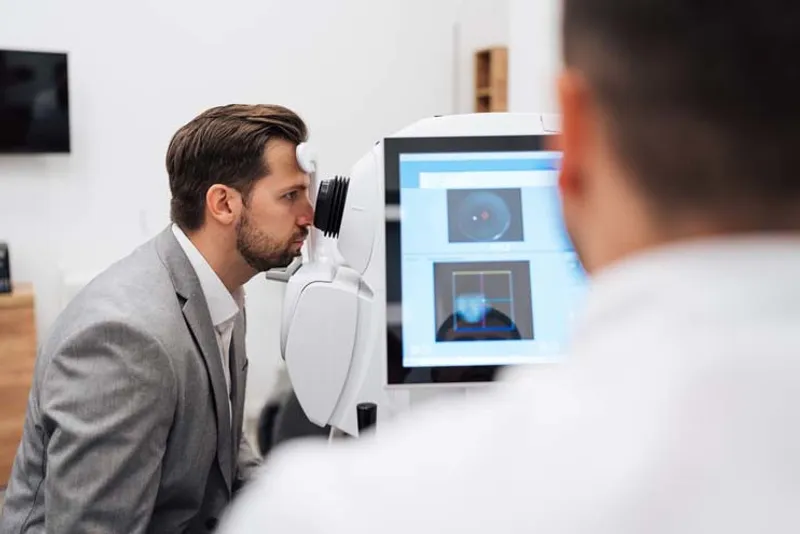
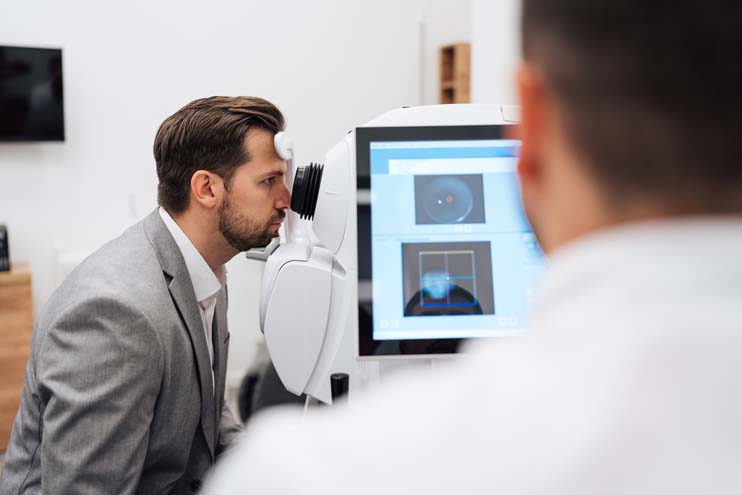
Before any treatment plan can be considered, a thorough evaluation is essential. At our clinic, we use advanced diagnostic tools to assess:
Corneal thickness and shape (topography and tomography)
Optical aberrations (wavefront analysis)
Tear film and meibomian gland function
The presence of scar tissue or abnormal healing
Every patient’s eye responds differently to surgery. That’s why we believe no two treatment plans should be alike.
Treatment Options for Botched Surgeries

Fixing a compromised eye isn’t about jumping into another surgery. It’s about understanding what is safe, what is realistic, and what will provide the most sustainable improvement.
Enhancements for Residual Error
If the cornea is healthy and thick enough, a secondary laser procedure—like topography-guided LASIK or PRK—can fine-tune the original correction.
Corneal Cross-Linking (CXL)
For patients with early-stage ectasia, CXL can strengthen the cornea and prevent further deformation. This is often combined with specialty lenses for visual rehabilitation.
Specialty Contact Lenses
Rigid gas permeable (RGP) lenses, scleral lenses, or hybrid lenses can dramatically improve vision in patients with irregular corneas, offering a non-surgical alternative to restore functional sight.
Dry Eye Therapies
Chronic dry eye must be addressed with a combination of:
Prescription eye drops
LipiFlow or thermal treatments
Nutritional support (e.g., omega-3 fatty acids)
Lid hygiene regimens
ICL Explantation or Exchange
In rare cases, improperly implanted ICLs (Implantable Collamer Lenses) may need to be removed or replaced if sizing or positioning is incorrect.
The Psychological Impact—and Why Compassionate Care Matters
One aspect of recovery that often goes overlooked is emotional healing. Patients who experience botched surgeries often struggle with anxiety, guilt, and distrust of the medical system. Some feel embarrassed that they prioritized cost over quality. Others are simply exhausted by the idea of more procedures.
It’s important to recognize that eye health is deeply tied to self-esteem and independence. When something goes wrong with your vision, it’s not just about blurry eyesight—it affects your confidence, your ability to work, drive, and even connect with people socially. Some patients withdraw, avoid mirrors, or feel ashamed talking about their symptoms, especially if they fear being judged for going overseas for surgery.
That’s why our approach is patient-centered from the start. We don’t rush. We don’t overpromise. We listen. And most importantly, we rebuild trust by educating patients about their condition, their options, and the likely outcomes.
Our team prioritizes emotional safety as much as clinical accuracy. Whether it’s through longer consultations, clear explanations, or simply making space for someone to express frustration or fear—we treat the whole person, not just their chart. Recovery is a shared process, and we walk it with our patients every step of the way.
Why Korea—and Jryn Eye Clinic—Are at the Forefront of Correction
South Korea is known for its advanced ophthalmologic infrastructure, particularly in Busan and Seoul. But what sets Jryn Eye Clinic apart is our focus on precision, personalized care, and post-surgical recovery.
We are not just a vision correction center. We are a referral hub for complex cases. Patients come to us not only for new procedures like SMILE LASIK or EVO ICL—but also to recover from failed surgeries performed abroad.
Dr. Han Sang Yeop, our lead surgeon, brings over 20 years of experience in dealing with delicate eye surgeries and complications. Under his leadership, our clinic has helped countless patients recover clarity and comfort after disappointment elsewhere.
We combine leading-edge diagnostic tools with an unwavering commitment to ethical care. Whether someone is seeking a second opinion or a full treatment plan, our goal remains the same: to deliver clarity—visually, emotionally, and medically.
Real-World Success Stories
A patient in her early 30s came to us after SMILE surgery in another country left her with severe starbursts at night. After a detailed analysis and customized treatment plan, including topography-guided correction and tear stabilization therapy, her symptoms improved dramatically.
Another patient, a university student, experienced progressive corneal thinning after LASIK abroad. Through early diagnosis and prompt CXL, we prevented vision loss and rehabilitated him with specialty lenses that now provide better vision than he had before surgery.
A recent case involved a retiree who had undergone ICL implantation abroad, only to experience night glare and depth perception issues. Imaging revealed a sizing mismatch. After safely explanting the lens and replacing it with a properly fitted model, the patient reported not only visual improvement but emotional relief—he could now read, drive, and enjoy his retirement without anxiety.
Conclusion: Recovery Is Possible—With the Right Help
If you’ve undergone vision correction abroad and something feels off—whether it’s blurry vision, discomfort, or just a lingering sense of unease—don’t ignore it. Eyes heal, but they also adapt, and that adaptation can sometimes lead to permanent changes if not managed early.
Fixing botched surgery isn’t about blame. It’s about clarity. It’s about regaining the life you envisioned when you first decided to improve your sight.
At Jryn Eye Clinic, we believe that even the most difficult visual journeys can end in hope. With comprehensive diagnostics, expert care, and a truly personalized approach, recovery isn’t just possible—it’s within reach.
Ready for a Personalized 1:1 Eye Consultation?
Schedule your comprehensive 3D eye examination with Chief Director Dr. Sang-Youp Han and our ophthalmology team on the 14th floor of JRYN Medical Center in Seomyeon, Busan.