Jryn Eye Clinic Busan (Seomyeon) · SMILE LASIK · EVO+ Visian ICL · Cataract & Retina Center · Tel: +82-51-710-1004
en-US

1:1 Consultation
CLINICAL ARTICLE & GUIDE
How Much for Laser Multifocal Cataract Surgery in Korea? 30% Cheaper Than Russian Price
Discover how much laser multifocal cataract surgery costs in Korea — often up to 30% cheaper than Russian prices with advanced tech, expert surgeons, and quality care.
Introduction
For many people, the world begins to lose its sharpness as they enter their 50s and 60s. Colors fade, night driving becomes a hazard, and the constant reach for reading glasses becomes a daily burden. This isn’t just aging; it’s often the onset of cataracts and presbyopia.
While traditional surgery used manual blades and basic lenses, a new standard has emerged: Laser Multifocal Cataract Surgery. Today, South Korea has become the global hub for this procedure, offering a "Gold Standard" of care that is significantly more accessible than private clinics in Moscow or St. Petersburg. By choosing Seoul, international patients are accessing robotic-level precision at a price point that is often 30% to 50% lower than the Russian private sector.
What is Laser Multifocal Cataract Surgery? (The 20/20 Solution)
Standard cataract surgery, known as phacoemulsification, typically uses ultrasound and manual tools to remove the cloudy lens. While effective, it often leaves the patient still needing glasses for reading or distance.
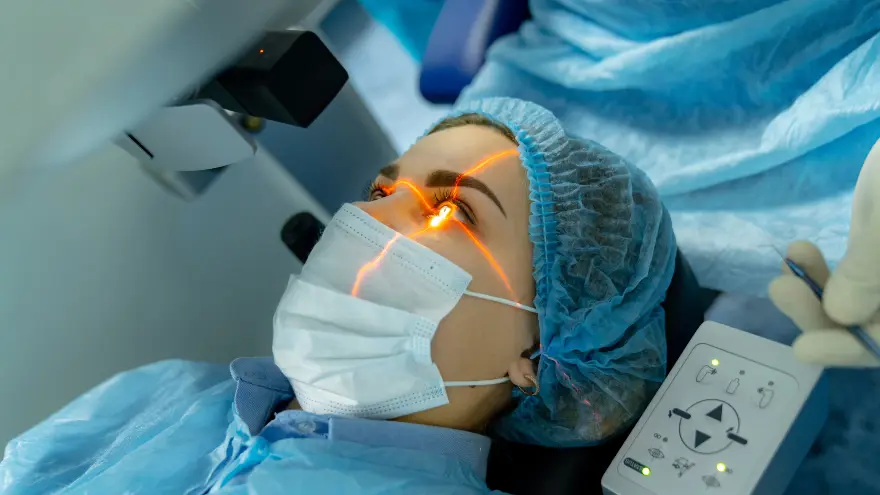
Laser Multifocal Cataract Surgery is a sophisticated evolution. It uses a Femtosecond Laser to perform the most critical steps of the surgery with micron-level accuracy. Instead of a manual blade, the laser creates a perfectly circular opening in the lens capsule and pre-fragments the cataract.
The "Multifocal" part refers to the Premium Intraocular Lens (IOL) implanted. Unlike standard lenses that only focus on one distance, multifocal lenses are engineered with multiple focal points. This allows your brain to seamlessly switch between near (reading), intermediate (computer), and far (driving) vision, effectively curing both cataracts and the need for reading glasses in a single 15-minute session.
The Technology Shift: From Manual to Robotic
South Korean ophthalmology clinics are famous for their rapid adoption of "Robotic" assistance. Two specific technologies set Korean clinics apart from many regional centers in the CIS:
1. Zepto Precision Pulse Technology
While some clinics use heavy lasers, top-tier Seoul centers utilize Zepto Precision. This is a specialized, automated device that creates the lens opening (capsulotomy) in just milliseconds. It ensures the new multifocal lens is centered exactly on your Visual Axis—the specific line where your eye captures light—rather than just the center of your pupil. This centration is the "secret sauce" for high-definition vision.
2. Visual Axis Alignment
Korean surgeons prioritize alignment based on where you actually see. By using robotic guidance, the lens is positioned to match your unique ocular anatomy, reducing the risk of glares or halos that can occur with manual placement.
Why South Korea is the Cheapest and Best for Treatment
It is a common misconception that "cheaper" implies a compromise in quality. In South Korea, the lower price is a direct result of market volume and extreme efficiency.
The Gangnam Density Factor
The Gangnam district in Seoul has the highest concentration of eye specialists in the world. With hundreds of clinics competing, they must offer the latest Zeiss, Alcon, and Johnson & Johnson technology at the most competitive rates to attract patients.
Technological Integration
Korea adopts new technologies significantly faster than the Russian private sector. High surgical volume allows them to purchase premium IOLs and laser platforms at manufacturer rates, passing those savings directly to you.
Diagnostic Superiority
In many countries, advanced mapping is a "hidden extra." In Korea, a "50-Step Eye Exam" is the standard. This includes 3D Corneal Topography and DNA testing for corneal dystrophy to ensure you are a safe candidate before the surgery even begins.
Cost Comparison: South Korea vs. Russian Private Sector
When comparing costs, it is vital to look at the "all-inclusive" price. Russian private clinics often charge separately for diagnostics, the lens, and follow-up care. South Korean clinics typically offer transparent, bundled packages.
Service / Technology | Price in Russian Private Clinics | Price in South Korea (Seoul) | Your Savings |
|---|---|---|---|
Laser Cataract Surgery (Per Eye) | $3,200 – $4,500 | $2,100 – $2,800 | ~35% Cheaper |
50-Step Advanced Diagnostics | $300 – $500 | Included (Free) | 100% Saving |
Premium Multifocal IOLs | High Import Markup | Direct Manufacturer Cost | Significant |
Post-Op Meds & Care | Extra Charges | Included | Peace of Mind |
Tax Refund (VAT) | 0% | 7% – 10% Cash Back | Extra Bonus |
The VAT Refund Advantage
South Korea provides an additional financial incentive: the Medical VAT Refund. Most accredited clinics participate in this government program. For a surgery costing $2,500, you can claim roughly $200–$250 back in cash at Incheon Airport. This "bonus" often covers the cost of a luxury hotel or your dining for the trip.
The "One-Stop" Medical Journey in Seoul (72-Hour Workflow)
Korean clinics are world-famous for their efficiency. You don't need to spend weeks abroad; the entire process is optimized for international travelers.
Day 1: The Diagnostic Marathon: You spend 2–3 hours undergoing intensive imaging. This maps your unique ocular anatomy down to the micron and checks for any underlying conditions.
Day 2: The Procedure: The actual surgery takes about 15 minutes. There is zero pain; the team uses only numbing drops. You walk out of the clinic on your own immediately after.
Day 3: Final Inspection & Medical Passport: A follow-up exam confirms the stability of the lens. You are issued an English or Russian "Medical Passport" detailing your surgery and lens serial numbers for your doctors back home.
Essential Questions for Your Surgeon
Before booking your trip, we recommend a virtual consultation. Ask these critical questions:
"How many laser-assisted multifocal implants have you personally performed?" (Target 1,000+).
"Is the Zepto technology included in my surgical plan?"
"Will I receive the official serial number and certificate for my IOL?"
Frequently Asked Questions
1. Is the surgery painful?
No. Your eyes are completely numbed with specialized anesthetic drops. You remain awake and relaxed. You might feel a slight pressure for about 20 seconds, but there is no sharp pain or needles involved.
2. How long is the recovery?
Most patients report a "wow" moment within 4 to 6 hours after surgery. While vision stabilizes fully over a few weeks, you can usually return to work or light activities within 48 hours.
3. Why is Korea the cheapest and best for treatment?
It is a combination of massive surgical volume and government-backed medical infrastructure. Because Seoul is the global hub for eye surgery, clinics compete to provide the world's best technology at the most transparent, "manufacturer-direct" prices.
4. Can I fly home immediately?
We advise waiting 48–72 hours to ensure the eye has stabilized against cabin pressure changes.
5. Does the price include the lens?
Yes. In Korea, we provide a "Bundled Package" that includes the premium multifocal lens, surgery, and diagnostics.
Conclusion
As we age, our vision should be an asset, not a limitation. While the cost of premium eye care in the Russian private sector continues to rise, South Korea remains a beacon of accessible excellence. By choosing Laser Multifocal Cataract Surgery in Seoul, you aren't just choosing a "cheaper" option—you are choosing a higher tier of robotic safety that ensures the best possible vision for the next 30 years.
Ready for a Personalized 1:1 Eye Consultation?
Schedule your comprehensive 3D eye examination with Chief Director Dr. Sang-Youp Han and our ophthalmology team on the 14th floor of JRYN Medical Center in Seomyeon, Busan.