Jryn Eye Clinic Busan (Seomyeon) · SMILE LASIK · EVO+ Visian ICL · Cataract & Retina Center · Tel: +82-51-710-1004
en-US

1:1 Consultation
CLINICAL ARTICLE & GUIDE
Fixing Complications from Other Clinics: Your Options in Busan
Explore your options for fixing complications from other clinics in Busan. Expert care, proven results—restore your confidence. Book a consultation today!
Introduction
You’ve taken the step. Maybe it was LASIK, SMILE, ICL, or cataract surgery—you trusted a clinic, underwent the procedure, and hoped for a clear new chapter in your vision. But instead of comfort and clarity, you're now dealing with blur, light sensitivity, or unsettling side effects. If this sounds familiar, you’re not alone. At Jryn Eye Clinic in Busanjin-gu, Busan, we regularly see patients who come to us not for their first procedure, but because something didn’t go quite right elsewhere.
Dealing with complications from previous eye surgery is more common than many realize. What’s less common, however, is finding a clinic that truly specializes in personalized diagnostics and corrective care—one that takes the time to figure out what went wrong and what your best path forward is. This article is for patients in Busan and beyond who feel stuck, worried, or simply disappointed after a past eye procedure. We’ll walk through the kinds of complications we often see, why they happen, and how a thoughtful, expert-driven approach can help you find relief—and maybe even the visual clarity you were hoping for from the start.
What counts as a "complication"?

Not all complications are dramatic. Some are subtle, quietly affecting your quality of life day after day. A slight haze in your vision, difficulty driving at night, or the need to reach for glasses again when you thought you'd said goodbye to them. These lingering issues often stem from one of the following:
Residual refractive error (like remaining myopia, hyperopia, or astigmatism)
Fluctuating or blurry vision after LASIK, SMILE, or ICL
Dry eye syndrome exacerbated by surgery
Halos, glare, or night vision problems
Lens decentration or rotation after cataract or IOL procedures
Corneal irregularity or even mild ectasia after corneal-based surgery
You might not even realize your symptoms are post-surgical complications. Many patients blame themselves—"maybe I just expected too much"—but often, there's a clinical reason, and it's something we can treat. Vision is not just a mechanical result; it’s deeply tied to how your eyes heal, how your brain adapts, and how your ocular surface behaves over time.
Why do these issues happen in the first place?
Having treated thousands of patients and consulted on many post-op complications, we've found that most issues fall into one of a few categories:
Incomplete or rushed diagnostics
Some clinics prioritize speed over precision. If a cornea is too thin or irregular, or the tear film is unstable, the surgery result can be compromised. Without in-depth diagnostic tools, key warning signs might be missed. In fact, many patients who experienced issues elsewhere tell us that their first consultation lasted just 10 minutes. A rushed exam is not enough to detect long-term risk factors.
Poor surgical planning or procedure selection
No two eyes are the same. A cookie-cutter approach doesn’t work in vision correction. If a procedure like LASIK or SMILE is chosen when the patient would have benefited more from ICL or lens-based correction, dissatisfaction is almost inevitable. A patient with high myopia, for instance, might experience better outcomes with a lens-based solution—but is sometimes offered LASIK for convenience or cost.
Surgical execution or healing variation
Even with excellent planning, subtle issues during surgery—like slight misalignment or incomplete flap adhesion—can lead to imperfect outcomes. And healing is highly individual. Some patients develop haze, inflammation, or epithelial ingrowth that distorts vision. Healing also depends on post-operative lifestyle. Korea’s digital-heavy work culture often accelerates dry eye symptoms after surgery.
Post-operative neglect
Surgery is only half the story. Follow-up is critical. Delayed detection of inflammation, dry eye, or corneal changes can turn small issues into persistent problems. Some clinics do not offer structured post-op care beyond a 1-week or 1-month visit. At Jryn, we see the post-op period as a 6–12 month process, especially in complicated or borderline cases.
Unrealistic expectations or incomplete counseling
Sometimes, the issue isn’t just medical—it’s emotional. Patients weren’t fully informed about what to expect. If night vision issues or glare are possible side effects, they should be discussed beforehand. We believe in honest, realistic pre-op counseling to build long-term trust.
What you can do now: A roadmap to recovery

If you’re experiencing complications, don’t give up hope. The key is a personalized, precision-driven approach. Here’s what we recommend at Jryn Eye Clinic:
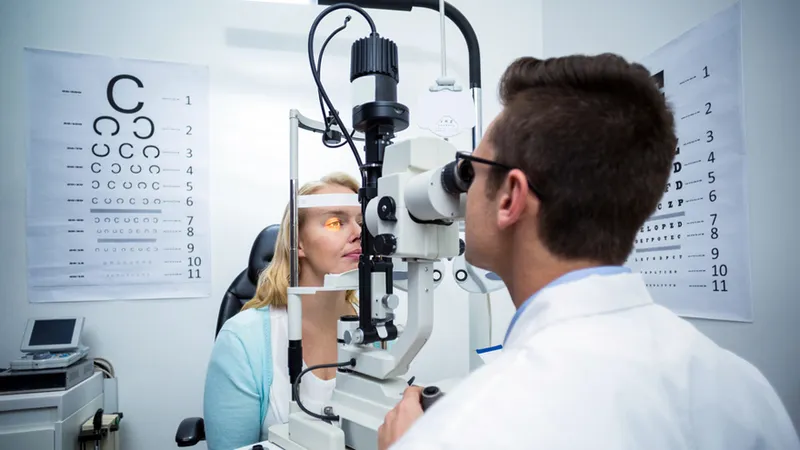
Comprehensive re-evaluation
We start with a full suite of diagnostics:
Corneal topography & tomography (to check shape, curvature, irregularities)
Anterior segment OCT (to visualize the cornea, lens, and implanted IOLs)
Tear film & meibomian gland assessment (dry eye plays a major role)
IOL positioning and rotation measurement (for post-cataract cases)
Retina & optic nerve imaging (to rule out non-surgical causes of visual disturbance)
We also review any records from your previous surgery—if you can get them—to better understand what was done, and what went wrong. If you don't have the records, we can still reconstruct much from our diagnostic data.
Precise problem mapping
Are your symptoms due to residual refractive error? Is the cornea irregular? Is the implanted lens tilted? We’ll isolate the root cause rather than just treating the symptoms. Patients are often relieved just to finally understand why things feel off.
Treatment options tailored to you
Depending on the findings, your solution may include:
Laser enhancement or PRK touch-up for residual refractive error
Corneal surface treatment or cross-linking for irregularity or ectasia
Lens repositioning or exchange if the implant is misaligned
Dry eye therapy (including IPL and tear film rehab) to restore surface stability
Custom optical correction like specialty contact lenses or ICL if laser isn’t suitable
We may also recommend delaying any new procedures until ocular health stabilizes—an important step many clinics skip. It’s not about doing more; it’s about doing it right.
Realistic expectations & timelines
We take the time to explain what each option offers—and what it doesn’t. Some patients will regain crystal-clear vision. Others may see significant improvement but still need minor correction. The goal is honesty, safety, and your comfort. We never promise perfection, but we aim for functional, dependable vision that enhances your quality of life.
Why choose Jryn Eye Clinic for post-op correction?

Here’s what sets our clinic apart:
Advanced diagnostics: We invest in leading technologies to assess and map your eye with utmost precision. From corneal biomechanics to optical aberrations, we analyze it all.
Personalized care: We don’t rush. We listen, explain, and collaborate with you. Each patient receives a customized care plan based on medical and lifestyle needs.
Corrective experience: Dr. Han Sang Yeop and his team have guided many patients through complex recoveries. Post-op rescue is not just a side service—it’s a core part of what we do.
Local trust, global standards: We’re trusted by the Busan community, and our methods align with international best practices. We’ve received patients from across Korea and abroad who seek high-level re-evaluation.
Whether you're from Busanjin-gu or flew back from Seoul after surgery, our doors are open to assess, explain, and guide your recovery journey.
A case that says it all
One recent patient came to us after SMILE at a well-known Seoul clinic. His night vision had declined, and he felt dismissed by the original center. We found residual astigmatism and dry eye. After 3 months of customized surface treatment, eyelid gland therapy, and a minor laser enhancement, his vision stabilized and he reported full satisfaction. The surgery wasn’t the full problem—the post-op care had been lacking.
Another patient, a 63-year-old woman from Busan, came to us after a multifocal IOL was implanted during cataract surgery. Her intermediate vision was poor, and she had constant glare. We discovered that the lens had slightly rotated and her pupil dynamics weren’t compatible with the lens design. We carefully exchanged the lens with a monofocal toric IOL and optimized her ocular surface. She regained comfortable, stable vision for her daily needs.
Final thoughts: You deserve a second chance at clarity
Having complications from a previous eye procedure can be frustrating and emotional. But there are answers, and there are real solutions. At Jryn Eye Clinic, we see patients not as cases, but as individuals with unique eyes, lives, and hopes.
Fixing another clinic’s complications isn’t just a medical process—it’s a human one. It takes patience, honesty, advanced tools, and a team willing to listen deeply. And we do all of that, every single day.
If you’re struggling with discomfort, blur, or lingering doubt after eye surgery elsewhere, don’t wait. Schedule a consultation. Bring your records, your questions, and your story. We’ll bring the precision, care, and honesty that you deserve.
Ready for a Personalized 1:1 Eye Consultation?
Schedule your comprehensive 3D eye examination with Chief Director Dr. Sang-Youp Han and our ophthalmology team on the 14th floor of JRYN Medical Center in Seomyeon, Busan.