Jryn Eye Clinic Busan (Seomyeon) · SMILE LASIK · EVO+ Visian ICL · Cataract & Retina Center · Tel: +82-51-710-1004
en-US

1:1 Consultation
CLINICAL ARTICLE & GUIDE
EVO Visian ICL in Busan: Is It Better Than LASIK?
Discover EVO Visian ICL in Busan vs LASIK. Learn which vision correction suits your eyes best. Compare benefits & book a consultation today!
Introduction: When Clear Vision Feels Complicated
You walk through the streets of Seomyeon, gaze shifting from storefront signs to distant mountains. You blink, and the world seems a little fuzzier than it should. You thought glasses or contacts would be the answer—yet the idea of LASIK, or its newer cousin SMILE, lingers in your mind. But then you hear about EVO Visian ICL—a lens implanted inside the eye.
Which one is truly better? Is ICL just a flashy new alternative, or a paradigm shift in vision correction? At Jryn Eye Clinic in Busanjin‑gu, we’ve guided many in Busan through exactly this decision. The answer isn’t one-size-fits-all. It depends on your eyes, your lifestyle, and how you—and your eyes—will change over time.
In the following, we’ll dive deep: how each procedure works, who they suit (or don’t), safety and long-term data, recovery, cost, and when one might clearly outshine the other. My goal: by the time you finish reading, you’ll see not just which is “better,” but which is better for you.
Understanding the Basics: What Are LASIK and ICL?
LASIK / SMILE: Reshape the Cornea
LASIK (Laser-Assisted In Situ Keratomileusis) has been the workhorse of refractive surgery for decades. The cornea—the transparent front “window” of your eye—is reshaped so that light focuses precisely on your retina.
SMILE (Small Incision Lenticule Extraction) is a more modern variant: a laser carves out a small lens-shaped piece (a lenticule) from inside the cornea, which is then removed through a tiny incision. The result is similar to LASIK, but the flap is avoided, potentially preserving more corneal integrity and reducing some risks.
Because both are “subtractive” procedures (removing corneal tissue), you need enough corneal thickness and favorable shape.
EVO Visian ICL: Add a Lens Inside the Eye
ICL stands for Implantable Collamer Lens. Instead of altering the cornea, this procedure inserts a thin, flexible lens between your natural lens and the iris (in the posterior chamber). In the EVO (and EVO+) designs, a small central hole (“central port”) allows fluid to flow naturally, removing the need for preoperative laser iridotomy.
So, rather than reshaping, we supplement your eye with an internal lens. Because the cornea is left mostly untouched, postoperative dryness or structural corneal weakening are less of a concern (in appropriately selected patients).
Who Makes a Better Candidate for Each Option?
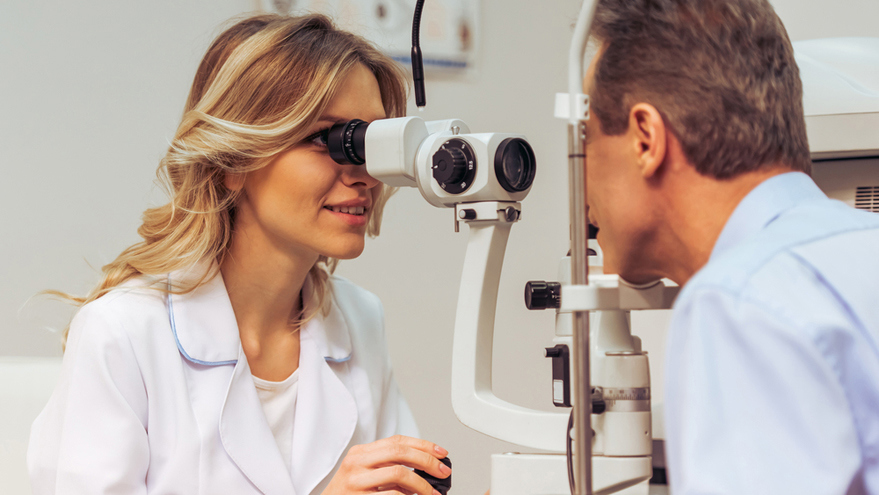
This is where “better” becomes personal—and where a clinic’s diagnostic capabilities matter most.
When LASIK / SMILE Might Be Preferable
Mild to moderate refractive error: If your myopia, hyperopia, or astigmatism is within a safe range and corneal thickness is sufficient, LASIK/SMILE often gives excellent results.
Healthy tear film and minimal dry eye: Because the procedure can temporarily worsen dryness, patients with already poor tear production must be chosen carefully.
Desire for a simpler, proven option: LASIK has a long history, many surgeons are deeply experienced, and many patients achieve 20/20 vision relatively quickly.
Lower cost barrier: Generally, LASIK is less expensive than ICL, as there's no need for a custom intraocular lens.
When EVO ICL Often Wins the Edge
High myopia / strong prescriptions: Because ICL does not rely on removing corneal tissue, patients with high myopia (or high astigmatism) can be safer candidates.
Thin or steep corneas: If your cornea is too thin to safely reshape, ICL avoids that limitation.
Risk of dry eye / ocular surface disease: Since the cornea and its nerves are less disturbed, ICL may reduce the chance of worsening dry eye.
Desire for reversibility or future flexibility: ICL can be removed or exchanged later—for instance, when cataract surgery becomes necessary.
Long-term structural preservation of cornea: For patients concerned about corneal stability decades later, ICL may preserve corneal integrity.
In Korean ophthalmic practice, we also consider environmental stresses: long screen time, air pollution, indoor heating/air conditioning—all aggravating dry eye risk. So more patients in Busan with marginal corneas or tear film issues are being evaluated for ICL.
The Patient Experience: Surgery, Recovery, Comfort
Knowing what to feel before, during, and after helps ground expectations.
LASIK / SMILE Experience
The procedure is usually quick: the laser work itself per eye may take under a minute, though setup, alignment, and safety steps take more.
Many patients see usable vision within 24 hours.
Some transient discomfort, foreign body sensation, and tearing are common early.
Dry eye is a well-known side effect, often peaking in the first few weeks and improving over months.
Enhancements or “touch-ups” are possible in the future, though not always needed.
EVO ICL Experience
The surgery is longer—roughly 20–30 minutes per eye (including preparatory and closing steps).
Most patients notice crisp vision relatively soon—though some subtle settling may occur.
Discomfort tends to be mild; patients often describe pressure or mild irritation, not sharp pain.
Dry eye symptoms tend to be less severe or shorter-lived, owing to less disturbance to corneal nerves.
Because the lens sits inside, healing is more about internal adjustment rather than surface healing.
At Jryn Eye Clinic, we counsel patients that the “day after” matters less than the week to month after, in which your eyes settle and adjust.
Cost, Value, and Long-Term Thinking

It’s tempting to make decisions based solely on upfront price. But in vision correction, value over time matters more.
Cost: ICL is generally more expensive than LASIK, due to the custom lens and extra steps.
Enhancements & maintenance: LASIK may require retreatments; ICL may require lens exchange later if refractive needs change.
Long-term risks: If LASIK leaves you with borderline corneal thickness, managing future interventions (for presbyopia, cataracts, etc.) becomes more complex.
Patient satisfaction: Many patients who were borderline LASIK candidates, and would have had complications or poor outcomes, find peace of mind with ICL—even if it costs more initially.
At Jryn Eye Clinic, we guide patients through a lifetime cost-benefit view—not just the next 12 months.
In the Context of Busan & Korea: Unique Considerations
Dry eye prevalence: Korea has high rates of dry eye, partly driven by long screen times, indoor heating, and air quality. This tilts the risk-benefit in favor of techniques that spare the corneal nerves.
Screen-based professions: Many in Busan work in IT, design, education—jobs that demand sustained visual clarity with minimal discomfort.
Patient expectations: Koreans tend to seek perfection in visual outcomes; even mild residual blur is noticed. We need to aim for very tight refractive precision.
Follow-up culture: Korean patients are accustomed to rigorous follow-up and monitoring, which helps manage long-term risks in ICL (vault checks, endothelial health, etc.).
Because of these, in Busan we often see more patients who serve better with ICL than LASIK—particularly among those who push the limits of LASIK candidacy.
When I Still Recommend LASIK
ICL is not a universal winner. There are eyes that are simply better suited to LASIK:
Eyes with very mild prescriptions and robust corneas, where LASIK’s cost and simplicity make it more attractive.
Patients with strong aversion to intraocular surgery—even though ICL is safe, entering inside the eye feels more intimidating.
Patients whose ocular anatomy (e.g. shallow anterior chamber, narrow angles) preclude safe ICL implantation.
Cases where insurance, finance, or institutional constraints favor LASIK.
A responsible clinic must never push ICL just because it’s new; the diagnostic evaluation should always drive the best option.
How We Decide at Jryn Eye Clinic
At our clinic, we follow a tiered diagnostic protocol:
Refraction and retinal health: ensures your retina can handle stress, especially in high myopes.
Corneal tomography and thickness maps: to assess if LASIK is biomechanically safe.
Anterior chamber depth and angle measurement: critical for ICL candidacy.
Endothelial cell count: to ensure the cornea can tolerate an internal lens.
Tear film / dry eye evaluation: to measure baseline risk.
Lifestyle questionnaire: screen time, job demands, future expectations.
Simulations and visual predictions: we use ray tracing and optical models to predict visual quality, not just “20/20 chance.”
After all that, we present you with informed pros and cons, tailored to your eye, your life, and your future.
Conclusion: No Universal “Better”—Only What’s Right for You
If I had to summarize in a sentence: EVO Visian ICL is not universally “better” than LASIK—but for many patients, especially those with high prescriptions, thinner corneas, or dry eye risk, it can offer superior safety, quality, and flexibility over a lifetime.
LASIK remains a remarkably safe, predictable, and cost-effective option for many. For patients whose eyes are well within LASIK’s “sweet spot,” it continues to be an excellent choice.
But, when corneal limitations, tear issues, or long-term structural preservation come into play, ICL is a powerful option. And importantly, because ICL is additive—and in many cases reversible—it provides future flexibility that traditional LASIK cannot.
In Busan, where screens, environment, and medical expectations push patients toward the best possible vision, many are opting for ICL as the premium choice. But the “better” one is always the one aligned with your eyes, your life, your future.
Ready for a Personalized 1:1 Eye Consultation?
Schedule your comprehensive 3D eye examination with Chief Director Dr. Sang-Youp Han and our ophthalmology team on the 14th floor of JRYN Medical Center in Seomyeon, Busan.