Jryn Eye Clinic Busan (Seomyeon) · SMILE LASIK · EVO+ Visian ICL · Cataract & Retina Center · Tel: +82-51-710-1004
en-US

1:1 Consultation
CLINICAL ARTICLE & GUIDE
Does LASIK Cause Cataracts Later?
LASIK doesn’t cause cataracts, but age-related cataracts can still develop naturally. Learn how LASIK and cataracts relate—get the facts today!
Introduction: A Long-Term Concern in a Laser-Focused World
Vision correction is one of the most transformative choices you can make. For many in Busan and beyond, LASIK has delivered freedom from glasses and contact lenses—often for decades. But a common question emerges with time: Does LASIK increase my chances of getting cataracts later on? It’s an understandable concern, especially as people reach their 40s and 50s and start noticing vision changes again.
At Jryn Eye Clinic, where we treat patients at all stages of their visual journey, we hear this question frequently. And it deserves a clear, evidence-based answer: No, LASIK does not cause cataracts. But that simple truth opens the door to a larger conversation—about aging, long-term eye care, and what LASIK really means for your future vision.
This article aims to unpack those answers with real clinical perspective, scientific grounding, and practical insights drawn from years of ophthalmic experience in Korea.
Understanding LASIK: Reshaping the Cornea, Not the Lens
To understand why LASIK doesn’t cause cataracts, you first need to understand what LASIK actually does—and what it doesn’t.
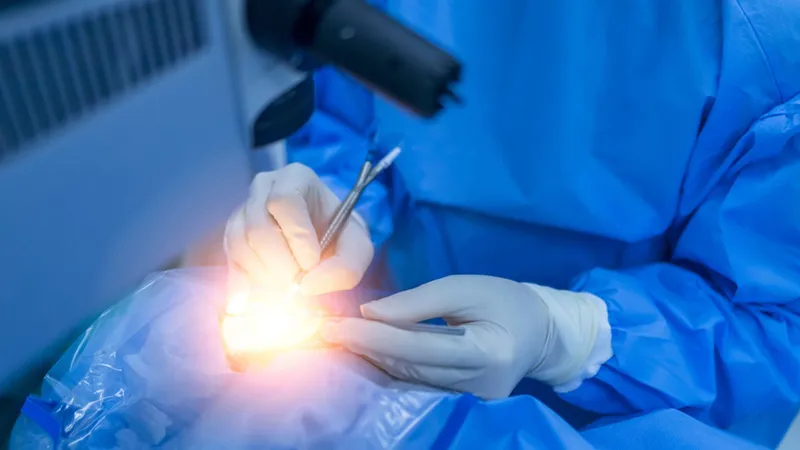
LASIK, short for Laser-Assisted In Situ Keratomileusis, is a refractive surgery. That means its sole purpose is to adjust how light enters your eye and focuses on the retina. It does this by reshaping the cornea, the clear outer surface of the eye, which bends (or refracts) light.
At Jryn Eye Clinic, we describe it like this: LASIK is like fine-tuning the curve of a camera lens cap, not altering the lens inside the camera. That inner lens—the crystalline lens—is responsible for focusing and adjusting to near or far objects. Over time, this internal lens can become cloudy, leading to cataracts.
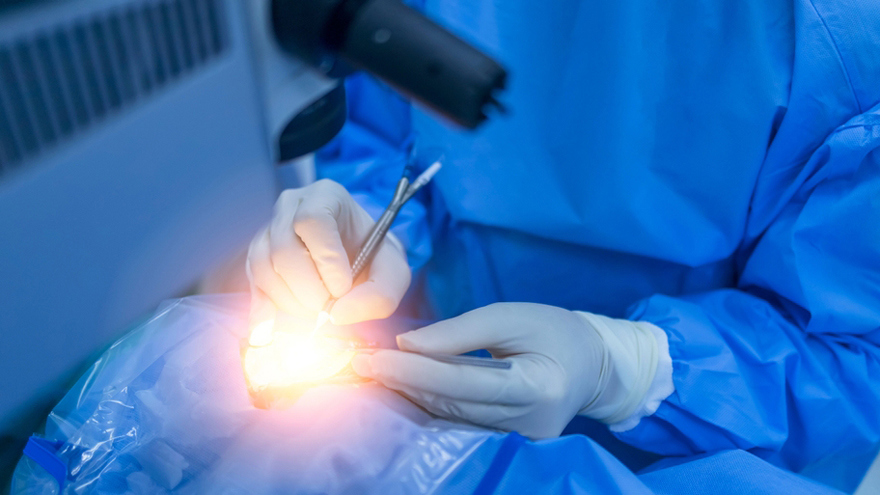
LASIK does not touch the lens. It doesn’t go deep enough into the eye to interact with the lens or the structures responsible for lens health. Instead, a laser is used to create a precise, ultra-thin flap on the cornea, and then another laser (typically an excimer laser) removes microscopic amounts of tissue to change the eye's refractive power. The flap is then replaced, and healing begins.
This procedure is purely external in terms of ocular anatomy. There’s no trauma to the internal parts of the eye where cataracts develop.
In short:
LASIK corrects the cornea (to improve vision).
Cataracts form in the lens (a natural result of aging).
The two systems function independently.
We’ve treated countless patients at Jryn Eye Clinic who’ve enjoyed 10–20+ years of excellent vision post-LASIK. Later in life, they may return—not because LASIK caused a problem, but because their natural lens has aged. When that happens, it’s not a LASIK issue—it’s a lens issue.
So Where Does the Myth Come From?
Despite the facts, some people still suspect LASIK might be linked to cataracts. That misunderstanding usually stems from:
Timing: LASIK is often done in a person’s 20s or 30s. Cataracts usually emerge decades later. So when vision gets cloudy in the 50s or 60s, it’s easy to connect the dots, even if they’re unrelated.
Visual Changes: As vision worsens later in life, patients may assume their LASIK is “wearing off,” when in fact, early cataracts are forming.
Complexity in Surgery: If someone with prior LASIK has cataract surgery, the lens power calculations can be more challenging. This has led to a perception that LASIK causes surgical complications—but in truth, it just requires a higher level of precision and planning.
There’s also a phenomenon we sometimes observe where patients lose trust in earlier treatments when new symptoms arise. It’s human nature to question past decisions, especially when facing new vision issues. But rest assured, cataracts are so common that even people who never had LASIK will eventually face them.
Cataracts Are an Age-Related Reality—Not a LASIK Side Effect
In Korea, where regular health check-ups are common and eye screenings are well-integrated into the healthcare system, we catch cataracts earlier than in many countries. What we’ve observed at Jryn Eye Clinic is this:
Many patients who had LASIK in their younger years (sometimes abroad, sometimes locally) come to us in their 50s or 60s wondering why their vision is cloudy again.
After careful imaging and diagnostics, we find the cause is age-related lens changes, not any residual effect of LASIK.
Cataracts are natural. Everyone, LASIK or not, is likely to develop them eventually. It's part of the aging process, much like getting gray hair. They are typically classified into types such as nuclear, cortical, and posterior subcapsular cataracts. None of these have been directly linked to LASIK in medical research or long-term studies.
What people often overlook is how modern lifestyle and environmental factors—such as UV exposure, diabetes, smoking, and prolonged screen time—can accelerate cataract development. These are far more significant contributors than any refractive surgery you may have had decades ago.
Does LASIK Make Cataract Surgery More Complicated?
This is the more practical and medically relevant question. And the answer is: Yes, slightly—but only if your surgeon isn’t experienced.
Here’s why:
LASIK changes the corneal curvature.
Standard cataract formulas rely on a normal corneal profile to calculate intraocular lens (IOL) power.
Without knowledge of a patient's past LASIK data, there's a higher chance of "refractive surprise" after cataract surgery.
At Jryn Eye Clinic, we use advanced diagnostic tools such as swept-source OCT, corneal topography, and ray-tracing aberrometry to reconstruct an accurate optical model of the eye, even years after LASIK. This allows us to select the optimal IOL and deliver excellent post-cataract vision.
Moreover, modern technology has introduced IOL formulas specifically designed for post-LASIK eyes, such as the Barrett True-K formula. When used correctly, these tools help restore precise vision outcomes. So while the process is more complex, it is entirely manageable with the right expertise.
Can LASIK Mask Early Cataracts?
Surprisingly, yes.
Patients who once had razor-sharp vision after LASIK are often hyper-aware when even slight blur or glare returns. They may think their LASIK results are regressing or that their eyes are too dry. But in reality, what they’re experiencing may be:
Early nuclear sclerosis (the start of lens yellowing)
Increased light scatter from microscopic lens changes
Night glare and contrast loss from early lens opacities
The good news? These changes are easily detected with a comprehensive eye exam. At Jryn Eye Clinic, we screen for early cataracts in all patients over 40—even if they’ve had perfect LASIK results in the past.
And because many early cataracts are subtle, a thorough slit-lamp exam combined with optical clarity scans can detect even pre-symptomatic changes. This allows for timely intervention and better long-term visual outcomes.
LASIK Patients Still Need Long-Term Eye Care
One common misconception is that LASIK means you no longer need to worry about your eyes. That’s not true. While it can permanently correct refractive errors, LASIK doesn't prevent aging, and it doesn't stop other conditions like:
Presbyopia (the age-related loss of near vision)
Cataracts
Glaucoma or macular degeneration
This is why we emphasize long-term follow-up care. In fact, many of our cataract patients today are LASIK veterans from 10, 15, even 20 years ago. Their stories all share a common thread: clear vision in youth, subtle decline in middle age, and then a need for further treatment—this time for the lens, not the cornea.
Think of LASIK as the beginning of your vision journey—not the end. As the years go by, your eye care needs shift. And having a trusted clinic that can manage your changing visual profile becomes increasingly important.
Conclusion: Seeing the Full Picture
Vision care doesn't stop after LASIK. In fact, some of the most important chapters come much later, when age-related changes begin to appear. But here's what we want every patient to know: LASIK is not the cause of cataracts. It neither accelerates their onset nor increases their severity.
The real takeaway? Long-term vision health is about ongoing care—not just one procedure. Whether you had LASIK years ago or are just starting to consider it now, understanding your evolving eye anatomy is crucial. With age, your cornea may remain stable, but your lens will likely change.
At Jryn Eye Clinic, we don’t just treat today’s vision problem—we help you plan for tomorrow’s. We offer comprehensive eye exams, advanced diagnostic imaging, and tailored treatments for everything from refractive errors to cataracts and presbyopia.
Ready for a Personalized 1:1 Eye Consultation?
Schedule your comprehensive 3D eye examination with Chief Director Dr. Sang-Youp Han and our ophthalmology team on the 14th floor of JRYN Medical Center in Seomyeon, Busan.