Jryn Eye Clinic Busan (Seomyeon) · SMILE LASIK · EVO+ Visian ICL · Cataract & Retina Center · Tel: +82-51-710-1004
en-US

1:1 Consultation
CLINICAL ARTICLE & GUIDE
Do You Qualify for Laser-Assisted Cataract Surgery?
Discover if you're a candidate for laser-assisted cataract surgery. Learn about benefits, eligibility, and next steps. Take our quick assessment today!

Introduction

When patients hear the word "cataract," it’s often accompanied by a quiet worry. Blurry vision, difficulty driving at night, or a halo effect around lights can start subtly—but over time, these signs can reshape everyday life. Fortunately, cataract surgery has become one of the most successful procedures in modern medicine. And thanks to laser-assisted techniques, it’s more precise and customizable than ever.
But not everyone qualifies for laser-assisted cataract surgery. At Jryn Eye Clinic in Busan, we often help patients navigate whether this advanced approach is right for their unique eyes. Some come to us after being told they aren’t suitable elsewhere; others don’t know this type of procedure even exists. This article is for anyone who wants to understand the nuances behind candidacy for laser-assisted cataract surgery—from clinical benchmarks to real-world concerns.
Understanding Laser-Assisted Cataract Surgery
Cataracts occur when the natural lens of your eye becomes cloudy—much like a window fogging up during the rainy season. Traditional cataract surgery involves manually removing that cloudy lens and replacing it with an artificial one. It’s safe and effective.
Laser-assisted cataract surgery, however, takes this to the next level. Using a femtosecond laser, surgeons can create corneal incisions, break up the cloudy lens, and prepare the eye for lens implantation with remarkable precision. This isn’t just about technology for technology’s sake. It can lead to:
More accurate incisions
Better lens placement
Less energy used inside the eye
More predictable outcomes
Shorter phacoemulsification time
In certain cases, quicker healing and fewer complications
The laser can also correct corneal astigmatism in the same procedure. In our clinic, we often use this approach to fine-tune visual outcomes for patients who want reduced dependence on glasses. It’s not an experimental technology—it’s evidence-based, FDA-approved, and integrated into modern ophthalmology worldwide.
The Evolution of Cataract Surgery in Korea
Historically, Korea has seen rapid adoption of advanced medical technologies. Cataract surgery is no exception. In the past, patients simply accepted that cataract removal restored vision “good enough.” Today, expectations are higher. Patients want crisp, clear vision. They want minimal downtime. Many still work, drive, read small fonts, or use digital devices daily. They want vision that suits modern life.
At Jryn Eye Clinic, our patients range from elderly retirees to active middle-aged professionals—some even in their 40s or early 50s, experiencing early-onset cataracts from prolonged screen exposure or genetic predisposition. For these individuals, especially those seeking spectacle-free living, laser-assisted surgery can offer important advantages.
Who Is a Good Candidate?

1. You have a vision-impairing cataract
If your cataract is interfering with daily tasks—like reading, driving, or recognizing faces—you’re already on the right track. Surgery is typically recommended once vision loss begins to impact quality of life. And in urban Korea, where traffic signs, LED billboards, and mobile screens dominate, even minor lens opacity can feel like a major limitation.
2. Your corneal health is stable
The femtosecond laser relies on corneal mapping. If your cornea is irregular, scarred, or too thin, laser calibration may be unsafe. We check for keratoconus, corneal ectasia, and other corneal abnormalities before proceeding. Even chronic dry eye—a common concern due to Busan’s coastal winds and high screen usage—needs to be stabilized first.
3. You want astigmatism correction or reduced glasses use
Many patients today want more than just restored sight—they want enhanced sight. Laser-assisted cataract surgery allows for precise astigmatism correction via arcuate incisions or toric lens alignment. When combined with multifocal or extended-depth-of-focus (EDOF) IOLs, patients often achieve greater visual freedom.
We often see patients who previously relied on progressive glasses or multifocal contacts for decades. With proper surgical planning, some of these individuals no longer need any corrective lenses at all post-surgery. That’s a transformative outcome.
4. You can lie still and tolerate topical anesthesia
This sounds simple, but it’s essential. Laser-assisted procedures require the patient to remain still while the laser performs its tasks. If you have musculoskeletal issues, severe anxiety, or neurological conditions that prevent this, a manual approach may be safer.
5. You’re in overall good systemic health
Good healing depends on more than the eye itself. We screen for diabetes, immune issues, and systemic medications that affect tissue repair. Patients on anticoagulants, immunosuppressants, or undergoing cancer treatments require customized plans or alternative approaches.
Who Might Not Be a Good Candidate?
Advanced Eye Disease
Patients with macular degeneration, advanced glaucoma, or optic nerve damage may not benefit fully from premium lens implants—even if the cataract is removed perfectly. In these cases, laser precision may not translate into better functional vision.
Prior Eye Surgeries or Trauma
Previous eye surgeries (e.g., corneal transplants, refractive surgery) or trauma can alter anatomy. Some post-LASIK eyes are still candidates for laser-assisted cataract surgery, but they require advanced diagnostics. At Jryn, we use technologies like IOL Master 700 and anterior segment OCT to evaluate complex cases.
Extremely Dense or Mature Cataracts
Ironically, the most severe cataracts sometimes challenge the laser. If the lens is too thick or calcified, ultrasound energy may be required from the outset. The laser has limits in penetrating certain lens types. This is why early diagnosis matters.
Patients Who Expect "Perfect Vision"
It’s important to manage expectations. While laser-assisted cataract surgery can offer exceptional outcomes, it’s not a miracle. You may still need reading glasses depending on IOL type, and healing varies by person. We prioritize realistic goals that match lifestyle—not exaggerated promises.
What the Evaluation Looks Like at Jryn Eye Clinic
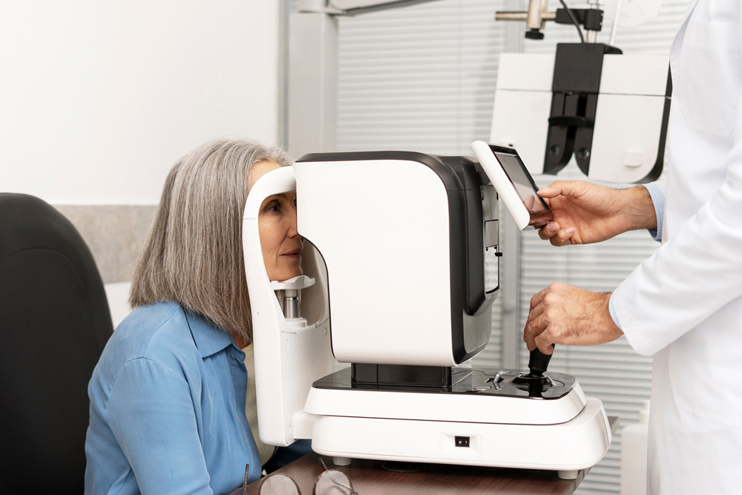
Our assessments go beyond basic eye exams. Each pre-op workup includes:
Visual Acuity and Contrast Testing: To assess functional vision in varied lighting
Biometry (Axial Length and IOL Calculation): Precision is key in lens power selection
Corneal Topography & Tomography: We check curvature, thickness, and elevation maps
Macular OCT & Fundus Exams: To rule out hidden retinal conditions
Tear Film Stability Tests: Especially important in Korea’s high digital device usage environment
Pupil Dynamics & Night Vision Analysis: Useful for selecting multifocal vs monofocal IOLs
Finally, we discuss your goals. Do you work on screens all day? Do you need strong night vision for driving? Do you read paper books or mostly use smartphones? These lifestyle details shape our IOL and procedural choices.
Common Misconceptions We Hear
“I’m too old for laser.” — Not true. Age isn’t a barrier unless health or anatomy makes it unsafe.
“Laser surgery means no glasses ever.” — Possibly, but not guaranteed. Depends on lens and eye structure.
“It’s not worth it unless I have astigmatism.” — Incorrect. Laser precision benefits all types of eyes, especially with multifocal or toric IOLs.
“It’s riskier than normal cataract surgery.” — In experienced hands, it’s just as safe—sometimes even safer.
Final Thoughts: Why the Right Clinic Makes All the Difference
At Jryn Eye Clinic, we believe great vision isn’t just about medical technique—it’s about human-centered care. Laser-assisted cataract surgery is a tool, not a magic wand. What makes it successful is a comprehensive approach: diagnostics, technology, surgical expertise, and understanding the patient’s life.
We’ve treated patients from Busan, Seoul, and even overseas who chose our clinic because of our reputation for safety, transparency, and results. They’re not just looking for surgery—they’re looking for clarity, both visual and informational.
If you're unsure whether you're a candidate, come in for a consult. Let us check your eyes, listen to your concerns, and walk you through your options. No pressure—just honest, evidence-based guidance.
Ready for a Personalized 1:1 Eye Consultation?
Schedule your comprehensive 3D eye examination with Chief Director Dr. Sang-Youp Han and our ophthalmology team on the 14th floor of JRYN Medical Center in Seomyeon, Busan.