Jryn Eye Clinic Busan (Seomyeon) · SMILE LASIK · EVO+ Visian ICL · Cataract & Retina Center · Tel: +82-51-710-1004
en-US

1:1 Consultation
CLINICAL ARTICLE & GUIDE
Cataract Surgery Techniques Compared: Phaco vs. Laser
Cataract surgery techniques compared: ultrasound phaco vs. Catalys femtosecond laser vs. Zepto, and how Jryn Eye Clinic decides which fits.
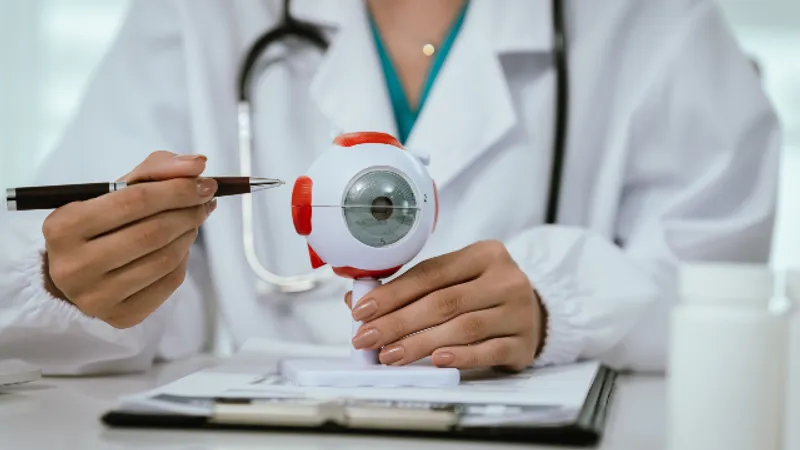
Comparing Cataract Techniques: Standard Phaco vs. Femtosecond-Assisted
Medically reviewed by Dr. Sang Youp Han, MD, Chief Director, Jryn Eye Clinic · Last updated July 2026
If you are researching cataract surgery techniques compared side by side, you have probably noticed that the field uses a lot of overlapping names, phaco, laser, femtosecond, Zepto, without explaining how they actually differ. The good news is that modern cataract surgery shares a common goal: removing your clouded natural lens and replacing it with a clear artificial lens called an intraocular lens (IOL). What changes from one technique to the next is how certain steps are performed. This guide walks through the main approaches offered at Jryn Eye Clinic in Busan, South Korea, so you can follow the conversation with any surgeon, at home or abroad.
A quick note on scope. This article explains techniques and trade-offs. It does not quote prices, does not promise a glasses-free result, and does not decide which method suits your eyes, that is what an examination is for. General cataract information is drawn from independent sources and cited at the end.
The Steps Every Cataract Surgery Shares
The American Academy of Ophthalmology describes cataract surgery as removing the eye's cloudy lens and, in most cases, replacing it with a clear artificial lens. Regardless of technique, the operation involves a few common steps:
- A small incision in the cornea.
- An opening in the thin membrane that holds the lens, called the capsule (a step named capsulotomy).
- Breaking up and removing the clouded lens.
- Inserting the IOL into the now-empty capsule.
The techniques below differ mainly in how two of those steps, the capsulotomy and the lens removal, are carried out, and in the tools used. Understanding that is the key to reading any comparison sensibly.
Technique 1: Standard Ultrasound Phaco (Phacoemulsification)
"Phaco" is short for phacoemulsification, the long-established method of removing a cataract with ultrasound energy. In this approach, the surgeon uses a handpiece that emits ultrasound to gently break up the clouded lens, which is then suctioned out through a micro-incision before the IOL is placed. Jryn Eye Clinic describes this as its ultrasound (no-laser) approach.
Per the clinic's published details, the ultrasound step is performed using established surgical platforms, the Bausch + Lomb Stellaris PC and the Johnson & Johnson Vision Signature Pro systems. The clinic notes features such as micro-incision capability and technologies designed to use ultrasound energy efficiently and reduce thermal effects at the incision site. Its published procedure sequence includes measurement, anesthesia, a roughly 2 mm corneal incision, protection of the inner cornea with a viscoelastic substance, capsulotomy, ultrasound removal of the lens, and IOL insertion, with the micro-incision healing without sutures.
Standard phaco is the workhorse of cataract surgery worldwide. It is well understood, versatile, and does not require an additional laser step.
Technique 2: Femtosecond-Assisted (Laser) Cataract Surgery
Femtosecond-assisted cataract surgery adds a laser to perform some steps that are done manually in standard phaco. At Jryn Eye Clinic, this is described as an all-laser technique in which the corneal incision, the capsulotomy, lens fragmentation, and astigmatism correction can be performed by a femtosecond laser, using image-guided planning, before the IOL is positioned.
The clinic uses the Catalys femtosecond cataract laser system for this approach and lists features such as a 3D image-integrated guidance system, protective zone settings, and technology intended to keep eye pressure stable during the procedure. The clinic also states that its lead surgeon published Korea's first femtosecond-laser cataract surgery paper in 2013 and has continued performing femtosecond laser cataract procedures since; Dr. Han separately received a Korean Ophthalmological Society Gold Prize in 2018 for femtosecond-laser-combined cataract surgery. These are society-issued recognitions, not guarantees about any individual outcome.
The idea behind laser assistance is precision and reproducibility for certain steps. Whether that translates into a meaningful advantage for a specific patient depends on the eye, which is why the choice is made at examination rather than in advance.
Technique 3: Zepto Precision Capsulotomy
Zepto is not a whole separate surgery; it is a specific way of performing one step, the capsulotomy, that opening in the lens capsule. Jryn Eye Clinic describes ZEPTO cataract surgery as using the ZEPTO device to create a precise, perfectly circular 360-degree opening in the anterior capsule, after which the cataract itself is removed with ultrasound (phacoemulsification) and a multifocal IOL is implanted.
According to the clinic's published steps, a small micro-incision is made, a folded silicone suction cup is inserted, a shape-memory Nitinol ring unfolds into a circle around the visual axis, and pulse energy is delivered over 4 milliseconds to complete the circular capsulotomy, after which standard ultrasound removal and IOL implantation proceed. The clinic lists potential benefits such as a precise circular opening, localized suction that may reduce discomfort, and minimal thermal effect on surrounding tissue. The clinic also states its Chief Director published Korea's first SCI paper on ZEPTO cataract surgery.
The useful mental model: Zepto is a capsulotomy tool combined with ultrasound lens removal, sitting between fully manual and fully laser approaches for that one step.
How the Three Compare, Step by Step
| Step | Standard ultrasound phaco | Femtosecond-assisted (laser) | Zepto |
|---|---|---|---|
| Corneal incision | Manual | Can be laser-performed | Manual micro-incision |
| Capsulotomy | Manual | Laser | Zepto device (circular) |
| Lens removal | Ultrasound | Laser fragmentation, then ultrasound | Ultrasound |
| Key platform at Jryn | Stellaris PC / Signature Pro | Catalys femtosecond laser | ZEPTO device + ultrasound |
| No sutures needed | Yes (per clinic) | Yes | Yes |
What this table does not show is a winner, because there is not one in the abstract. Each approach performs the same core operation, and the best choice depends on your eye's anatomy, the lens you and your surgeon select, and the surgeon's judgment.
Where the IOL Choice Comes In
A point that often gets lost: the surgical technique and the lens are two separate decisions. Whatever method opens the capsule and removes the cataract, you still choose an IOL. The American Academy of Ophthalmology explains that IOLs come in different types, including monofocal lenses that focus at one distance and presbyopia-correcting lenses designed to reduce dependence on glasses across distances.
Jryn Eye Clinic references a broad menu of IOL brands and types (monofocal, toric for astigmatism, multifocal, and extended-depth-of-focus lenses) from manufacturers including ZEISS, Alcon, Johnson & Johnson Vision, and Oculentis. The clinic's own materials note that monofocal IOLs typically still require reading glasses for near tasks, whereas multifocal lenses aim to address near, intermediate, and distance vision, individual results vary, and no glasses-free guarantee is made. Because premium-lens marketing is heavily scrutinized, treat any "no more glasses" language cautiously and rely on a personal consultation for realistic expectations.
How Jryn Eye Clinic Decides
One reason patients look at a clinic offering several techniques is that candidacy can be matched to the eye rather than to whatever single method is available. Jryn Eye Clinic describes using university-hospital-grade diagnostics to plan cataract surgery and select an IOL, including the Tomey CASIA2 (3D anterior-segment imaging), the Tomey OA-2000 (biometry), and the ZEISS IOLMaster 500 (non-contact optical biometry). The clinic also notes that IOLs may not be appropriate for patients with significant retinal disease, advanced glaucoma, or severe corneal disorders, another reason the decision follows a thorough exam. International patients can begin with the clinic's online inquiry and consultation process.
What Recovery and Follow-Up Look Like
Technique comparisons often overlook a practical point patients care about: what happens after surgery. Across cataract approaches, several things are broadly consistent. Jryn Eye Clinic's cataract materials note that surgery typically requires no sutures, allowing same-day discharge after a period of observation, and describe sensible early aftercare, keeping the eye at rest on the day of surgery, not rubbing the eye, using prescribed drops, and avoiding eye-straining activities such as reading for the first several days.
For its laser multifocal pathway, the clinic describes a first follow-up visit typically around 24 hours after surgery, at which vision and eye pressure are checked and eye-drop use is explained, followed by continued monitoring over several weeks. It notes patients typically attend one to four follow-up visits within the first month depending on the type of IOL used, with a final check about one month after surgery. Vision may be blurry immediately afterward and generally improves over the following days, with stabilization monitored across those visits. Individual timelines vary.
Two takeaways follow. First, the technique used to open the capsule or remove the lens is not the main driver of your recovery experience; the type of IOL and your individual healing matter more. Second, follow-up is an integral part of the procedure, not an optional extra, which is worth planning for carefully if you are traveling for surgery. The American Academy of Ophthalmology's cataract surgery resource is a helpful independent reference on typical recovery and what to expect.
International patients can discuss the likely schedule, and how it fits their travel plans, with Jryn Eye Clinic through its online consultation and inquiry system before booking, so the plan for after surgery is as clear as the plan for the surgery itself.
The Bottom Line
- All three approaches perform the same core operation: removing the clouded lens and implanting an IOL. They differ mainly in how the capsulotomy and lens removal are done.
- Standard phaco uses ultrasound throughout; femtosecond-assisted surgery adds a laser (Catalys) for several steps; Zepto uses a device for a precise circular capsulotomy plus ultrasound removal.
- Technique and lens are separate choices. Your IOL type, monofocal, toric, multifocal, or EDoF, is decided alongside the surgical method.
- There is no universal "best" technique. The right approach depends on your eye's anatomy and your surgeon's assessment, not on marketing.
- Jryn Eye Clinic offers all three approaches and selects among them using detailed diagnostics, with candidacy confirmed at examination.
Frequently Asked Questions
**What is the difference between phaco and laser cataract surgery?**Standard phaco uses ultrasound energy to break up and remove the clouded lens, with the surgeon performing the incision and capsulotomy manually. Femtosecond-assisted (laser) surgery uses a laser to perform several of those steps, such as the capsulotomy and lens fragmentation. Both then implant an IOL.
**Is laser cataract surgery better than ultrasound?**Not automatically. Laser assistance adds precision to certain steps, but standard ultrasound phaco is a well-established, highly effective method. The better choice depends on your individual eye and your surgeon's assessment rather than on the technology name alone.
**What is Zepto capsulotomy?**Zepto is a technique for the capsulotomy step, creating a precise, circular 360-degree opening in the lens capsule using a small device. After the Zepto capsulotomy, the cataract is removed with ultrasound and an IOL is implanted, so it combines elements of both manual and automated approaches.
**Does the technique determine whether I still need glasses?**No. Glasses dependence relates mainly to the type of IOL you choose, monofocal versus presbyopia-correcting, not to whether the capsulotomy was manual, laser, or Zepto. Results vary by individual, and no method guarantees a glasses-free outcome.
**Which technique does Jryn Eye Clinic use?**The clinic offers all three: ultrasound phaco (using Stellaris PC and Signature Pro platforms), femtosecond-assisted surgery (using the Catalys laser), and Zepto capsulotomy. The approach is selected after diagnostic testing.
**How is the right technique chosen for me?**Through a comprehensive examination and measurements. Jryn Eye Clinic uses diagnostics including the Tomey CASIA2, Tomey OA-2000, and ZEISS IOLMaster 500 to plan surgery and select an IOL, and notes that some eye conditions may limit which options are appropriate.
This article is for general informational purposes and does not constitute individualized medical advice. Candidacy, technique, and expected outcomes can only be determined through a consultation with a qualified eye surgeon.
Ready for a Personalized 1:1 Eye Consultation?
Schedule your comprehensive 3D eye examination with Chief Director Dr. Sang-Youp Han and our ophthalmology team on the 14th floor of JRYN Medical Center in Seomyeon, Busan.