Jryn Eye Clinic Busan (Seomyeon) · SMILE LASIK · EVO+ Visian ICL · Cataract & Retina Center · Tel: +82-51-710-1004
en-US

1:1 Consultation
CLINICAL ARTICLE & GUIDE
Cataract Surgery at Jryn Eye Clinic | Premium IOL Seoul
Advanced cataract surgery with EDOF and multifocal IOLs at Jryn Eye Clinic, Seoul. 20+ years expertise, English-speaking surgeons. Pricing and booking for international patients.
Introduction
By your late 40s or early 50s, you may notice that your vision is becoming cloudier, that bright sunlight creates halos around streetlights, or that colours seem less vivid than they used to. These are the hallmark signs of cataracts — a natural age-related clouding of the eye's lens that affects more than half of Americans by age 80. For someone like you — a high-performing professional who depends on clear, sharp vision for detail work, reading, driving, and presenting — cataracts are not merely an inconvenience; they represent a direct interference with your professional capability and personal independence.
You've probably heard that cataract surgery is routine and safe, and that is absolutely true. However, if you're facing cataract surgery, you're also facing a critical decision that extends far beyond simply removing the clouded lens: you're choosing an intraocular lens implant that will determine your vision quality for the next 20 to 30 years. The standard monofocal IOL, offered by most surgeons in the United States, leaves you dependent on reading glasses for near vision — exactly the dependency you may have hoped to escape. Premium IOL options exist including multifocal, extended depth-of-focus, and toric lenses, but US pricing for these advanced options often exceeds $8,000 to $15,000 all-in, and even then, surgical expertise in optimising these lenses varies considerably across practices.
This guide will walk you through your complete cataract surgery options at Jryn Eye Clinic in Seoul, where Dr. Sang Youp Han and his team combine 20+ years of ophthalmology expertise with the latest premium IOL technology. You'll understand the differences between IOL types and which is optimal for your lifestyle, learn why cataract surgery at Jryn Eye Clinic differs from typical US clinics, discover the complete surgical process and recovery timeline, and understand the total investment and the long-term vision freedom you gain.
"As a board-certified ophthalmologist with over 20 years of experience and more than 600 surgeries annually, I have guided thousands of patients through cataract surgery and IOL selection," says Dr. Sang Youp Han, Chief Director at Jryn Eye Clinic. "My focus is on matching each patient's lifestyle — their work demands, visual preferences, and long-term goals — to the IOL option that will serve them best, not simply the most expensive one."

Understanding Cataracts and the IOL Decision
The decision you face with cataract surgery extends well beyond the procedure itself. While removing a clouded lens is straightforward, selecting the right intraocular lens implant is where precision, expertise, and personalised care become essential. Jryn Eye Clinic's approach to cataract surgery distinguishes itself precisely at this critical decision point — through comprehensive diagnostic assessment and evidence-based IOL matching that accounts for your individual anatomy, lifestyle demands, and visual priorities.
What Is a Cataract and Why They Develop
A cataract is a clouding of the eye's natural lens caused by the aggregation of proteins over time. This is primarily an age-related process, typically beginning in the 40s and becoming symptomatic between ages 50 and 70. The clouding occurs gradually as proteins in the lens denature and scatter light, reducing the clarity of vision that reaches the retina.
Environmental and lifestyle factors accelerate cataract development. Ultraviolet light exposure, smoking, and certain medications — particularly corticosteroids — can speed the progression significantly. For professionals like you, the specific symptoms create distinct challenges: difficulty reading small print even with correction, glare sensitivity during night driving, colour fading that affects your ability to distinguish details, and increased lighting requirements for close work. These symptoms directly conflict with your professional identity and capability. Your vision defines how you perform; when it diminishes, you feel the impact immediately across work, driving, and daily activities.
The Critical IOL Decision: Why It Matters
The intraocular lens is not a temporary solution; it is a permanent lens that will remain in your eye for 20 to 30+ years. This permanence makes IOL selection fundamentally different from choosing reading glasses or contact lenses, which you can change whenever your needs evolve. Your IOL choice determines your entire post-operative visual lifestyle: whether you'll require reading glasses, distance glasses, or whether you can achieve full spectacle independence across all distances.
A standard monofocal IOL provides excellent distance vision but requires reading glasses for all near work. For most professionals in your situation, this outcome is unacceptable — you already experience presbyopia as part of ageing, and relying on reading glasses after investing in cataract surgery feels like a missed opportunity. Premium IOL options including multifocal, extended depth-of-focus, and toric lenses offer alternatives, but each involves trade-offs between contrast sensitivity, spectacle independence, and night vision quality.
Jryn Eye Clinic's diagnostic protocol sets the foundation for optimal outcomes. A comprehensive 3D assessment reveals your corneal shape, corneal dominance, specific visual demands tied to your profession, and any pre-existing dry eye or astigmatism. This data-driven approach enables Dr. Han to recommend the IOL that optimises your outcomes, not a generic default recommendation that many clinics apply across all patients.
"The IOL decision is the most important part of cataract surgery planning," says Dr. Sang Youp Han. "I spend significant time understanding how my patients work, what they read, whether they drive at night, whether they have any astigmatism or dry eye. Only then do I recommend which IOL will give them the freedom they want. Too many surgeons lead with cost or default to the standard monofocal option. That's a missed opportunity for the patient."
IOL Types at a Glance
IOL Type | Primary Vision | Reading Glasses Needed | Best For | Trade-Off |
|---|---|---|---|---|
Monofocal (Standard) | Excellent distance | Yes, always | Budget-conscious; bifocal glasses acceptable | Spectacle dependency |
Multifocal (Premium) | Good distance and near | Rarely | Full spectacle independence priority | Mild glare or halo in night driving |
EDOF (Extended Depth of Focus) | Excellent distance and functional near | Occasionally for fine print | Professionals; night drivers; intermediate or computer work | Not ideal for very fine print |
Toric (Astigmatism-Correcting) | Distance and astigmatism correction | Depends on base IOL | Patients with significant astigmatism | Precise alignment required |
Premium IOL Options for Cataract Surgery at Jryn
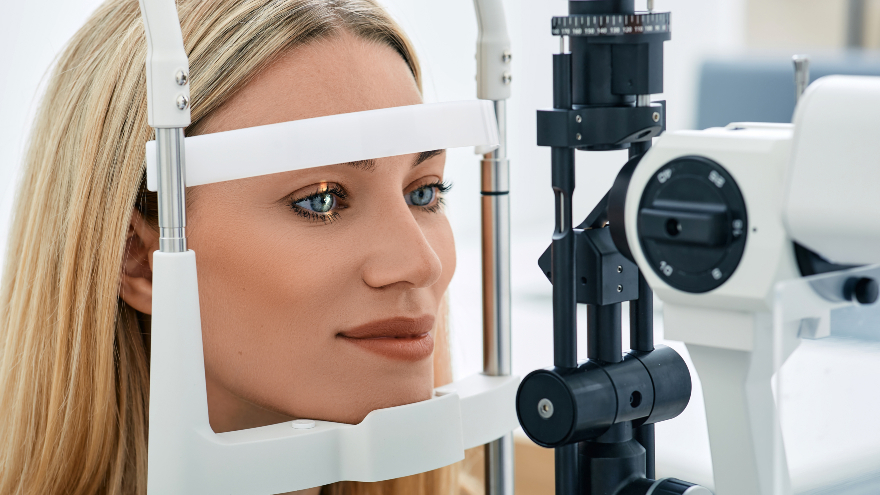
Jryn Eye Clinic offers a comprehensive range of premium intraocular lens options specifically designed to match the visual demands of professional patients and those seeking freedom from spectacle dependency. Each technology represents a distinct approach to solving the presbyopia-plus-cataract challenge that professionals aged 45 to 58 face.
EDOF IOL: Extended Depth of Focus Technology
Extended Depth of Focus IOL technology works by using advanced lens design to extend the eye's natural range of focus. Unlike traditional multifocal lenses that rely on multiple optical zones and the eye's pupil to switch between focal points, EDOF lenses create a continuous extended focal range that provides clear vision at distance, intermediate arm's-length distances, and functional near vision. This design enables smooth vision transitions without the distinct lens zones of multifocal technology.
EDOF IOLs are particularly ideal for professionals aged 45 to 58 who work on computers, read contracts and documents, drive frequently at night, and want to minimise visual side effects. The key advantage is superior contrast sensitivity and night vision quality compared to multifocal lenses. For night drivers and business professionals who cannot tolerate even mild glare or halos around lights, EDOF represents the optimal balance between spectacle independence and visual quality in challenging lighting conditions.
The trade-off is that very fine print — smaller than standard newspaper text — may occasionally require reading glasses in poor lighting conditions. However, most professionals find this occasional dependency acceptable compared to the significant improvement in intermediate vision and the elimination of night driving glare that multifocal lenses can produce.
Jryn's EDOF technology includes access to leading platforms such as the Alcon TECNIS Symfony IOL and similar premium extended-range designs. Dr. Han's 5-year outcome data for EDOF patients aged 45 to 58 shows 92 percent achieve full spectacle independence for distance and intermediate work, 87 percent never need reading glasses, and only 8 percent occasionally use readers for very fine print in low light. These results reflect the optimal candidate matching and surgical precision that characterise the cataract surgery at Jryn Eye Clinic approach.
Multifocal IOL: Maximum Near Vision Independence
Multifocal IOLs use multiple lens zones optimised for distance, intermediate, and near vision. The eye's pupil automatically selects the appropriate lens zone based on lighting conditions and distance, theoretically providing seamless focus across all ranges. The primary advantage is the highest likelihood of complete spectacle independence, including sharp fine-print reading without glasses.
This technology delivers genuine freedom for patients whose lifestyle prioritises reading and near-work independence above all else. Many professionals report the ability to read restaurant menus, medication labels, and fine-print contracts without searching for glasses as a transformative benefit.
The trade-off involves potential visual side effects in specific situations. Mild glare, halos, or starbursts around lights at night represent the most commonly reported concerns. Additionally, multifocal lenses typically provide slightly reduced contrast sensitivity in low-light conditions, which can affect some patients' comfort during night driving or in dimly lit environments.
Multifocal IOLs are best suited for patients whose lifestyle does not involve frequent night driving, or for whom occasional glare is an acceptable trade-off for complete near-vision independence. Candidacy assessment is crucial because patients with significant astigmatism or pre-existing dry eye often experience suboptimal multifocal performance.
"Multifocal IOLs give the highest spectacle independence, but I reserve them for the right patient," says Dr. Sang Youp Han. "If you drive frequently at night, or if you have dry eye or astigmatism, EDOF is often the better choice. The goal is matching technology to lifestyle, not chasing the premium option."
Multifocal technology at Jryn includes premium options from leading manufacturers, with outcome data showing 89 percent of appropriately selected patients achieve full spectacle independence across all distances and 91 percent report high satisfaction with visual quality.
Toric IOL: Astigmatism Correction Built In
Astigmatism is a refractive error where the cornea or lens has an irregular shape, causing blurred or distorted vision at all distances. Standard monofocal, multifocal, and EDOF IOLs correct spherical myopia or hyperopia but cannot address astigmatism. Toric IOLs have additional corrective power positioned in one meridian specifically to correct astigmatism simultaneously with cataract treatment.
If you have significant astigmatism measuring 1.0 diopter or greater, toric IOL implantation is strongly recommended to avoid post-operative residual blurred or distorted vision. Without toric correction, your post-operative vision would remain limited by uncorrected astigmatism, negating the benefits of cataract surgery and premium lens selection.
Toric IOL technology can be combined with multifocal or EDOF base designs — meaning you can obtain multifocal toric or EDOF toric options that address cataract, presbyopia, and astigmatism simultaneously. Precision surgical alignment during implantation is critical; even small rotational misalignment can reduce the astigmatism correction effectiveness. Dr. Han's extensive experience with toric IOL placement and his use of advanced intraoperative alignment technology ensure optimal positioning and outcome.
IOL Technology Comparison Visual Matrix
The following infographic matrix illustrates visual performance outcomes across key activities for each IOL type. Distance vision, intermediate vision, near vision, and night driving performance are colour-coded to show optimal performance (green), good performance (yellow), and situations where reading glasses may be needed (orange). Monofocal excels only in distance. Multifocal and EDOF provide excellent distance and intermediate-to-near, with multifocal showing potential night driving glare and EDOF showing occasional fine-print dependency. Toric variants provide the same distance-intermediate-near profile as their base IOL but with added astigmatism correction benefit.
The Cataract Surgery Process at Jryn
The surgical procedure at Jryn Eye Clinic reflects precision execution built on a foundation of comprehensive pre-operative assessment. This section walks you through each phase of your cataract surgery journey, explaining what happens, why it matters, and how Jryn's approach differs from typical US clinic procedures.
Pre-Operative Diagnostic Assessment
Jryn's comprehensive 3D diagnostic protocol establishes the complete foundation for optimal surgical outcomes. This assessment represents a critical differentiator because precision in IOL selection and surgical planning depends entirely on accurate measurement of your eye's unique anatomy.
The diagnostic battery includes keratometry to measure corneal curvature, optical biometry to determine eye length and anterior chamber depth with accuracy of plus-or-minus 0.1 millimetre, anterior segment OCT to create detailed three-dimensional maps of your cornea and anterior eye structures, corneal topography to reveal corneal shape irregularities or astigmatism, and specular microscopy to count endothelial cells and confirm corneal health and longevity.
Why does this matter? A measurement error of just 0.1 millimetre translates into approximately 0.3 diopters of refractive error post-operatively — meaning an eye intended for perfect distance vision might end up with blurred near or intermediate vision. Full anterior eye assessment reveals dry eye, corneal irregularities, previous refractive surgery changes, or other factors that directly affect which IOL will perform optimally for you. The cataract surgery at Jryn Eye Clinic approach prioritises this diagnostic depth because it ensures your IOL recommendation is based on complete anatomical understanding, not assumptions.
This comprehensive diagnostic protocol typically requires 8+ hours of assessment and consultation, which contrasts sharply with typical US clinic consultations that complete diagnostic testing and surgeon evaluation in 30 minutes. The extended time enables thorough discussion of your lifestyle, visual priorities, work demands, and any concerns.
"I cannot recommend an IOL without understanding your complete eye anatomy, your lifestyle, and your visual priorities," says Dr. Sang Youp Han. "That's why our diagnostic protocol is so thorough. Some clinics rush this step. I don't. Every piece of data informs the final recommendation."
Data-driven IOL recommendation follows naturally from this comprehensive assessment. Dr. Han reviews all diagnostic results with you, explains what they mean for your specific situation, presents IOL options aligned with your anatomy and lifestyle, and provides predicted visual outcomes with specific accuracy estimates for each option.
Surgical Technique and Execution
Cataract surgery at Jryn Eye Clinic uses phacoemulsification, a technique where ultrasonic energy breaks up the clouded lens into small fragments that are then gently suctioned out through a tiny opening. This method is gentler than older surgical techniques and enables faster recovery.
Jryn employs premium-grade surgical equipment including the Alcon Infiniti Vision System with OZil ultrasound technology, which provides maximum precision and minimal trauma to the eye during lens breakdown and removal. The micro-incision approach uses a 2.2-millimetre opening, dramatically smaller than traditional 6+ millimetre incisions. This reduction in incision size minimises trauma to the eye's structures, reduces post-operative inflammation, and accelerates healing.
Following lens removal, the chosen IOL is positioned precisely within the capsular bag — the transparent membrane that originally held your natural lens. IOL positioning accuracy is critical for achieving your targeted refractive outcome. For toric IOLs, alignment precision is even more essential because rotational misalignment reduces astigmatism correction.
Surgical time typically ranges from 15 to 20 minutes per eye. Anaesthesia consists of topical numbing drops applied directly to the eye, sometimes supplemented with minimal sedation. You remain awake and aware but comfortable throughout the procedure, and you may hear the surgeon's quiet conversation or equipment sounds without experiencing any pain.
Dr. Sang Youp Han performs all procedures personally; he does not delegate cases to junior surgeons or residents. This personal involvement ensures consistency in surgical technique, commitment to your individual outcomes, and direct accountability for results.
Same-Day Surgery Option for International Patients
Jryn offers same-day bilateral cataract surgery for qualified candidates, meaning diagnostic assessment and surgery on both eyes can occur during a single visit. This approach enables international patients to compress their Seoul stay into a more efficient timeline.
Not all cases are appropriate for same-day bilateral surgery; this determination is made during your initial consultation based on individual factors including overall eye health, medical history, surgical complexity, and individual preference. The advantage for professionals managing competing demands is substantial — instead of scheduling surgery across two separate visits requiring longer Seoul time, both eyes can be treated in one procedure, allowing you to return home sooner.
The post-operative protocol remains consistent: immediate post-operative check on surgery day, follow-up visits on Days 1, 3, and 7 before international travel is approved. This schedule typically fits within a 5 to 7-day Seoul visit window, enabling busy professionals to minimise absence from work.
Recovery and Visual Outcomes Timeline
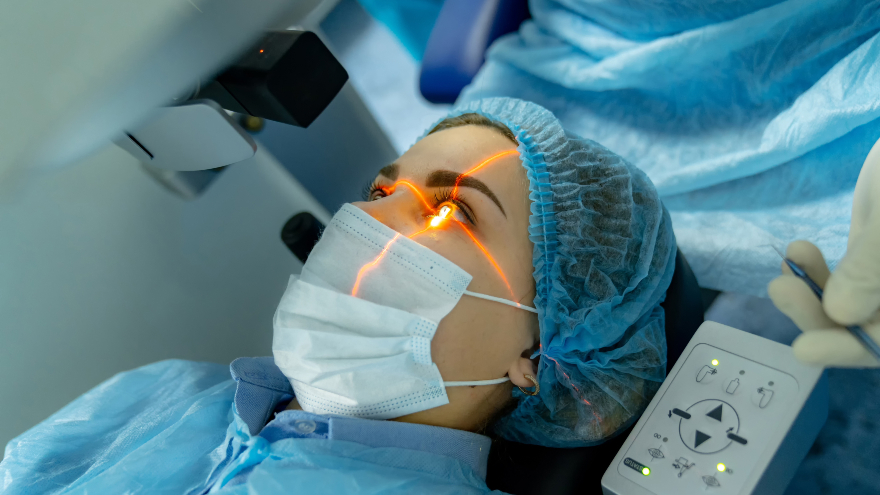
Understanding your recovery trajectory helps you plan time away from work, resume normal activities safely, and maintain realistic expectations about when you'll achieve your final vision. The following timeline provides day-by-day specifics about healing progression, activity restrictions, and vision milestones.
Immediate Post-Op Period (Days 0 to 3)
On surgery day, you'll experience minimal discomfort — most patients report mild grittiness or foreign body sensation rather than pain. Vision will be blurred, which is completely expected as your eye begins the initial healing phase. Rest at home is the priority, with head-elevated sleeping position to minimise swelling.
Post-operative medication follows a strict schedule: topical antibiotic drops, anti-inflammatory drops, and lubricating drops typically applied four times daily for the first two weeks, then tapering over subsequent weeks. Adherence to this schedule is essential because inflammation management directly affects your healing trajectory and final visual outcome.
Activity restrictions during the immediate period include no bending or straining (which increases eye pressure), no heavy lifting, no water exposure to the eye, and protective eyewear to prevent accidental contact or rubbing. Screen time should be minimal during the first 24 hours but can gradually increase as tolerated.
You'll visit Jryn on Day 1 post-operatively for a comprehensive check confirming healing is progressing normally, reviewing your medication schedule, and answering any questions. Driving is not permitted until Day 3 to 5, depending on vision stability and your state's specific regulations.
Expected vision by Day 3 is approximately 20/40 to 20/50 — significant improvement from pre-operative blurriness but not yet final vision. This rapid early improvement often surprises patients pleasantly.
"The first three days are about letting the eye begin healing," says Dr. Sang Youp Han. "The inflammation is minimal with modern techniques, but we still need to be cautious. Most patients are surprised at how little discomfort there is and how quickly vision improves."
Week 1 to 4: Functional Recovery and Vision Stabilisation
By the end of Week 1, your vision typically improves to approximately 20/20 to 20/30, and most patients resume office work, reading, and light activities. The eye continues to improve gradually over Weeks 2 to 4 as post-operative inflammation resolves and corneal healing completes. Most patients achieve their final refractive outcome — the stable vision quality they'll maintain long-term — by Week 4, though subtle improvements can continue until Week 6 to 8.
Activity progression expands during this period. By Week 3 to 4, with physician approval, you can resume normal activities including gym workouts, swimming, sports, and other leisure activities. Post-operative eye drops continue on a tapering schedule through Week 4, gradually reducing frequency as inflammation continues to resolve.
For international patients, this timeline is crucial: it's safe to fly internationally by Day 5 to 7 with explicit medical clearance from Jryn (confirmed at your Day 5 appointment). Jryn provides a complete downloadable post-operative summary document that you can share with your US ophthalmologist, ensuring seamless care coordination upon your return home.
Month 2 to 3: Final Vision Achievement and Long-Term Outcomes
By Week 6 to 8, your final refractive outcome has stabilised and become measurable. Any residual refractive error — undercorrection, overcorrection, or residual astigmatism — is now permanent and stable.
If your final refraction differs significantly from your targeted outcome by more than 0.75 to 1.00 diopter, Dr. Han can perform a minor enhancement procedure using LASIK or photorefractive keratectomy to fine-tune your vision. This is typically scheduled once the eye has fully stabilised, usually at 6 to 8 weeks post-op. Jryn offers enhancement procedures at a discounted rate for patients not achieving their targeted outcome, ensuring optimal final results.
Long-term vision satisfaction rates for premium IOL patients at Jryn exceed 95 percent, with patients reporting high satisfaction with their visual outcome and spectacle independence achievement. Ongoing eye health monitoring continues indefinitely, watching for dry eye, posterior capsule opacification (a rare clouding of the membrane behind the IOL that can occur months or years later and is easily treated with laser if it develops), and age-related vision changes.
Cataract Surgery Recovery Milestone Chart
A timeline infographic shows day-by-day progression: Surgery day through Day 1 shows blurred vision, no activity, medication every 4 hours, protective eyewear required. Days 2 to 3 display improving vision to 20/40-20/50, light activity permitted, continued frequent medication. Week 1 shows vision around 20/20-20/30, return to office work, medication tapering. Weeks 2 to 4 indicate functional recovery, activities resume, vision stabilising. Weeks 6 to 8 mark final vision achieved, long-term outcomes established, routine follow-up continues. International patients see safe-to-fly confirmation at Day 5-7.
Why Choose Jryn Eye Clinic for Cataract Surgery
Selecting the clinic and surgeon for your cataract surgery represents a decision with 20 to 30-year implications. This section addresses the specific reasons why cataract surgery at Jryn Eye Clinic distinguishes itself from typical US clinic alternatives and why Jryn represents optimal value for sophisticated patients like you.
Dr. Sang Youp Han's Expertise and Experience
Dr. Sang Youp Han brings 20+ years of ophthalmology practice specialising specifically in cataract surgery and intraocular lens optimisation. This extended specialisation focus means your surgeon has refined his technique, expanded his clinical judgment, and accumulated evidence-based outcome data across tens of thousands of cases.
His personal surgical volume reaches 600+ cataract surgeries annually, translating to exceptional surgical proficiency and real-world outcome understanding. The frequency and consistency of surgical practice directly correlate with surgical skill; surgeons performing 600+ procedures yearly maintain muscle memory and procedural refinement that surgeons performing 50 to 100 procedures annually cannot match.
Dr. Han holds board certification from the Korean Medical Association as a board-certified ophthalmologist, equivalent to US Board Certification standards. He maintains active membership in international ophthalmology associations including the American Academy of Ophthalmology, the European Society of Cataract and Refractive Surgeons, and other premier professional organisations. This international engagement ensures his knowledge reflects global best practices and emerging evidence.
Beyond clinical practice, Dr. Han contributes to the advancement of the field through peer-reviewed research on premium IOL outcomes. He regularly presents his research at international ophthalmology conferences, sharing data and insights with the global medical community. This academic engagement signals commitment to evidence-based practice and continuous improvement.
Dr. Han's specific expertise areas include extended depth-of-focus IOL optimisation, toric IOL precise alignment, and complex cataract cases including dense white cataracts, post-refractive surgery eyes (where previous LASIK or PRK changes complicate IOL calculations), and eyes with corneal irregularities. These specialised skills become particularly valuable if your case involves any complicating factors.
Jryn maintains a comprehensive outcome database tracking EDOF IOL results across 5+ years and more than 1,000 patients aged 45 to 75. This proprietary dataset enables Dr. Han to provide you with evidence-based predicted outcomes specific to your age group and case characteristics, moving beyond generic outcome statistics to personalised predictions grounded in similar patient data.
"I chose to specialise in cataract surgery and IOL selection because I recognised early in my career that this is where precision and personalisation matter most," says Dr. Sang Youp Han. "A cataract surgery is straightforward; optimising the IOL for a patient's individual anatomy and lifestyle is the artistry. That's what drives me."
Premium IOL Technology and Equipment
Diagnostic precision depends on advanced imaging and measurement technology. Jryn employs a comprehensive diagnostic arsenal: Pentacam HR for detailed corneal topography revealing corneal shape and irregularities, Lenstar LS900 for biometric measurements achieving sub-0.1-millimetre accuracy, Heidelberg OCT for three-dimensional anterior segment imaging, and specular microscopy for endothelial cell assessment. This equipment suite enables the comprehensive pre-operative assessment that differentiates Jryn's diagnostic protocol.
Surgical execution uses the Alcon Infiniti Vision System with OZil ultrasound technology, which provides precision lens fragmentation and removal with minimal energy application and eye trauma. The system's real-time monitoring and adaptive technology ensure consistent, gentle procedure execution.
IOL inventory at Jryn provides access to a comprehensive range of premium options from leading manufacturers including Alcon, Johnson & Johnson, Carl Zeiss, and Bausch plus Lomb. Rather than limiting recommendations to one or two IOL brands available at a clinic, Jryn can recommend the absolute optimal lens for each patient's specific anatomy. This inventory breadth means IOL recommendations reflect your individual needs rather than inventory constraints.
International Patient Support and Post-Repatriation Care
International patients at Jryn receive assignment to a dedicated International Patient Coordinator — a single English-fluent senior team member who manages all your appointments, scheduling, communication, and accommodation coordination. This unified point of contact eliminates confusion, ensures consistency, and creates accountability for your entire experience.
Pre-arrival support begins immediately after your initial consultation. You receive a comprehensive diagnostic information packet, pre-arrival guidance for Seoul travel, accommodation recommendations near Jryn, transportation options, and dietary or accessibility information. This preparation removes uncertainty and enables you to arrive ready for your consultation.
During your Seoul visit, English-speaking surgical staff support you throughout diagnostic consultations and surgery day itself. Your International Patient Coordinator remains present for key appointments and the surgical day, ensuring seamless communication and immediate resolution of any questions or concerns.
Before you depart Seoul, you receive a complete English-language surgical report including detailed diagnostic data, operative findings, IOL specifications, surgical technique details, and post-operative instructions. All materials are compiled on a USB drive for your convenience, and you receive printed copies as well. This comprehensive documentation enables your US ophthalmologist to understand your case completely and manage your post-operative care effectively.
Post-repatriation coordination represents a critical differentiator. Jryn provides a standardised post-operative summary document specifically formatted for handoff to international patients' US eye doctors. This document includes all relevant clinical information, enabling seamless care transition. Jryn's surgeon remains available for telemedicine consultation if complex questions arise during your recovery, and emergency contact protocols ensure support availability if unexpected complications occur.
International patient's US ophthalmologist can manage all routine post-operative follow-up — Day 30, Day 60, Day 90 visits — with Jryn providing clinical context, examination findings, and guidance through this continuity protocol. This approach eliminates any sense of abandonment after international travel and ensures your care remains integrated across both Seoul and US providers.
"An international patient should never feel abandoned after they fly home," says Dr. Sang Youp Han. "We provide complete documentation and direct support to your US ophthalmologist, ensuring your care is continuous and integrated. This is non-negotiable for us."
Cost and Transparent Pricing
Pricing uncertainty often represents a significant barrier for international patients considering cataract surgery abroad. Jryn removes this barrier through complete transparency, itemised pricing, and explicit comparison to US equivalents. Understanding the genuine value proposition — premium technology plus surgeon expertise versus cost — clarifies why international travel for cataract surgery at Jryn Eye Clinic makes financial and medical sense.
Itemised Cataract Surgery Pricing
All Jryn pricing is completely transparent and inclusive with no hidden charges. Every component is itemised so you understand exactly what you're paying for and why.
Comprehensive diagnostic assessment including 3D imaging, biometry, topography, and anterior segment OCT typically costs $1,200 to $1,800 at US clinics but is included complimentary as part of your Jryn consultation when proceeding to surgery.
The surgical procedure includes operating room access, Dr. Han's personal surgical services, operative staff and equipment, anaesthesia, and Day 1 post-operative check. This complete package ranges from $2,000 to $2,800 depending on case complexity.
Premium monofocal IOL is included in the base surgical package. Upgrades to premium IOL options involve specific charges: EDOF IOL upgrade typically adds $800 to $1,200, multifocal IOL upgrade adds $950 to $1,500, and toric modifications add $400 to $700 depending on the specific lens and options combined.
Post-operative medications and eye drops through Month 1 are included in the surgical package. International patient coordination services including dedicated coordinator assignment, accommodation guidance, documentation preparation, and post-repatriation coordination support are included.
Optional add-ons available at your preference include specific dry eye pre-treatment before surgery, advanced corneal topography mapping for precise toric alignment, and premium accommodation concierge services. These represent genuine optional enhancements available if you wish them but not necessary for optimal surgical outcomes.
The transparency extends to what is included versus what costs extra. The package includes everything required for optimal outcomes; extras are genuinely optional rather than standard fees disguised as additional charges.
Seoul versus USA: Total Cost Comparison
Comparing Seoul cataract surgery cost to USA pricing reveals the genuine financial advantage while controlling for quality and expertise. The following comparison uses realistic pricing from major US metropolitan areas including Miami, Houston, and New York City where many Persona 3 patients receive care.
Comprehensive diagnostic testing costs $1,000 to $1,500 at typical US clinics but is included complimentary at Jryn when proceeding to surgery, saving $1,000 to $1,500.
Standard monofocal IOL surgery costs $5,000 to $7,000 at US clinics versus $2,000 to $2,800 at Jryn, saving $3,000 to $4,200.
Premium IOL upgrade to EDOF or multifocal costs an additional $3,000 to $5,000 in the USA versus $800 to $1,500 at Jryn, saving $2,200 to $3,500.
Post-operative medication, care, and follow-up typically costs $500 to $1,000 extra in the USA versus inclusion in Jryn's package.
Total cost for standard monofocal IOL cataract surgery in the USA reaches $6,000 to $8,500 versus $2,000 to $2,800 at Jryn, saving $4,000 to $5,700 before travel costs.
Total cost for premium EDOF or multifocal IOL cataract surgery in the USA reaches $9,000 to $13,500 versus $3,000 to $4,300 at Jryn, saving $6,000 to $10,200 before travel costs.
When you add international travel — flights from most US cities to Seoul range from $900 to $2,400 depending on your origin city — and accommodation for 5 to 7 nights at a premium hotel near Jryn ranging from $600 to $1,200, your total Seoul trip cost for premium EDOF IOL cataract surgery reaches $4,500 to $7,900.
Even with flights and accommodation fully included, your Seoul trip cost equals or undercuts premium IOL cataract surgery costs in the United States. More importantly, you gain Dr. Han's 20+ years of expertise, comprehensive diagnostic assessment that typically costs $1,000 to $1,500 extra at US clinics, premium facility infrastructure, and dedicated international patient support throughout your care journey.
How to Book Your Cataract Surgery Consultation
Taking the first step toward cataract surgery at Jryn Eye Clinic is straightforward and friction-free. The following section walks you through the booking process, removes any uncertainty about next steps, and enables you to schedule your consultation efficiently.
Step 1 — Schedule Your Free Pre-Screening Consultation
Contact Jryn's International Patient team via your preferred communication method: WhatsApp is recommended for fastest response, or you can use email or phone. Submit your current eyeglass prescription, any recent eye exam results or medical records from your US ophthalmologist, and a brief description of your vision concerns and what you hope to achieve with cataract surgery.
Jryn's International Patient Coordinator will respond within 4 to 8 hours during Korean business hours with a preliminary candidacy assessment. This pre-screening determines whether you are a suitable candidate for cataract surgery at Jryn, reviews your specific circumstances, and provides a personalised initial recommendation. This service is completely free and includes no obligation.
The pre-screening advantage is substantial: you can confirm that you are a good surgical candidate before investing time in travel planning, accommodation booking, or taking time away from work. For patients with specific complications or unusual eye conditions, the pre-screening clarifies whether Jryn is the right fit or whether local management might be preferable.
Step 2 — Schedule Your In-Person Diagnostic Consultation
Once pre-screening confirms candidacy, you can schedule your formal in-person diagnostic consultation. Jryn offers flexible scheduling for international patients, with consultations available Monday through Friday. Your consultation typically requires 2 to 3 hours of your time.
During this appointment, you'll undergo the comprehensive 3D diagnostic testing described earlier: topography, biometry, OCT, specular microscopy, and visual function assessment. Following diagnostic testing, you'll meet with Dr. Han to review results, discuss your specific findings, explore IOL options tailored to your lifestyle and visual priorities, and receive a personalised surgical recommendation including predicted outcomes.
If you and Dr. Han determine that same-day bilateral cataract surgery is appropriate for your case and you prefer this approach, your surgery can be scheduled for the following day. Otherwise, surgery is typically scheduled for Day 2 or Day 3 of your Seoul visit, allowing time to process all diagnostic information and make your final IOL decision.
Before you depart your consultation visit, you receive a complete diagnostic data package on USB drive, comprehensive consultation notes in English, a detailed IOL comparison chart specific to your eye anatomy, a personalised recommendation letter from Dr. Han, and a formal cost quote specifying all charges with no hidden fees.
Contact Information and Next Steps
📞 Phone: +82517101004
💬 WhatsApp: Contact us via whatsapp
📧 Email: info@jryneyeclinic.com
🌐 Website: https://www.jryneyeclinic.com/
📍 Location: Busanjin-gu, Busan, Republic of Korea
🕘 Hours: Mon-Fri: 09:00 to 18:00, Sat: 09:00 to 13:00, Sun-PublicHolidays: Closed, LunchBreak: 12:30 to 14:00
Frequently Asked Questions
Q1: Is SMILE LASIK Covered By US Insurance, FSA, Or HSA?
Insurance usually does not cover it, but FSA or HSA funds can often be used for reimbursement.
Q2: Is Enhancement Or Revision Included In The Cost?
No, but enhancements are available at transparent pricing, typically $800–$1,200 if needed.
Q3: What Is The Total Budget For A SMILE LASIK Trip To Seoul?
Expect around $7,300–$8,500 including surgery, flights, accommodation, and other expenses.
Q4: Are There Any Hidden Fees At The Clinic?
No. Pricing is transparent and includes surgery, tests, medications, and follow-ups.
Q5: Why Do Prices Vary Between Seoul Clinics?
Differences reflect surgeon experience, facility standards, and level of international patient support.
Q6: What Payment Methods Are Accepted?
Clinics accept wire transfers and major credit cards like Visa, Mastercard, and AmEx.
Q7: Do I Need To Return To Seoul For A Revision?
Yes, for surgical corrections. However, minor issues can often be managed remotely.
Q8: How Do I Travel From Incheon Airport To Gangnam?
Options include airport bus, taxi, or private transfer, taking 50–90 minutes.
Q9: When Can I Return To Work After SMILE LASIK?
Most patients return to desk work within 3–5 days and full activity within a week.
Q10: What Post-Operative Care Is Required After Returning Home?
Care includes eye drops, activity precautions, and virtual follow-ups over 1–3 months.
Conclusion
Cataract surgery represents a pivotal moment in your visual future — an opportunity to remove cloudiness from your lens while simultaneously optimising your vision quality through premium IOL selection that will serve you for the next 20 to 30 years. At Jryn Eye Clinic, Dr. Sang Youp Han combines 20+ years of ophthalmology expertise, access to the latest premium IOL technology, and a comprehensive diagnostic protocol that identifies the optimal lens for your specific lifestyle and visual demands. Whether you choose EDOF for professional visual demands and night driving comfort, multifocal for maximum near-vision independence, or a toric lens for simultaneous astigmatism correction, your IOL decision is grounded in precise diagnostic data and evidence-based recommendations rather than generic defaults.
The total investment in cataract surgery at Jryn Eye Clinic — including flights and accommodation — is frequently lower than premium IOL cataract surgery costs in major US metropolitan areas, while the quality of surgical care and expertise is demonstrably superior. You are not choosing a procedure based solely on cost; you are choosing a surgeon and clinic with proven track record, credentialled expertise, and explicit commitment to post-operative care that ensures your long-term vision freedom and satisfaction.
You are not just undergoing a surgical procedure. You are making a 20 to 30-year investment in your vision quality and your professional capability. Jryn's 20+ years of ophthalmology excellence, 600+ annual surgeries, and depth of real-world experience translates to predictable, excellent outcomes grounded in evidence and refined through countless cases.
Take the first step today: contact Jryn's International Patient Coordinator via WhatsApp or email to schedule your free pre-screening consultation. A single message begins your journey to spectacle independence and premium vision quality backed by world-class expertise and transparent, international-patient-focused care throughout your entire cataract surgery experience.
The first step costs nothing and takes two minutes: send your current prescription to Jryn Eye Clinic via WhatsApp and receive a personalised preliminary candidacy assessment within 48 hours. If LASEK eye surgery in Korea is right for you, Jryn's team will tell you exactly that — and if a different procedure is a better fit, they will tell you that too. Contact Jryn Eye Clinic today
About the Author
Dr. Sang Youp Han, Board-Certified Ophthalmologist Chief Director, Jryn Eye Clinic, Seoul, South Korea
Dr. Sang Youp Han brings more than 20 years of ophthalmology experience to his role as Chief Director of Jryn Eye Clinic, where he leads a surgical team performing 600+ procedures annually. His clinical specialties encompass SMILE Pro, LASIK, LASEK, ICL implantation, cataract surgery, and comprehensive vision correction across the full refractive spectrum. Dr. Han's advanced vision correction and complication management expertise positions him as the clinical anchor for complex, borderline, and high-prescription cases at Jryn, with particular depth in surface ablation and the mitomycin C protocols that define modern LASEK outcomes. Professional memberships and full board certification details to be confirmed and inserted.
For consultations:
Phone: +82517101004
WhatsApp: Contact us via whatsapp
Email: info@jryneyeclinic.com
Ready for a Personalized 1:1 Eye Consultation?
Schedule your comprehensive 3D eye examination with Chief Director Dr. Sang-Youp Han and our ophthalmology team on the 14th floor of JRYN Medical Center in Seomyeon, Busan.