Jryn Eye Clinic Busan (Seomyeon) · SMILE LASIK · EVO+ Visian ICL · Cataract & Retina Center · Tel: +82-51-710-1004
en-US

1:1 Consultation
CLINICAL ARTICLE & GUIDE
Cataract After ICL: Should You Remove the Implant?
Discover if you need ICL removal after cataract development. Learn treatment options, risks, and safe solutions to protect your vision—read more today!
Introduction: When Vision Changes Twice
Imagine this: you had ICL surgery in your 20s or 30s. You remember the relief—finally saying goodbye to thick glasses, finally waking up to a world in focus. For years, you enjoyed sharp vision, traveling, working, and raising your family without the hassle of contact lenses.
Then, sometime in your 50s or 60s, you notice something unsettling. Streetlights begin to bloom with halos. Your morning reading requires stronger light. The world looks dimmer, as if you’re looking through a fogged window.
The diagnosis? Cataracts.
And naturally, the first question patients ask us at Jryn Eye Clinic is:
“But I already have an ICL inside my eye. Does this mean I have to remove it? Is my vision correction wasted?”
It’s an important question—and the answer is more nuanced than most people expect. To understand what happens when cataracts and ICL meet, let’s explore how these two conditions interact and what treatment pathways look like.
ICL and the Natural Lens: A Delicate Relationship
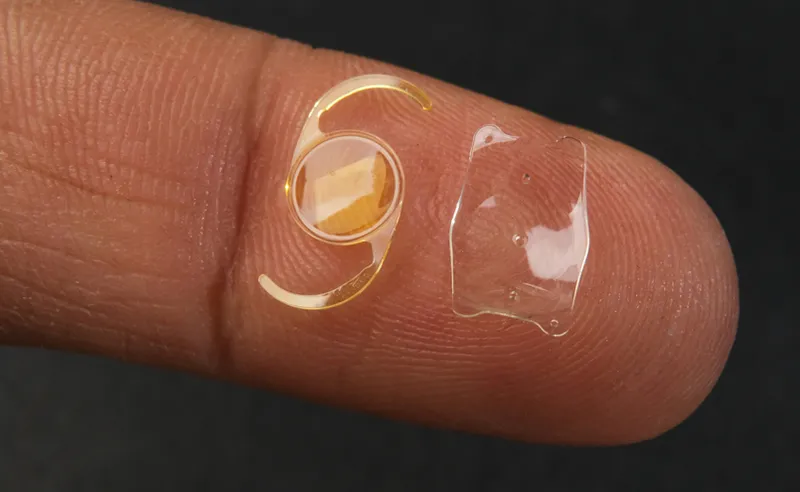
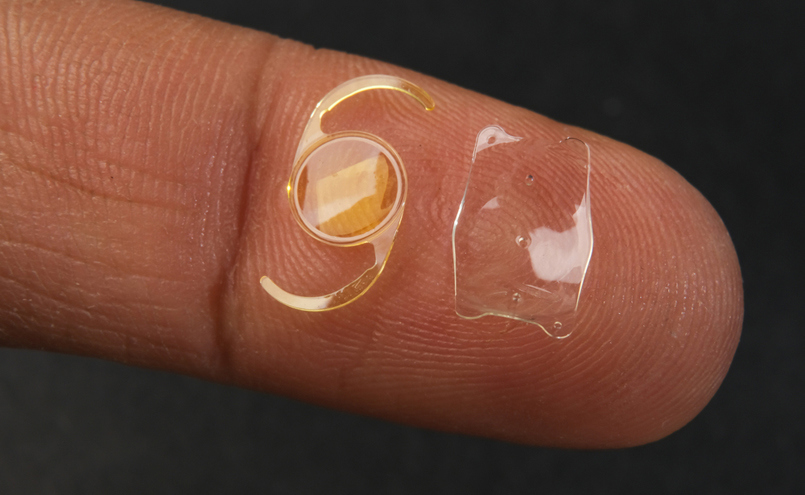
When we perform ICL surgery, we don’t remove anything from the eye—we add something. Unlike LASIK, which reshapes the cornea, the Implantable Collamer Lens is gently positioned behind the iris (the colored part of your eye) and in front of the natural crystalline lens.
Think of it as sliding a thin, flexible lens into a pocket that already exists inside your eye. The beauty of this design is that it’s reversible and invisible—patients don’t feel it, and others can’t see it.
But here’s the important part: the natural lens remains in place. That lens is responsible for focusing and, in younger years, adjusting (accommodating) between near and far vision. Over time, however, that same lens naturally changes—it stiffens (leading to presbyopia) and eventually clouds (leading to cataracts).
This close positioning means that the ICL and natural lens share a delicate space. Surgeons always check something called the “vault”—the distance between the ICL and the crystalline lens.
If the vault is too low, the ICL may rest too close to the natural lens, which in rare cases can increase the risk of cataract formation.
If the vault is too high, it may interfere with fluid circulation inside the eye, potentially affecting eye pressure.
That’s why precision sizing, advanced imaging, and surgeon experience matter so much. At Jryn Eye Clinic, we use high-resolution anterior segment OCT and other measurements to calculate the ideal ICL size for each patient’s unique anatomy.
Does ICL Cause Cataracts?

This is where myths and fears often arise. Some patients worry that the ICL itself causes cataracts.
Here’s what the evidence and our clinical experience show:
Age-related cataracts will eventually occur in almost everyone, ICL or not. This is the most common cause we see.
Anterior subcapsular cataracts—a type that forms at the front of the lens—can occur slightly more often in ICL patients, especially if the implant vaults too low (sitting too close to the natural lens).
Design evolution matters. The older generation of ICLs had a slightly higher cataract risk, but the newer EVO ICL includes a central flow port that improves fluid dynamics in the eye, lowering the risk considerably.
So, while cataracts after ICL aren’t rare, they’re not always implant-related. In most cases, they’re simply part of natural aging.
The Big Question: Do You Have to Remove the ICL?
When cataracts appear, patients want clarity: Do I have to remove my ICL?
The answer depends on the situation:
1. When Cataract Surgery Is Required
If the cataract progresses to the point where daily activities—reading, driving, or recognizing faces—are affected, surgery becomes necessary. In these cases, the ICL must be removed, because the natural lens (which has the cataract) is also being taken out. An intraocular lens (IOL) is then implanted in its place.
2. When the Cataract Is Mild
Not all cataracts need immediate surgery. If clouding is minimal, we may recommend monitoring while leaving the ICL in place. Patients can still enjoy clear vision with their implant until the cataract worsens.
3. When There Are Complications
In rare cases—such as rapid cataract progression, or if the ICL itself is misaligned—removing both the ICL and cataract lens together becomes the safest option.
The bottom line: if your natural lens must go, the ICL goes too.
What Cataract Surgery Looks Like After ICL
Cataract surgery in post-ICL patients requires more planning, but the principles remain similar. At Jryn Eye Clinic, the sequence usually looks like this:
ICL Removal
Through a micro-incision, the surgeon carefully removes the ICL. Since it’s flexible, it can be folded and withdrawn with minimal trauma.Cataract Removal
Using phacoemulsification (an ultrasound technique), the clouded natural lens is broken up and aspirated from the eye.IOL Implantation
A new intraocular lens (IOL) is inserted, restoring clarity. Today’s options include toric lenses for astigmatism, multifocal lenses for reading and distance, and advanced aspheric designs that improve contrast sensitivity.
For many patients, this surgery represents not a setback but a second opportunity. If you once had extreme myopia corrected by ICL, cataract surgery now allows a “reset”—a new prescription for life.
Patient Concerns We Hear Most Often
“Will I need glasses again?”
Not necessarily. With premium IOLs, many patients enjoy glasses-free living after cataract surgery—sometimes with even greater freedom than before.
“Is it more dangerous than normal cataract surgery?”
It’s more complex, but in the hands of an experienced surgeon, risks remain very low. At Jryn Eye Clinic, we perform thorough pre-surgical imaging to measure vault, corneal health, and lens positioning before planning surgery.
“Was my ICL surgery wasted?”
Not at all. Think of ICL as a phase in your vision journey. It gave you 20+ years of glasses-free vision. Cataract surgery simply transitions you into the next stage, one that’s inevitable for nearly everyone.
The Overlooked Perspective: Aging as a Continuum

One thing patients often overlook is that eye care is lifelong.
When you chose ICL in your 20s or 30s, you made the best choice for that stage—safe, reversible, and perfect for high myopia. Later in life, cataract surgery isn’t a failure of that choice; it’s the natural next step.
In fact, many patients find cataract surgery liberating. Unlike the natural lens, which continues to age and cloud, the artificial IOL is permanent. Once implanted, cataracts cannot return.
The Korean Context: Why This Question Matters Locally
In South Korea, where routine health check-ups are deeply ingrained, we see patients who are highly proactive about their vision. Many undergo ICL at a younger age due to high myopia, a condition especially prevalent in East Asia.
By their 50s, cataracts become a common reality. Because Korean patients often have higher visual demands—working with digital devices, driving at night, or reading fine print—they notice subtle cataract symptoms earlier than Western counterparts.
This is why clinics like Jryn Eye Clinic emphasize continuity of care: we don’t just perform ICL, we prepare patients for the natural progression toward cataract management later in life.
When to See a Doctor
If you’ve had ICL and notice any of the following, it’s time for an evaluation:
Increasing glare or halos
Faded or yellowed colors
Blurred night vision
Needing brighter light to read
Difficulty with driving or daily tasks
Regular follow-up visits are essential, even if you feel fine. Many early cataracts go unnoticed until they’re advanced.
Conclusion: Vision Is a Lifelong Partnership
To be honest, the word “cataract” scares many people who already had eye surgery once. They fear complexity, pain, or “losing” the benefit of their ICL. But the truth is gentler: cataracts are simply the next chapter in your eye story.
Yes, in most cases, the ICL will be removed when cataract surgery is performed. But that doesn’t erase the years of clear sight it gave you—it just means your vision is evolving. With today’s advanced surgical techniques and IOL options, patients often emerge with sight as sharp, or even sharper, than before.
At Jryn Eye Clinic in Busanjin-gu, Busan, we specialize in guiding patients through this transition. From ICL to cataract management, our focus is on precision, safety, and personalized care. Because in the end, your eyes aren’t just about seeing—they’re about living fully, at every stage of life.
Ready for a Personalized 1:1 Eye Consultation?
Schedule your comprehensive 3D eye examination with Chief Director Dr. Sang-Youp Han and our ophthalmology team on the 14th floor of JRYN Medical Center in Seomyeon, Busan.