Jryn Eye Clinic Busan (Seomyeon) · SMILE LASIK · EVO+ Visian ICL · Cataract & Retina Center · Tel: +82-51-710-1004
en-US

1:1 Consultation
CLINICAL ARTICLE & GUIDE
Can You Wear Lenses After Keratoconus Treatment?
Discover if you can wear lenses after keratoconus treatment. Learn about safe options and what to expect post-procedure. Book an eye consult today!

Introduction

When you first hear the word keratoconus, it might feel like the ground shifts beneath you. It’s not a common condition—and certainly not an easy one to pronounce. But for many in Korea and around the world, it's an unsettling diagnosis that turns daily vision into a constant struggle. At Jryn Eye Clinic in Busan, we meet patients every week who are overwhelmed by questions like, “Will I go blind?” or “Can I still wear contact lenses after treatment?”
Here’s the truth: keratoconus is challenging—but it’s also highly manageable. Thanks to major advances in corneal treatments and lens technology, most people with keratoconus not only preserve their sight—they thrive. And yes, you can usually wear contact lenses after treatment—but which type, when, and how comfortably depends on your eye’s unique healing process.
In this article, we’ll walk you through the post-treatment lens landscape based on firsthand clinical experience, with honest insights into what to expect and how to make the most of your vision journey.
Understanding Keratoconus: Why Lenses Matter
Keratoconus is a progressive thinning and bulging of the cornea—the clear front surface of the eye. In a healthy eye, the cornea maintains a dome-like shape, allowing light to focus precisely onto the retina. In keratoconus, the cornea warps into a cone-like shape, causing distorted vision, ghosting, halos, and high astigmatism.
In the early stages, glasses or soft contact lenses might correct the visual distortion. But as the disease progresses, standard vision correction no longer suffices. That’s when patients often turn to hard contact lenses—especially rigid gas permeable (RGP) or scleral lenses—which essentially create a new, smooth refractive surface over the irregular cornea.
This is why, even after treatment, lenses are often not only wearable—they’re essential.
Can You Wear Contact Lenses After Cross-Linking?

Yes, you can—but timing matters.
Corneal cross-linking (CXL) is the gold standard for halting the progression of keratoconus. It works by strengthening the corneal collagen fibers through a combination of riboflavin (vitamin B2) drops and controlled ultraviolet (UV) light exposure.
What Happens Post-CXL?
Immediately after the procedure, a soft bandage contact lens is often placed on the eye for comfort while the epithelium (surface layer) heals. During this initial healing phase—usually 3 to 7 days—patients are advised not to wear their usual contact lenses.
Once the epithelium heals and the eye is no longer inflamed, your ophthalmologist will assess when to restart lens use. In our experience at Jryn Eye Clinic, most patients resume lens wear within 2 to 4 weeks, although this varies depending on corneal response and overall healing.
Do You Need New Lenses?
Often, yes. The cornea can slightly flatten or change shape post-cross-linking, so previous lenses may no longer fit properly. A refitting may be necessary to ensure optimal comfort and vision.
It’s also important to understand that while CXL halts further progression, it doesn’t reverse the corneal shape. This means that while some patients experience visual improvement with glasses or lenses, many still require specialty contacts for the best outcome.
At Jryn Eye Clinic, we monitor each patient’s corneal maps and healing trajectory closely before recommending a refitting.
Contact Lenses After Intacs: Improved Fit, Not a Replacement
Intacs, or intracorneal ring segments, are tiny plastic implants inserted into the cornea to flatten and regularize its shape.
While Intacs help improve corneal symmetry and reduce distortion, they rarely eliminate the need for corrective lenses entirely. In fact, the majority of patients still rely on contact lenses for their best vision—but fitting them becomes easier and more comfortable after Intacs.
Timing for Lens Wear
We typically wait 4 to 6 weeks post-Intacs for corneal swelling to subside and shape to stabilize. At that point, specialty lenses such as RGP, hybrid, or scleral lenses can be refit for improved vision and comfort.
Lens Type Considerations
The goal with Intacs is to create a more regular corneal contour that makes lens wear more tolerable. Patients who previously struggled with lens stability or discomfort often report greater ease after this procedure. However, most still require rigid lenses to neutralize residual irregular astigmatism.
For some, hybrid lenses become an attractive option after Intacs, offering a balance between comfort and clarity.
After Corneal Transplant: Yes, but with Patience
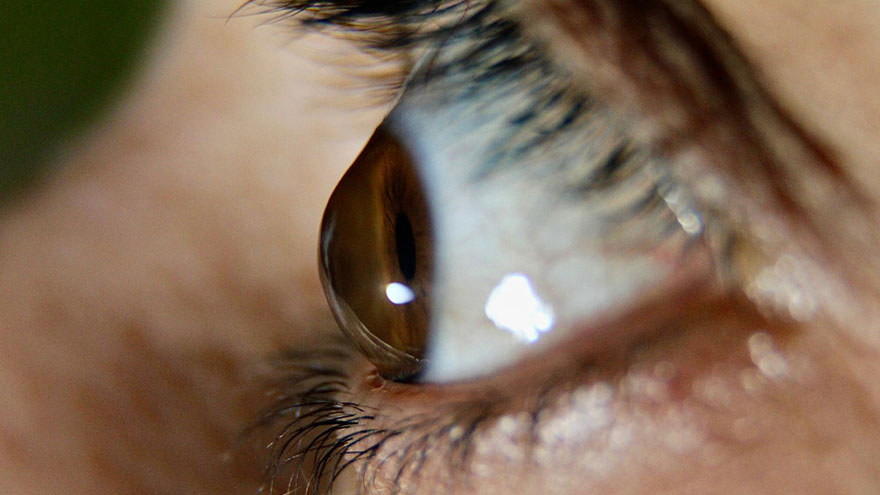
In advanced keratoconus, particularly when there’s corneal scarring or extreme thinning, a corneal transplant (either full-thickness PKP or partial-thickness DALK) may be performed.
The transplant replaces the distorted corneal tissue with healthy donor tissue, significantly improving corneal clarity and structure. However, it doesn’t always produce a perfectly round surface, and irregular astigmatism can remain.
When Can You Wear Lenses?
Healing after a transplant is slow. It can take 3 to 6 months or longer before lens fitting is appropriate, depending on suture removal and graft stability.
Once cleared, scleral lenses are often the best choice—they vault over the entire cornea and rest on the white part of the eye, offering exceptional stability and comfort.
The Importance of Custom Fitting
Post-transplant eyes are unique. No two grafts heal identically. At Jryn, we employ high-resolution imaging and corneal topography to craft lenses that match each eye’s unique post-surgical anatomy. This level of precision is crucial for maintaining visual acuity while protecting the graft.
Which Contact Lenses Work Best After Treatment?
Keratoconus requires a different lens philosophy. Here’s a rundown of the options most commonly used post-treatment:
1. Scleral Lenses
These large-diameter lenses vault completely over the cornea and sit on the sclera (the white of the eye). They provide:
Crisp, stable vision
Superior comfort (they don’t touch the cornea)
Moisture reservoir, beneficial for dry eyes
At Jryn Eye Clinic, we see many post-treatment keratoconus patients achieve their clearest, most comfortable vision with scleral lenses.
2. Rigid Gas Permeable (RGP) Lenses
These small, firm lenses create a smooth optical surface over the irregular cornea. While highly effective in earlier stages or post-Intacs, they can become uncomfortable over time.
3. Hybrid Lenses
With a rigid center and soft skirt, hybrid lenses offer the optical quality of RGPs with improved comfort. They’re a middle-ground option post-CXL or Intacs.
4. Custom Soft Lenses
In very mild or early keratoconus, or after cross-linking, specialized soft toric lenses may still work—but they’re limited in correcting significant irregularity.
It’s also worth noting that some patients benefit from piggyback systems (RGP lens over a soft lens), though these are less common today thanks to advances in scleral designs.
Tips for Successful Lens Wear After Keratoconus Treatment
Specialized Fitting is Essential: Don’t settle for off-the-shelf lenses. A precise topography-based fitting ensures both comfort and optical clarity.
Give Healing Time: Your cornea is still settling post-treatment. A few extra weeks can make a big difference in lens success.
Use Preservative-Free Solutions: Especially with scleral lenses, to avoid surface toxicity or irritation.
Regular Follow-Up is Non-Negotiable: Your eyes change—and your lenses should adapt accordingly.
Monitor Comfort and Vision: Don’t ignore early signs of discomfort, fogging, or fluctuating vision—your fit may need adjustment.
Stay Consistent With Hygiene: Keratoconus patients wearing specialty lenses are at higher risk of infection if lenses are mishandled. Follow cleaning protocols rigorously.
Conclusion
Keratoconus may change the shape of your cornea—but it doesn’t have to change your life. With today’s treatments and specialty lens options, patients can return to crisp, comfortable vision—often better than they imagined. Whether you’ve undergone cross-linking, Intacs, or a corneal transplant, contact lenses often remain your most powerful tool for achieving functional, everyday clarity.
At Jryn Eye Clinic, we know this road because we walk it every day—with students, professionals, parents, and seniors. We’ve seen how tailored care, the right lens fit, and patience during recovery can completely reshape a person’s confidence.
So yes—you can wear lenses after keratoconus treatment, and in many cases, you absolutely should.
If you're navigating post-treatment decisions or struggling with poor vision despite past care, reach out to a clinic that understands both the science and the human side of keratoconus. At Jryn, we’re here to help you see your world again—with precision, compassion, and vision that lasts.
Ready for a Personalized 1:1 Eye Consultation?
Schedule your comprehensive 3D eye examination with Chief Director Dr. Sang-Youp Han and our ophthalmology team on the 14th floor of JRYN Medical Center in Seomyeon, Busan.