Jryn Eye Clinic Busan (Seomyeon) · SMILE LASIK · EVO+ Visian ICL · Cataract & Retina Center · Tel: +82-51-710-1004
en-US

1:1 Consultation
CLINICAL ARTICLE & GUIDE
Can You Get LASIK with Severe Dry Eyes?
Discover if LASIK is safe for those with severe dry eyes. Learn about risks, alternatives, and treatments before surgery. Find out if you qualify today!

Introduction: When Clear Vision Meets a Common Problem

You’ve thought about it for years—waking up and seeing the world clearly without reaching for glasses or fumbling for contact lenses. LASIK seems like the obvious choice. But then you remember that constant dryness, that gritty feeling after long hours in front of a computer or under an air conditioner.
And suddenly, a question arises:
“Can I still get LASIK if my eyes are this dry?”
It’s not an uncommon concern. In fact, at Jryn Eye Clinic in Busan, nearly one in three patients who come in for LASIK evaluations mention dry eyes as a daily discomfort. Some have mild symptoms; others have struggled for years. And while LASIK offers freedom from glasses, severe dry eye can complicate both the surgery and recovery process—if not properly managed.
But here’s the hopeful truth: having dry eyes doesn’t automatically disqualify you from vision correction. With modern diagnostics, pre-treatment, and alternative procedures like SMILE LASIK and EVO ICL, many patients with dryness still achieve the clear, comfortable vision they’ve always wanted.
Understanding LASIK: What Really Happens During Surgery
LASIK (Laser-Assisted In Situ Keratomileusis) reshapes the cornea—the clear, dome-shaped surface of your eye—to correct vision problems such as nearsightedness, farsightedness, or astigmatism.
During the procedure:
A thin flap is created on the cornea using a femtosecond laser.
A second laser (excimer laser) reshapes the underlying tissue to correct refractive errors.
The flap is gently repositioned, where it naturally seals without stitches.
This process takes only about 10 minutes per eye. Most patients report clearer vision within a day or two.
However, one key aspect often overlooked is how this surgery temporarily affects the eye’s natural tear regulation system. The cornea is packed with tiny nerves that communicate with the tear glands, helping to regulate tear production and blink reflex. When the flap is created, some of those nerves are disrupted—causing temporary dryness even in people who previously had no dry eye symptoms.
Why Dry Eyes and LASIK Don’t Always Mix
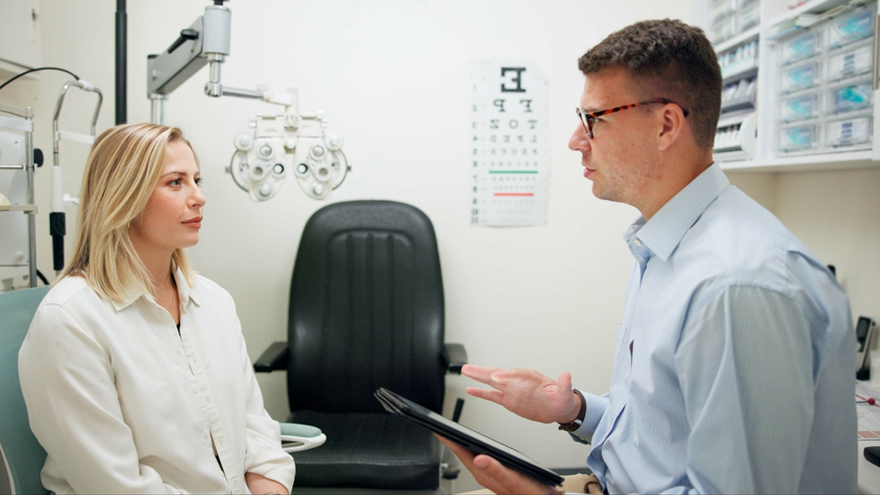
Dry eye syndrome occurs when your eyes don’t produce enough tears, or when the tears evaporate too quickly. The result is a thin, unstable tear film that fails to properly lubricate and protect the eye surface.
After LASIK, this problem can be magnified because:
The corneal nerves that trigger tear production are partially interrupted.
Healing tissues require extra lubrication.
Inflammation from surgery can affect the glands that secrete tears and oils.
If you already have moderate or severe dry eye, LASIK can exacerbate these issues—leading to prolonged discomfort, blurred vision, and even delayed healing.
That’s why ophthalmologists are cautious. At Jryn Eye Clinic, we sometimes tell patients, “Your eyes can be ready for LASIK—but only after your tear film is ready first.”
How Dry Eye Affects LASIK Results
To appreciate the risks, it helps to understand how much your tear film quality impacts your vision. Tears might seem like simple moisture, but in reality, they form a three-layered film that ensures optical clarity and comfort:
Lipid layer (outer): prevents evaporation.
Aqueous layer (middle): provides hydration and nutrients.
Mucin layer (inner): helps tears spread evenly across the eye.
If any layer is disrupted, light entering the eye scatters, causing fluctuating or blurry vision.
Now imagine performing a precision laser surgery on a surface that’s already unstable. Even microscopic dryness can throw off preoperative measurements or affect laser accuracy.
At Jryn Eye Clinic, before any LASIK or SMILE procedure, we perform detailed diagnostics such as:
Tear breakup time (TBUT)
Ocular surface staining with fluorescein or lissamine green
Meibomian gland imaging
Tear osmolarity and inflammatory marker testing
These help us identify not just whether dry eye exists, but why. In Korea, for example, we often see meibomian gland dysfunction (MGD) due to long hours of screen use and air-conditioned environments—especially among younger adults seeking LASIK.
When LASIK May Still Be Possible
So, can you get LASIK with dry eyes? In many cases—yes, but not immediately.
If your dry eye is mild to moderate and related to temporary factors such as contact lens overuse or seasonal conditions, it can often be treated and stabilized before surgery.
The key is to address the root cause first.
At Jryn Eye Clinic, we approach it like preparing a field before planting—it’s not just about clearing the surface, but nourishing the deeper structures for lasting results.
Step 1: Comprehensive Diagnosis
Our diagnostic process goes beyond basic tear tests. We assess:
Tear quantity and evaporation rate
Gland function (via LipiScan imaging)
Eyelid margin health
Corneal nerve density and sensitivity
Step 2: Customized Treatment
Depending on the findings, we design a plan that might include:
Medical-grade lubricants or prescription eye drops (such as cyclosporine or lifitegrast)
Punctal plugs to retain tears longer
Thermal pulsation therapy (LipiFlow®) to unclog oil glands
Intense Pulsed Light (IPL) therapy for inflammation control
Nutritional supplements like omega-3 fatty acids
Lifestyle modifications: proper hydration, limiting screen glare, using humidifiers
Step 3: Re-evaluation
After several weeks of treatment, we recheck tear film stability and corneal clarity.
If your ocular surface is healthy, you may safely proceed with LASIK—or we may recommend a less invasive option such as SMILE.
When LASIK Is Not Recommended
If your dryness is severe, chronic, or caused by autoimmune conditions such as Sjögren’s syndrome or rheumatoid arthritis, LASIK is typically discouraged.
Performing surgery on an unstable ocular surface could lead to persistent dry eye, scarring, or incomplete healing.
In these cases, other vision correction methods can be both safer and more comfortable.
Safer Alternatives for Patients with Dry Eyes
1. SMILE (Small Incision Lenticule Extraction)
SMILE is a newer, minimally invasive laser procedure that corrects vision through a tiny 2–4 mm incision—no flap required. Because it preserves most of the corneal nerves, tear production remains more stable compared to LASIK.
Patients with borderline or mild dry eye often experience less discomfort and faster recovery.
At Jryn Eye Clinic, SMILE is one of our most popular procedures for patients who want precision correction with minimal dryness risk.
2. EVO ICL (Implantable Collamer Lens)
For patients with severe or chronic dry eye, EVO ICL may be the ideal choice.
This procedure involves placing a soft, biocompatible lens inside the eye (between the iris and natural lens). No corneal reshaping occurs, meaning the corneal nerves are untouched, and tear stability is unaffected.
EVO ICL offers:
Clear, high-definition vision
Excellent night vision
Reversibility (the lens can be removed or replaced)
Suitability for thin corneas or severe dryness
At Jryn Eye Clinic, we’ve seen many patients who were previously told they couldn’t undergo LASIK achieve outstanding results with EVO ICL—without aggravating their dry eye symptoms.
What You Can Do if You Have Dry Eyes and Want LASIK
If you’ve been told you have dry eyes but still hope to correct your vision, here’s what we recommend:
1. Get a Professional Dry Eye Assessment
Don’t rely on over-the-counter drops or self-diagnosis. Modern eye clinics use imaging and lab-based tear tests to identify the exact cause.
2. Follow a Tailored Treatment Plan
Your eye doctor might suggest medical-grade eye drops, lid hygiene routines, or in-office treatments. Consistency is key—tear film health takes time to restore.
3. Consider Alternatives Like SMILE or EVO ICL
Ask your ophthalmologist about options that minimize corneal nerve disruption. These advanced procedures often deliver excellent results with lower dryness risk.
4. Maintain Long-Term Eye Wellness
Even after surgery, continue nurturing your ocular surface—regular hydration, screen breaks, omega-3 intake, and annual check-ups help maintain comfort and clarity for years.
How Jryn Eye Clinic Ensures Safety and Comfort
At Jryn Eye Clinic, we believe in precision guided by compassion. Every patient’s eye health is unique, so our approach is deeply personalized.
Before recommending LASIK or any procedure, Dr. Han Sang Yeop performs a comprehensive diagnostic workup that includes:
Non-invasive tear breakup analysis
High-resolution anterior segment OCT
Corneal nerve sensitivity testing
Meibomian gland evaluation
Detailed vision and ocular surface mapping
By combining these results with years of surgical experience, we can accurately determine which procedure offers the safest and most comfortable outcome for you.
For patients with dryness, we focus first on healing and stabilization, often improving comfort levels dramatically even before any laser procedure is performed.
Conclusion: Clarity Begins with Comfort
At the heart of every successful vision correction is one simple truth: healthy eyes come first. LASIK is an incredible procedure, but it’s not a one-size-fits-all solution—especially if you struggle with dryness.
The good news is that with modern ophthalmology, your options are broader than ever. Through precise diagnostics, targeted dry eye therapy, and advanced alternatives like SMILE and EVO ICL, achieving clear, comfortable vision is absolutely possible—even for patients once told they weren’t candidates.
At Jryn Eye Clinic in Busanjin-gu, Busan, Dr. Han Sang Yeop and his team take a patient-first approach: combining cutting-edge technology with genuine compassion. Our goal is not just to sharpen your sight but to restore comfort, confidence, and long-term eye health.
Ready for a Personalized 1:1 Eye Consultation?
Schedule your comprehensive 3D eye examination with Chief Director Dr. Sang-Youp Han and our ophthalmology team on the 14th floor of JRYN Medical Center in Seomyeon, Busan.