Jryn Eye Clinic Busan (Seomyeon) · SMILE LASIK · EVO+ Visian ICL · Cataract & Retina Center · Tel: +82-51-710-1004
en-US

1:1 Consultation
CLINICAL ARTICLE & GUIDE
Can You Get Keratoconus After LASIK?
Wondering if you can get keratoconus after LASIK? Learn the risks, symptoms, and how to protect your vision post-surgery. Discover expert insights now!
Introduction
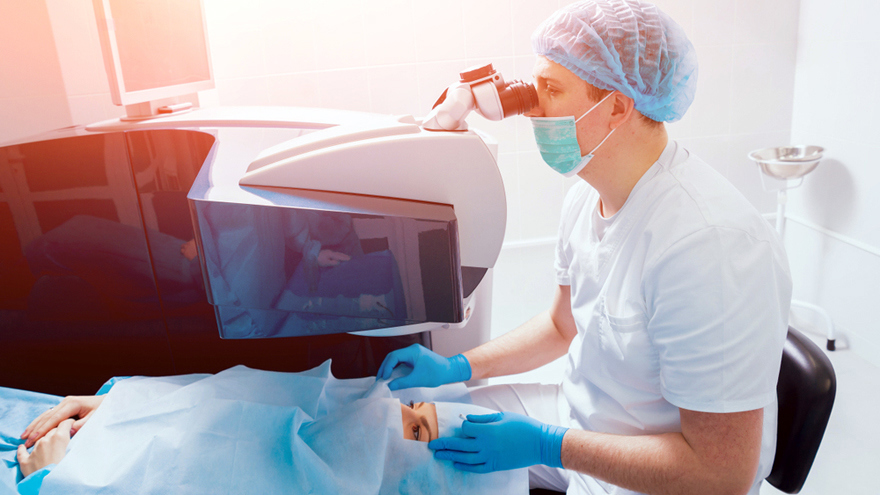
Modern laser vision correction, especially LASIK, has transformed the way millions of people see the world. It promises freedom from glasses, rapid recovery, and precision-driven results. But along with its popularity, questions about safety continue to surface. One that patients at Jryn Eye Clinic in Busanjin-gu, Busan often ask is: “Can I develop keratoconus after LASIK?” It’s a fair concern, particularly for those who prioritize not only short-term clarity but also long-term eye health.
To answer that question honestly, we need to explore what keratoconus is, how it differs from post-LASIK complications like ectasia, and what today’s advanced screening technologies can reveal—before problems arise. In this comprehensive guide, we’ll share the medical science, real patient scenarios, and our clinic’s frontline experience treating and preventing such conditions.
Understanding the Basics: What Is Keratoconus?
Keratoconus is a progressive eye condition in which the cornea—the clear, dome-shaped front surface of the eye—thins and begins to bulge outward into a cone-like shape. This irregular shape distorts light as it enters the eye, leading to blurred or distorted vision. It typically appears in adolescence or early adulthood and can progress over many years.
The condition is generally considered idiopathic, meaning it arises without a known cause, although genetic, environmental, and mechanical factors (like eye rubbing) may play a role. It's important to note: keratoconus is not caused by LASIK. However, LASIK can reveal or worsen a similar condition known as post-LASIK corneal ectasia.
Keratoconus often starts subtly. In the beginning, patients might simply notice that their glasses no longer provide the clarity they once did. Over time, the vision becomes increasingly distorted, with symptoms like streaks from lights at night, double vision in one eye, or ghosting around objects. In advanced cases, the cornea can scar, and only a corneal transplant can restore functional vision.
The Real Question: Does LASIK Cause Keratoconus?
Strictly speaking, no. LASIK does not cause keratoconus in the traditional sense. What LASIK can do, in rare cases, is weaken the corneal structure enough to cause a condition that closely resembles keratoconus: post-LASIK ectasia.
Post-LASIK ectasia occurs when the cornea becomes biomechanically unstable after surgery. The symptoms are nearly identical to keratoconus: thinning, bulging, irregular astigmatism, and progressive vision loss. But the key difference is that this condition is surgically induced in a cornea that may have already been predisposed to biomechanical weakness.
At Jryn Eye Clinic, we take this distinction very seriously. Many patients come to us confused, having read online that LASIK “caused” their keratoconus. In most of these cases, what they’re actually experiencing is post-surgical ectasia, not idiopathic keratoconus.
To draw an analogy: imagine a wooden bridge. If the wood has no defects, it can carry the load safely. But if the wood has tiny cracks not visible to the eye, placing weight on it could cause a collapse. LASIK is like placing a load on the cornea—which is perfectly safe if the structure is sound. But if there's undiagnosed weakness, ectasia can develop.
Who Is at Risk of Post-LASIK Ectasia?
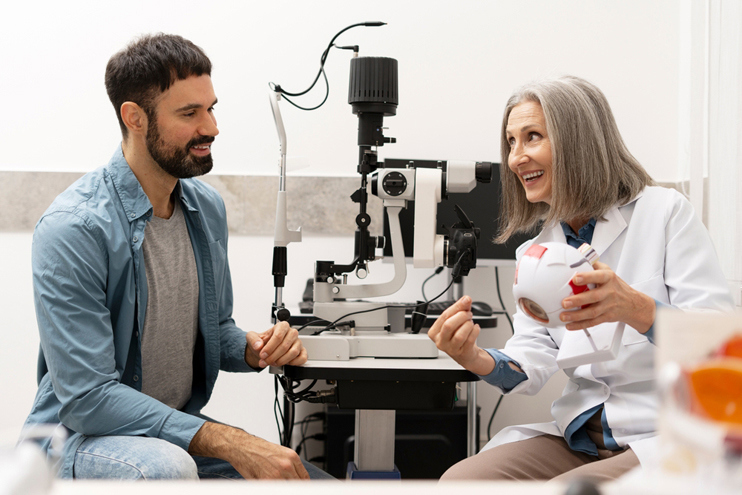
Not every LASIK patient is at risk. In fact, with modern diagnostic tools and careful screening, the risk is extremely low—especially at clinics that prioritize safety over volume.
However, certain factors significantly increase the risk:
Thin corneas (low pachymetry values)
High myopia (requiring deeper ablation)
Steep corneal curvatures
Abnormal corneal topography or tomography (especially signs of early keratoconus)
Family history of keratoconus
Excessive eye rubbing
Allergic or atopic eye conditions
These risks are not always obvious. A patient may appear to have a normal vision and a seemingly normal eye exam, but subtle signs can be picked up with corneal tomography and epithelial mapping. At Jryn Eye Clinic, we routinely diagnose subclinical keratoconus in patients who were told they were LASIK candidates elsewhere. In such cases, we counsel patients to avoid LASIK and consider safer alternatives.
Another important factor is age. Younger patients—particularly males under 25—are at higher risk because keratoconus often manifests in this demographic. Performing LASIK on a young patient with a slightly suspicious cornea is like playing with fire. That’s why we err on the side of caution.
What Do We Do Differently at Jryn Eye Clinic?
We understand that vision correction is not just about seeing 20/20 the next day. It’s about preserving long-term eye health.
Here’s how we protect our patients:
Advanced Screening: We go beyond the basics. Our pre-operative assessments include Scheimpflug tomography, corneal biomechanics (using devices like Corvis ST), epithelial thickness mapping, and sometimes even genetic counseling for those with a strong family history of keratoconus.
Custom Risk Profiles: No two eyes are the same. We build a unique surgical risk profile for each patient and use advanced software to calculate the percentage of corneal tissue affected (PTA), residual stromal bed (RSB), and other parameters critical to surgical safety.
Patient Education: We believe in shared decision-making. Every patient is given a detailed explanation of their eye condition, risks, and alternatives. We show corneal maps on screen, explain what the colors and curvatures mean, and encourage patients to ask questions.
Post-Operative Monitoring: After surgery, we continue to monitor corneal stability with periodic scans, especially in borderline cases. We watch for early signs of shape changes, such as inferior steepening or posterior elevation. Early detection means early intervention.
This approach takes more time, but we believe our patients deserve nothing less.
What Happens If Ectasia Develops After LASIK?

Even with the best screening, rare cases of ectasia can occur. Fortunately, we have effective ways to manage it:
Corneal Cross-Linking (CXL): A treatment that strengthens the corneal collagen fibers to halt progression. It's most effective when caught early. We often recommend it as a preventive treatment in borderline cases, or as an immediate response if post-op scans raise concerns.
Specialty Contact Lenses: Scleral lenses or rigid gas-permeable lenses can help reshape the corneal surface and improve vision. These lenses vault over the irregular cornea and create a new optical surface.
Intrastromal Ring Segments (ICRS): In some cases, small plastic inserts can help flatten the bulge and reduce irregular astigmatism. This can delay or even avoid the need for a corneal transplant.
Corneal Transplant: Rare, but a viable option in advanced, unresponsive cases. With today’s techniques, both full-thickness and partial-thickness (DALK) transplants offer excellent outcomes.
At Jryn Eye Clinic, we offer cross-linking and maintain close ties with corneal specialists across Korea to ensure seamless referrals when necessary. If we identify a progressing ectasia, patients are not left on their own—we walk with them through every stage of treatment.
How Can You Protect Yourself as a LASIK Candidate?
Ask the right questions:
Can you show me my corneal tomography and explain what it means?
What is my residual stromal bed after surgery?
Am I at risk for post-LASIK ectasia?
If I’m not a candidate for LASIK, what are my other options?
What is your protocol if ectasia is detected?
A responsible clinic will welcome these questions. At Jryn Eye Clinic, we encourage them. In fact, we consider inquisitive patients to be ideal partners in their care. The more you know about your eyes, the better your long-term outcome.
Final Thoughts: Precision Over Popularity
In Korea, where LASIK is extremely popular and accessible, it can be tempting to choose the fastest or cheapest option. But vision correction is not a one-size-fits-all decision. The safest path is through precision diagnostics and personalized care.
Our philosophy at Jryn Eye Clinic is grounded in this truth: every eye is different, and every decision must reflect that. We don’t rush patients into surgery. We don’t cut corners. And we never recommend LASIK if there’s any sign that it might compromise your corneal integrity down the road.
If you’ve already had LASIK and are now experiencing symptoms like increased glare, night halos, unstable vision, or progressive astigmatism—don’t dismiss them. They could be early signs of ectasia. Early detection is the key to protecting your vision.
Ready for a Personalized 1:1 Eye Consultation?
Schedule your comprehensive 3D eye examination with Chief Director Dr. Sang-Youp Han and our ophthalmology team on the 14th floor of JRYN Medical Center in Seomyeon, Busan.