Jryn Eye Clinic Busan (Seomyeon) · SMILE LASIK · EVO+ Visian ICL · Cataract & Retina Center · Tel: +82-51-710-1004
en-US

1:1 Consultation
CLINICAL ARTICLE & GUIDE
Beyond LASIK: Modern Laser Eye Surgery to Correct Vision and Astigmatism
Introduction Move over traditional LASIK a new era of vision correction has arrived. For decades, LASIK was the only name people knew, but today, third-generation technology is making perfect vision more accessible and safer than ever before.

Introduction
Move over traditional LASIK a new era of vision correction has arrived. For decades, LASIK was the only name people knew, but today, third-generation technology is making perfect vision more accessible and safer than ever before. Modern laser eye surgery has evolved into a highly customized field where treatments are tailored to the unique map of your eye.
If you have struggled with the daily nuisance of glasses or the irritation of contact lenses, you are not alone. For those with high astigmatism or active lifestyles, traditional options often felt like a compromise. However, the promise of Beyond LASIK options such as SMILE, ICL, and Contoura Vision means sharper night vision, fewer side effects, and a significantly faster recovery.
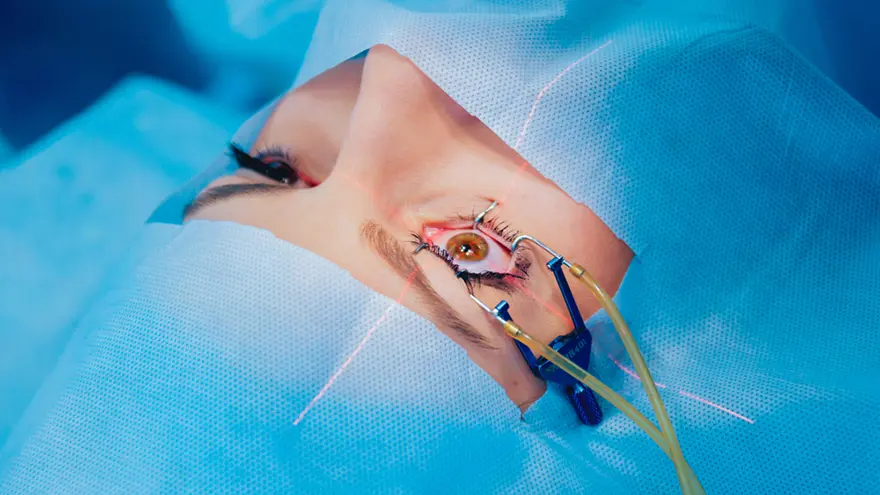
Understanding the Vision Trio: LASIK, PRK, and SMILE
When looking into laser eye surgery, you will likely encounter three primary types of procedures. While they all aim to reshape the cornea to improve how light hits the retina, they do so in very different ways.
LASIK (The Gold Standard)
LASIK remains the most popular choice worldwide. During this procedure, a surgeon creates a thin flap on the surface of the cornea using a laser. The flap is lifted, a second laser reshapes the underlying tissue, and the flap is replaced. It is known for near-instant results and very little discomfort.
PRK (The Surface Treatment)
PRK was the first type of laser eye surgery and is still vital today. Unlike LASIK, no flap is created. Instead, the thin outer layer of the cornea is removed entirely and grows back naturally. This is the preferred choice for patients with thin corneas or those in high-impact professions like the military or professional boxing, where a corneal flap could be a risk.
SMILE (The 3rd Generation)
SMILE (Small Incision Lenticule Extraction) is the latest revolution. It is an all-laser procedure that does not require a flap or the removal of the corneal surface. Instead, a tiny laser creates a small piece of tissue (lenticule) inside the cornea, which is removed through a microscopic incision. This preserves more corneal strength and significantly reduces the risk of post-op dry eye.
Comparison of Primary Laser Procedures
Feature | LASIK | PRK | SMILE |
|---|---|---|---|
Incision Size | 20mm flap | None (Surface removal) | 2-4mm small incision |
Recovery Time | 24 hours | 5–7 days | 24 hours |
Dry Eye Risk | Moderate | Low | Very Low |
Ideal For | General correction | Thin corneas/Athletes | Active lifestyles/Dry eyes |
Solving the Astigmatism Myth
A common misconception is that laser eye surgery cannot fix astigmatism. This is outdated information. Modern lasers are specifically designed to treat astigmatism with incredible precision.
Astigmatism occurs when your eye is shaped more like a football than a basketball. This irregular curvature causes light to blur at all distances. Modern Toric laser innovations allow surgeons to reshape that football back into a perfect basketball sphere.
One of the biggest breakthroughs is Contoura Vision. This is a topography-guided technology that maps 22,000 unique points on each eye. By treating the microscopic irregularities of your specific cornea, it provides high-definition clarity that often surpasses what glasses or contacts could ever achieve.
Beyond the Laser: Implantable Collamer Lenses (ICL)
Sometimes, the best laser surgery isn't a laser at all. For patients with extreme nearsightedness or corneas that are too thin for traditional reshaping, the EVO ICL is a game-changer.
Often called the permanent contact lens the ICL is a biocompatible lens inserted into the eye behind the iris.
No Tissue Removal: Unlike LASIK, no corneal tissue is removed.
Reversibility: One of the most unique benefits of ICL is that it is reversible. If your vision changes significantly in the future, the lens can be removed or replaced.
Built-in UV Protection: The lens material naturally filters harmful UV rays.
Candidacy: Is Your Eye a Match?
Not every eye is suited for every procedure. During a consultation for laser eye surgery, surgeons look at three main factors:
Stability: Your prescription should be stable for at least 12 months.
Corneal Thickness: Surgeons use advanced mapping (like Pentacam) to ensure your cornea is thick enough to be safely reshaped.
The Dry Eye Factor: If you already suffer from chronic dry eyes, your surgeon might steer you toward SMILE or ICL, as traditional LASIK can temporarily worsen dryness.
The Global Standard: Why South Korea Leads in Vision Correction

When it comes to advanced medical technology, South Korea has emerged as the global capital for laser eye surgery. Known as a Tech Hub, South Korean clinics utilize AI-driven diagnostics and the latest Zeiss and Alcon laser systems before they are even available in many Western countries.
The expertise in South Korea is unmatched due to sheer volume. Korean surgeons perform significantly more SMILE and ICL procedures per capita than almost anywhere else. This high volume leads to refined techniques and Smart Clinics that offer a luxury patient experience, often including same-day One-Stop surgery where your consultation and procedure happen in a single afternoon.
The Financial Breakdown: Cost vs. Value
While the upfront cost of laser eye surgery may seem high, it is a long-term investment. When you calculate the cost of frames, designer lenses, contact lenses, and cleaning solutions over 20 years, surgery often pays for itself within five to seven years.
For those seeking the highest quality at the most competitive price, South Korea offers the best value in the world. You receive treatment from world-class experts in ultra-modern facilities for a fraction of the cost in the other countries.
Average Cost per Eye (USD)
Procedure Type | United States | United Kingdom | South Korea (Best Value) |
|---|---|---|---|
Traditional LASIK | $2,500 - $3,500 | $2,000 - $3,000 | $1,200 - $1,800 |
SMILE (All-Laser) | $3,000 - $4,500 | $2,800 - $3,800 | $1,900 - $2,500 |
EVO ICL | $4,000 - $5,500 | $3,500 - $5,000 | $2,800 - $3,500 |
Recovery and What to Expect
The Wow moment usually happens within 24 hours. Most patients wake up the morning after LASIK or SMILE and can see the alarm clock clearly for the first time in years.
Timeline: Most patients return to work within 24 hours for SMILE and LASIK. PRK requires a bit more patience, usually taking 5 to 7 days for functional vision.
Post-Op Care: You will be prescribed antibiotic and anti-inflammatory eye drops. Wearing UV-protected sunglasses is essential during the first few weeks to protect your healing eyes from light sensitivity.
Managing Risks and Realistic Expectations
No surgery is without risk, but laser eye surgery is one of the safest elective procedures in the world. Some patients may experience temporary side effects like:
Dryness: Usually managed with artificial tears for a few months.
Night Glare: Seeing halos or starbursts around lights at night, which typically fades as the eye heals.
How to Choose Your Surgeon: 5 Essential Questions
How many SMILE or ICL procedures have you performed?
Do you use "All-Laser" technology or do you still use manual blades?
Is your diagnostic equipment topography-guided?
What is your enhancement (touch-up) rate if my vision isn't perfect?
What is included in the post-operative care and follow-up package?
Frequently Asked Questions
1. Does the Procedure Hurt?
No. Surgeons use potent numbing drops before the procedure begins. You may feel a slight pressure for about 30 seconds during the laser application, but there is no sharp pain involved.
2. What Happens If I Blink or Move My Eye During Surgery?
Modern laser systems are equipped with high-speed infrared eye trackers that monitor eye movement thousands of times per second. If excessive movement is detected, the laser automatically pauses instantly to ensure safety and precision.
3. How Long Does the Surgery Last?
The actual laser treatment usually takes less than 30 seconds per eye. Overall, you will typically spend under 15 minutes in the operating room from start to finish.
4. Can I Get Both Eyes Done at Once?
Yes. For most patients, treating both eyes on the same day is the standard and safest approach, allowing for balanced healing and faster visual recovery.
5. Will My Vision Correction Last Forever?
The corneal reshaping achieved by the laser is permanent. However, natural age-related changes such as presbyopia can still occur over time, which may require reading glasses later in life.
Conclusion
Laser eye surgery is no longer a one size fits all procedure. Whether it is the precision of SMILE, the HD clarity of Contoura Vision, or the versatility of ICL, there is a modern solution for almost every prescription. If you are ready to see the world with new eyes, the first step is a comprehensive corneal mapping session. By choosing a high-tech destination like South Korea, you can ensure you are receiving the world's best care at the most affordable price. Your journey to clear vision starts with a simple consultation here.
Ready for a Personalized 1:1 Eye Consultation?
Schedule your comprehensive 3D eye examination with Chief Director Dr. Sang-Youp Han and our ophthalmology team on the 14th floor of JRYN Medical Center in Seomyeon, Busan.