Jryn Eye Clinic Busan (Seomyeon) · SMILE LASIK · EVO+ Visian ICL · Cataract & Retina Center · Tel: +82-51-710-1004
en-US

1:1 Consultation
CLINICAL ARTICLE & GUIDE
Best Exercises for Eye Health After Surgery
Discover the best post-surgery eye exercises to boost recovery, strengthen vision, and prevent strain. Enhance your eye health—start today!

Introduction – Healing Your Eyes the Right Way

There’s a certain mix of relief and anticipation that follows eye surgery.
You’ve taken the brave step—whether it was SMILE LASIK to finally be free from glasses, cataract surgery to clear the haze from your vision, or a delicate retinal procedure to protect your sight for the future.
It’s a good question—and it comes from the right place. But the truth is, recovery isn’t about doing more; it’s about doing the right things at the right time. Your eyes are delicate after surgery. Push them too soon, and you risk strain or setbacks. Wait too long to start gentle activity, and your visual coordination may take longer to feel natural again.
This is where carefully chosen post-surgical eye exercises—introduced under your doctor’s guidance—can make a big difference. They’re not about “strengthening” the eyes like muscles in the gym, but about retraining focus, preventing dryness, and restoring smooth coordination between your eyes and brain.
Why Eye Exercises Matter After Surgery
After surgery, most patients imagine recovery as a period of complete rest—minimal movement, minimal strain. Rest is indeed important, but there’s another layer to healing that people often overlook:
your eyes are not just passive optical devices; they are dynamic, coordinated systems involving muscles, nerves, and brain pathways.
When you undergo a procedure—be it SMILE LASIK, cataract surgery, or retinal repair—those systems need to recalibrate. Even though your vision may improve quickly, your eyes and brain are still adapting to changes in:
Focusing mechanics – After cataract surgery, your natural lens is replaced with an intraocular lens (IOL). This changes how your eyes focus, especially at varying distances.
Blink rhythm – Following corneal surgeries like LASIK or SMILE, patients often blink less due to reduced corneal sensitivity, which can worsen dryness.
Eye alignment and coordination – Retinal procedures or muscle-related surgeries can temporarily affect how the eyes work together, leading to fatigue or mild double vision.
Light processing – A clearer optical path after surgery can make everyday light feel more intense until your brain adapts.
Gentle, doctor-approved exercises can help with this recalibration. They stimulate smooth muscle control, encourage natural blinking patterns, and train your focusing system to respond comfortably again.
But the keyword here is gentle. Overexerting the eyes before they are ready can slow recovery or cause unnecessary complications. At Jryn Eye Clinic, we only recommend starting exercises once your follow-up examination shows the surgical site is stable.
The First and Most Important Rule: Get Clearance First
Before we talk about the exercises themselves, let me emphasize this:
Never start any post-surgical eye exercise without your surgeon’s approval.
Why? Because each surgery type has different healing timelines:
SMILE LASIK – Corneal healing is rapid, but dryness is a priority for the first few weeks.
Cataract surgery – Lens stabilization and inflammation control come first, with focusing drills later.
Retinal surgery – Depending on the repair, eye movement may be restricted for weeks.
At Jryn Eye Clinic, we typically wait until at least the first follow-up visit (often 1–2 weeks post-op) before recommending even the simplest exercises.
Gentle Eye Exercises After Surgery
These movements are low-strain, low-risk and focus on comfort, flexibility, and coordination.
Do them only after your ophthalmologist says it’s safe.
1. Blink Refresh – The Dryness Defender
Why it helps:
After surgery—especially laser procedures—your corneal nerves are temporarily less sensitive. You blink less, leading to dryness, blurred vision, and irritation.
How to do it:
Close your eyes gently for 2–3 seconds.
Lightly squeeze (as if smiling with your eyes) for one second.
Relax and open.
Repeat 10 times, once every hour during screen use.
Clinic Tip: We tell patients to pair this with the “20-20-20” rule—every 20 minutes, look 20 feet away for 20 seconds.
2. Near–Far Focusing – The Focusing Flex
Why it helps:
Shifting focus between near and far helps retrain the ciliary muscle, which controls lens shape and focusing speed.
How to do it:
Hold a pen or card 30 cm from your nose.
Focus on it for 2–3 seconds.
Look at something across the room (3–6 meters away).
Repeat 10 times, 2–3 times daily.
Clinic Insight: After cataract surgery, we may modify this drill to match your new lens type—especially if you’ve chosen a multifocal IOL.
3. Eye Movement Tracing – Smooth Control
Why it helps:
Improves muscle coordination and reduces stiffness, especially after procedures that affect eye alignment.
How to do it:
Keep your head still.
Move eyes slowly up, down, left, and right.
Trace a large, slow circle clockwise, then counterclockwise.
Stop if you feel strain or discomfort.
Safety Note: Avoid rapid saccades (quick jumps) in early healing.
4. Palming – The Relaxation Reset
Why it helps:
Gives your visual system a short “break,” reduces fatigue, and can be soothing for light-sensitive eyes.
How to do it:
Rub your palms together until warm.
Cup your hands gently over closed eyes—no pressure.
Breathe slowly for 1–2 minutes.
Cultural Note: Many of our Busan patients find this especially calming after time outdoors in bright sunlight.
Exercises to Avoid in Early Recovery
It’s equally important to know what not to do:
Fast, repetitive eye movements in the first few weeks
Long sessions of tiny-font reading without breaks
Any straining activity that raises blood or eye pressure (heavy lifting, certain yoga poses)
Swimming or underwater opening of eyes until cleared (infection risk)
Jryn Eye Clinic’s Personalized Recovery Approach
One thing we’ve learned over years of post-surgical care is this: no two recoveries are ever the same.
Even if two patients had the exact same procedure, their healing timelines, comfort levels, and exercise needs can be completely different. That’s why, at Jryn Eye Clinic, we never give a one-size-fits-all recovery sheet. Instead, we create a tailored plan that matches the surgery type, the patient’s lifestyle, and the pace of healing seen in follow-up visits.
Here’s how we adapt our approach for common procedures:
SMILE LASIK
In the first month, our focus is on dryness prevention—hydrating eye drops, blinking exercises, and avoiding prolonged screen strain. Once corneal healing is stable, we introduce gentle near–far focusing drills to help the eyes feel natural in everyday tasks.Cataract Surgery
We start with inflammation control and visual clarity checks. For patients with multifocal IOLs, we gradually add focusing exercises that train the brain to switch comfortably between distances. If it’s a monofocal lens, the exercises are customized to your corrected vision zone.Retinal Surgery
This requires extra caution. Some patients need to limit eye movement for weeks to protect the repaired retina. Once cleared, we start with very mild movement and tracking exercises—always under close monitoring.
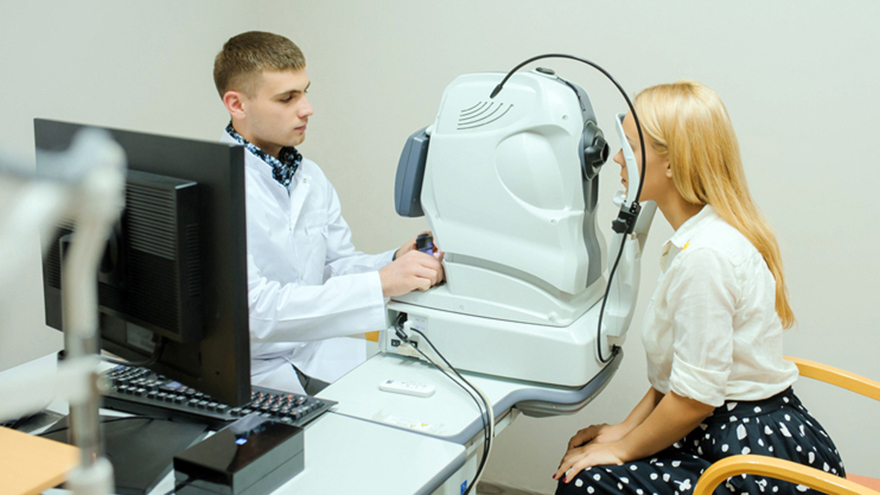
What sets our approach apart is not just the exercises themselves, but the timing and sequencing. We use advanced imaging tools—like OCT scans to check retinal stability and tear film analysis to track dryness—to decide exactly when your eyes are ready for each step.
Life in Busan After Eye Surgery – Local Considerations
Patients here in Busan have a few extra factors to think about:
Bright seaside light – Sunglasses are essential in early recovery to prevent squinting strain.
Frequent screen use – Korea’s digital lifestyle means more blinking drills are needed to fight dryness.
Seasonal yellow dust – In spring, outdoor protection matters more for healing eyes.
By integrating these realities into the recovery plan, we help patients protect both their surgery results and their everyday comfort.
Conclusion – Gentle Patience Wins
Recovering from eye surgery is a partnership—you bring the patience and discipline, your doctor brings the guidance and precision. The right exercises, introduced at the right time, can help your vision feel natural and comfortable again. But rushing ahead or “self-prescribing” eye workouts can put your results at risk.
If you’re in Busan and have had recent eye surgery, let’s make your recovery personal.
Visit Jryn Eye Clinic for a follow-up and customized post-surgery vision care plan. Together, we’ll help your eyes heal with the clarity, comfort, and long-term stability you deserve.
Ready for a Personalized 1:1 Eye Consultation?
Schedule your comprehensive 3D eye examination with Chief Director Dr. Sang-Youp Han and our ophthalmology team on the 14th floor of JRYN Medical Center in Seomyeon, Busan.